
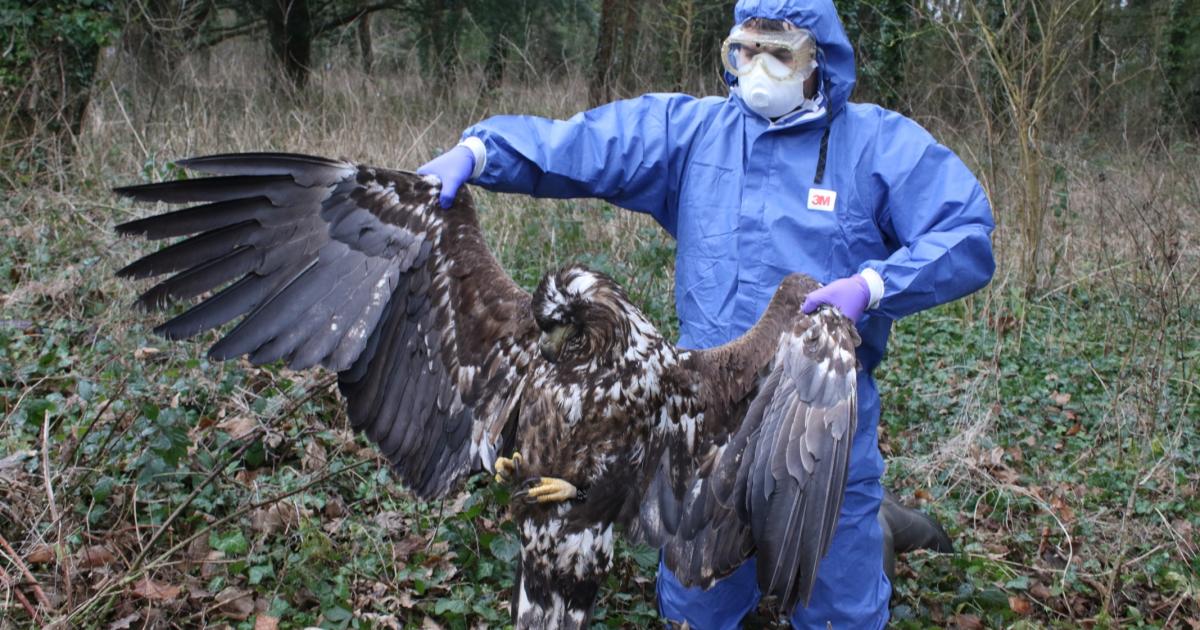
The poisonings have raised fresh questions over rodenticide use in the countryside.
Since 2019, Natural England has investigated 10 suspected white-tailed eagle poisonings in England, including nine deaths and one non-fatal illness; six cases were in Dorset: five deaths and one illness.
Poole Harbour has become a hotspot for the reintroduced white‑tailed eagles, with up to six birds seen there at once and at least two local adult eagles now using the area regularly
Natural England told the Echo toxicology tests found brodifacoum in all five dead Dorset eagles “at levels considered close to significant”.
Brodifacoum is a powerful rat poison that stops blood clotting and causes severe internal bleeding, and even small amounts can kill rodents, pets, farm animals and wild birds and poison predators that eat contaminated prey.
Experts said rodenticide toxicity probably contributed by leaving the birds more vulnerable to injury, starvation or other factors, although levels were “not high enough to be identified as the primary cause of death”.
Natural England’s list records Dorset eagles found in January 2022 (cause “unspecified”), May 2024 (starvation), March 2025 (trauma) and March 2026 (electrocution), plus a non-fatal illness in February 2022.
A fifth eagle died by electrocution in November 2024; Natural England said brodifacoum was found in all five at levels “above those expected from normal background exposure”, requiring further investigation into its use.
The results “suggest brodifacoum may not have been used in accordance with legal requirements designed to protect wildlife and prevent exposure of non-target species,” Natural England said.
The birds were reintroduced to southern England from the Isle of Wight under a Natural England-licensed project.
Investigations into the Dorset cases continue, with detailed evidence reports withheld until they end.
The Health and Safety Executive will publish the final outcomes and leads pesticide enforcement and the Government’s rodenticide stewardship scheme.
Wildlife Poisoning Research UK, which obtained much of the detail through freedom of information requests, says the Dorset cases show the stewardship scheme is failing and wants tighter controls on SGARs.
Conservationists say the findings raise questions over poison controls in areas used by reintroduced species and other protected birds of prey.
In a 2022 case, Dorset Police said tests were inconclusive and could not confirm deliberate intent or identify an offender despite detecting high brodifacoum levels.