
On the back row is a young Geoff Fletcher and a young Frankie Barrow is also pictured on the front row.
St Helens B team from the early 1960s (Image: Saints Heritage Society)
Geoff Fletcher was a straight-talking, hard-working pig farmer, rugby league player and coach – who died in November 2018, just short of his 75th birthday.
Fletcher, often given the moniker of ‘Piggy’ on account of him running the family farm which he combined with other businesses, was a genuine larger than life personality.
They were traits he carried on and off the rugby league field.
Although Fletcher was a St Helens man, whose Holme Farm is a drop kick away from Knowsley Road’s Edington End, he never followed his father Bill’s path to the Saints.
Fletcher enjoyed a long career, with 559 professional games spanning 1962-1985 starting with Leigh and ending at Runcorn Highfield.
The big prop forward first took up the oval ball with amateurs Thatto Heath and Pilikngton Recs, going on to win county and international caps in the unpaid ranks before being enticed to Leigh by former Saints and Great Britain captain Alan Prescott.
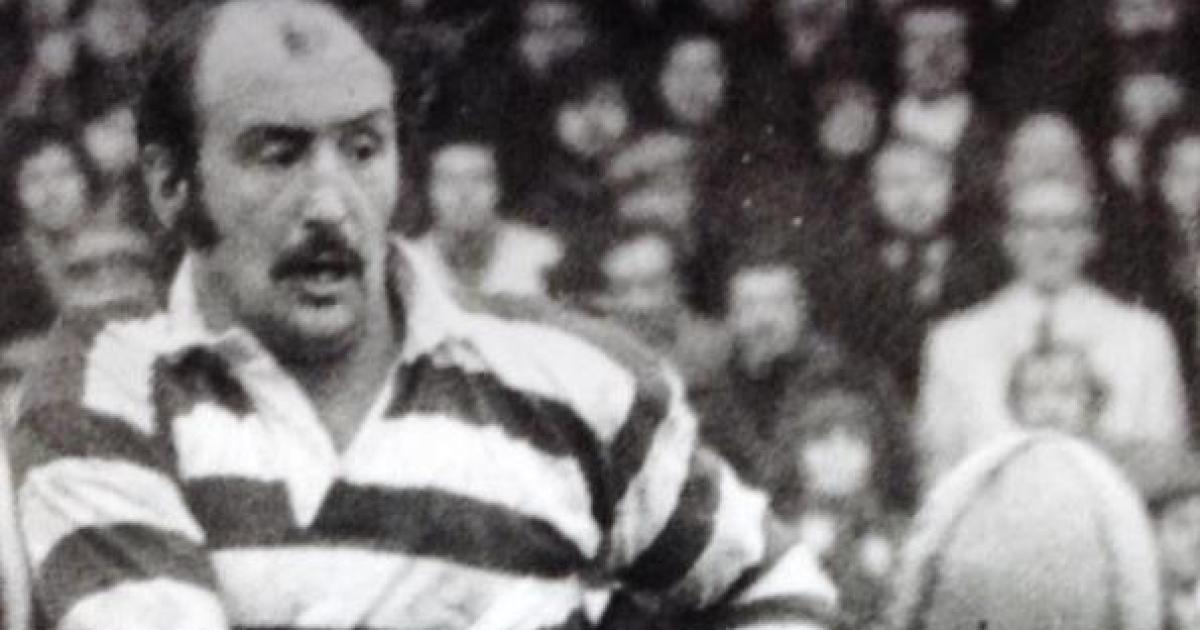
Geoff Fletcher – a larger than life rugby league player (Image: Supplied)
A big man, with good ball-handling skills playing in the line, Fletcher would go on to have three stints at Leigh, as well as spells with Oldham, Wigan and Workington Town.
In his time at Wigan he missed the 1970 Wembley final due to a broken elbow, but with fellow St Helener Brian Hogan in the front row he appeared in the following year’s Championship Final defeat by Saints.
He won the Lancashire Cup at Wigan and the BBC2 Floodlit trophy with Leigh, but it was his later role at Huyton, who he joined as player-coach in 1977, which earned him much respect.
Geographically Huyton, a town most famous for being the Parliamentary seat of Prime Minister Harold Wilson, was only a stone’s throw away from St Helens but it was a million miles away in sporting culture.
Alas some of the locals took the stone’s throw term too literally and vandals, with no respect for the club’s Alt Park home or the code that played there, routinely smashed anything – windows, fences and even the concrete terracing.
Anyone visiting there in the early 80s would have been forgiven for thinking they had walked onto the set for Play for Today.
With a shoe-string budget from crowds of less than 250 and the cost of repairing constant vandalism, Fletcher had to combine his player-coach’s role with that of groundsman, kitman and repairman.
It was a thankless task, but Fletcher dealt with all the travails and woes of keeping the game alive on Merseyside with a large dollop of black humour.
When he finally got some recognition, collecting the Rugby League Writers Association inaugural merit award he told a story – maybe a tall one – about how inhospitable the area was.
He said: “One day the lions escaped at Huyton on their way to the zoo or the circus.
“The poor lions were petrified.”
Fletcher did make headlines at Huyton – and was a prominent figure in the YTV documentary Another Bloody Sunday which featured fellow strugglers Doncaster’s pursuit for a win…which inevitable came against the Merseysiders.
Fletcher also made the national press news section, when Huddersfield’s Graham Swale hid his toupee and a ‘disagreement’ ensued.
He was always a colourful character – a straight-talker who was never going to be auditioning for the diplomatic corps. And often he would come out with some real pearls of rugby league wisdom when interviewed by Gerry Burrows on Radio Merseyside.
The club persevered at Huyton until it was reborn at Runcorn Highfield, then Highfield at Hoghton Road and Prescot Panthers where Fletcher and the club’s timeline in the sport came to a halt in 1997.