
Your support helps us to tell the story
From reproductive rights to climate change to Big Tech, The Independent is on the ground when the story is developing. Whether it’s investigating the financials of Elon Musk’s pro-Trump PAC or producing our latest documentary, ‘The A Word’, which shines a light on the American women fighting for reproductive rights, we know how important it is to parse out the facts from the messaging.
At such a critical moment in US history, we need reporters on the ground. Your donation allows us to keep sending journalists to speak to both sides of the story.
The Independent is trusted by Americans across the entire political spectrum. And unlike many other quality news outlets, we choose not to lock Americans out of our reporting and analysis with paywalls. We believe quality journalism should be available to everyone, paid for by those who can afford it.
Your support makes all the difference.Read more
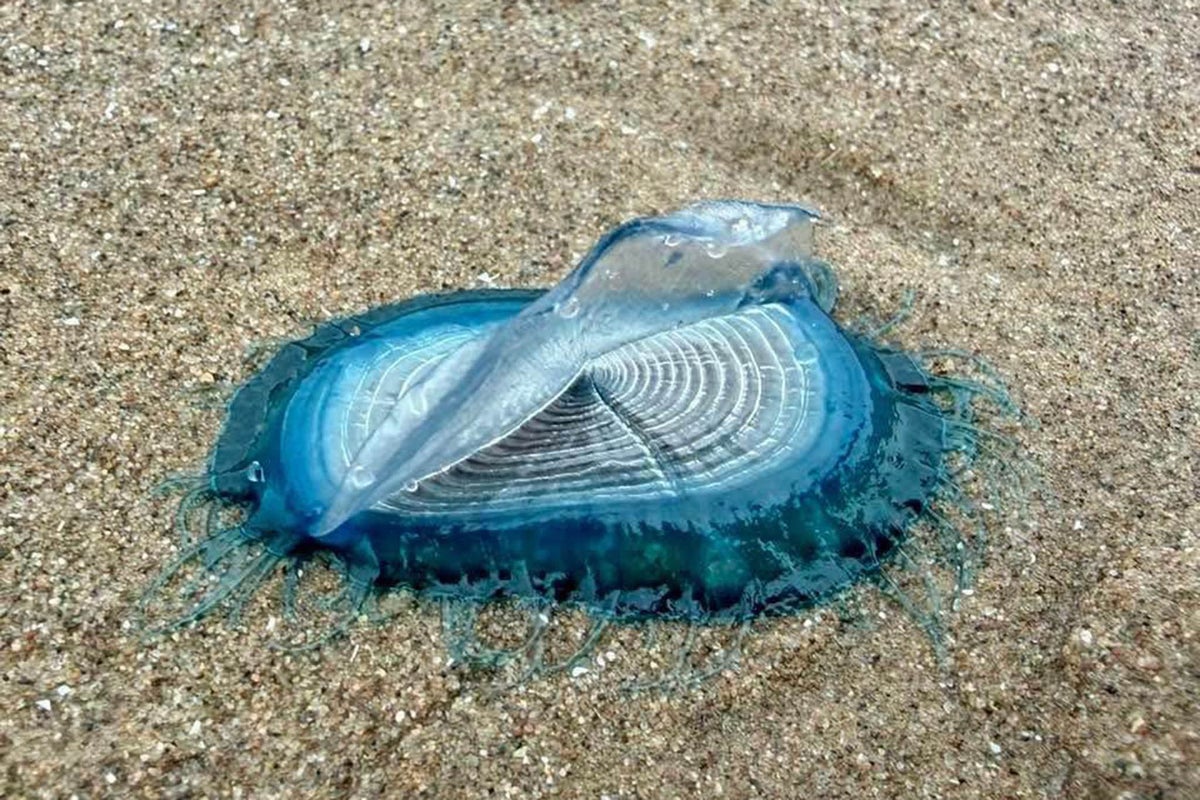
Hundreds of exotic-looking sea creatures have washed up on beaches in northwest England after being driven there by westerly winds.
Beachgoers in Cumbria stopped to photograph the raft of animals, known as “by-the-wind sailors”, that appeared along St Bees beach.
But wildlife experts warned people not to touch them because the can give a “very nasty” sting.
The creatures are closely related to the Portuguese man o’ war, but at only about 2ins long they are smaller.
Louise Nicholson, who lives in the area, said at first she thought the animals were seaweed and almost picked one up.
“There were hundreds of them and there were lots of visitors to the area taking photos,” she told the BBC.
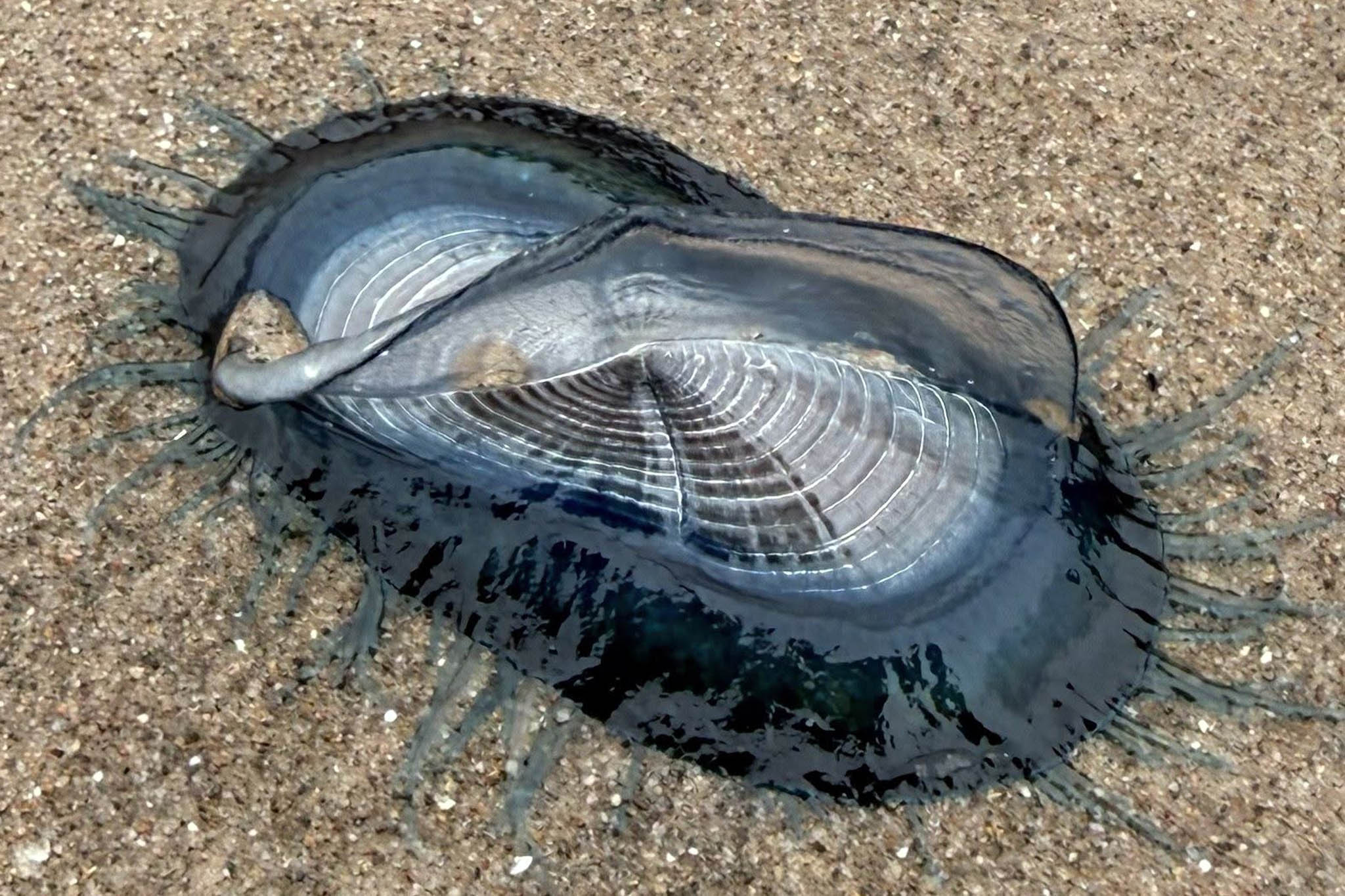 Each by-the-wind sailor is a colony of polyps with different functions (Louise Nicholson)
“They are absolutely beautiful, only about 2ins (5cm) in size. It was a great find on a beautiful day.”
Cumbria Wildlife Trust said: “Despite appearances, this weird and wonderful creature is not a jellyfish! They’re sometimes found washed up on our shores after westerly winds. Look but don’t touch – they give a very nasty sting.”
The trust said: “As the romantic name suggests, they spend their lives drifting on the wind.
“Each sailor is a colony of polyps working as a single entity, with different kinds of polyps having different functions, like feeding, reproduction and defence.”
Their nickname comes from their stiff translucent “sail” that catches the wind and propels them along the ocean surface.
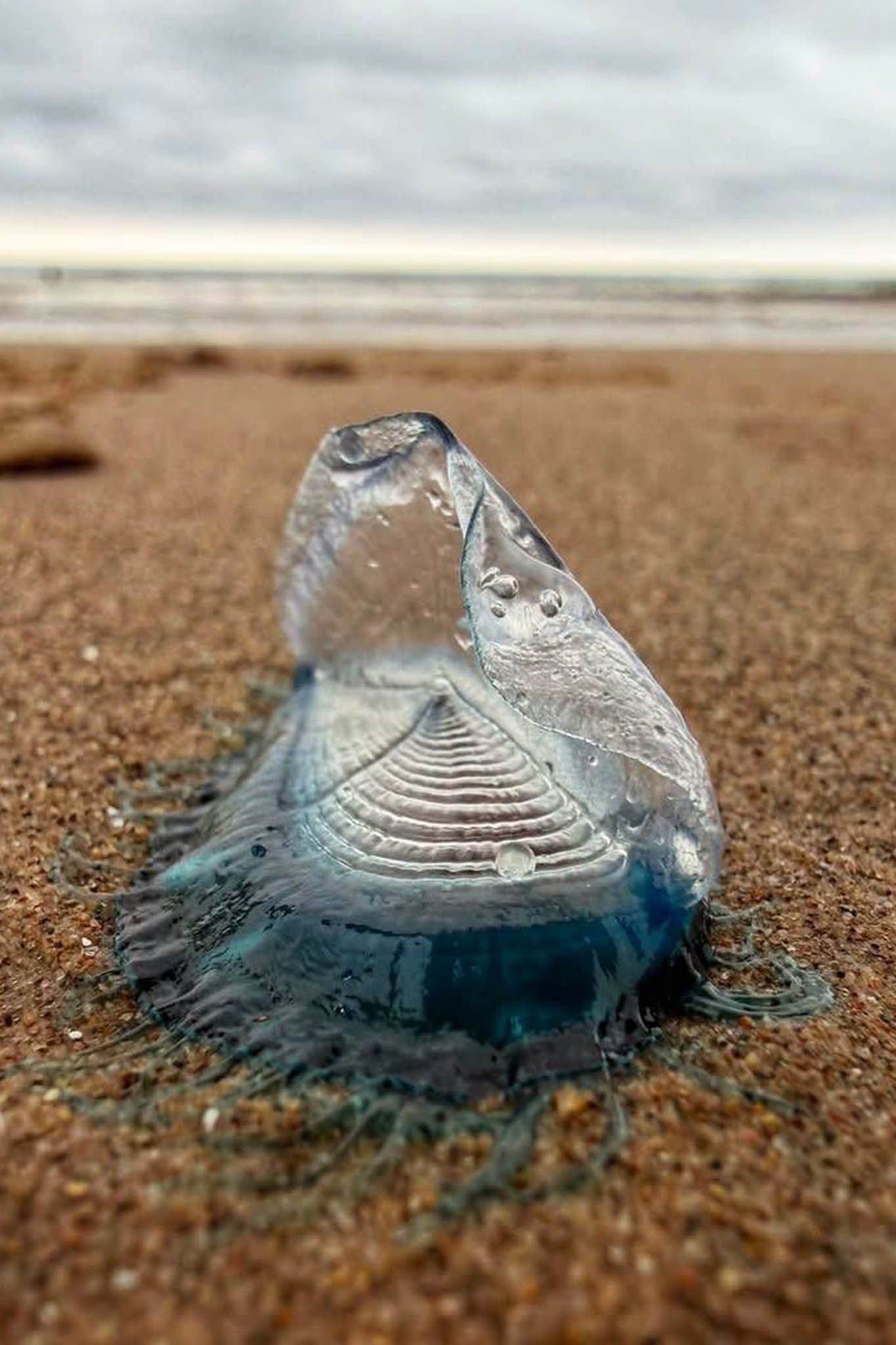 By-the-wind sailors may wash ashore in their hundreds or even thousands after stormy winter weather (Louise Nicholson)
They use their stinging tentacles to prey on young fish.
By-the-wind-sailors may wash ashore in their hundreds or even thousands after stormy winter weather.
Despite their potential sting, they are generally considered harmless to humans.
Head of marine at the trust, Georgia de Jong Cleyndert, said although the “incredible” blue creatures looked like jellyfish, they were actually “colonial hydrozoans” – tiny, predatory animals.
“When conditions are right, particularly after periods of persistent onshore winds, thousands can be washed up along our shores,” she said.