
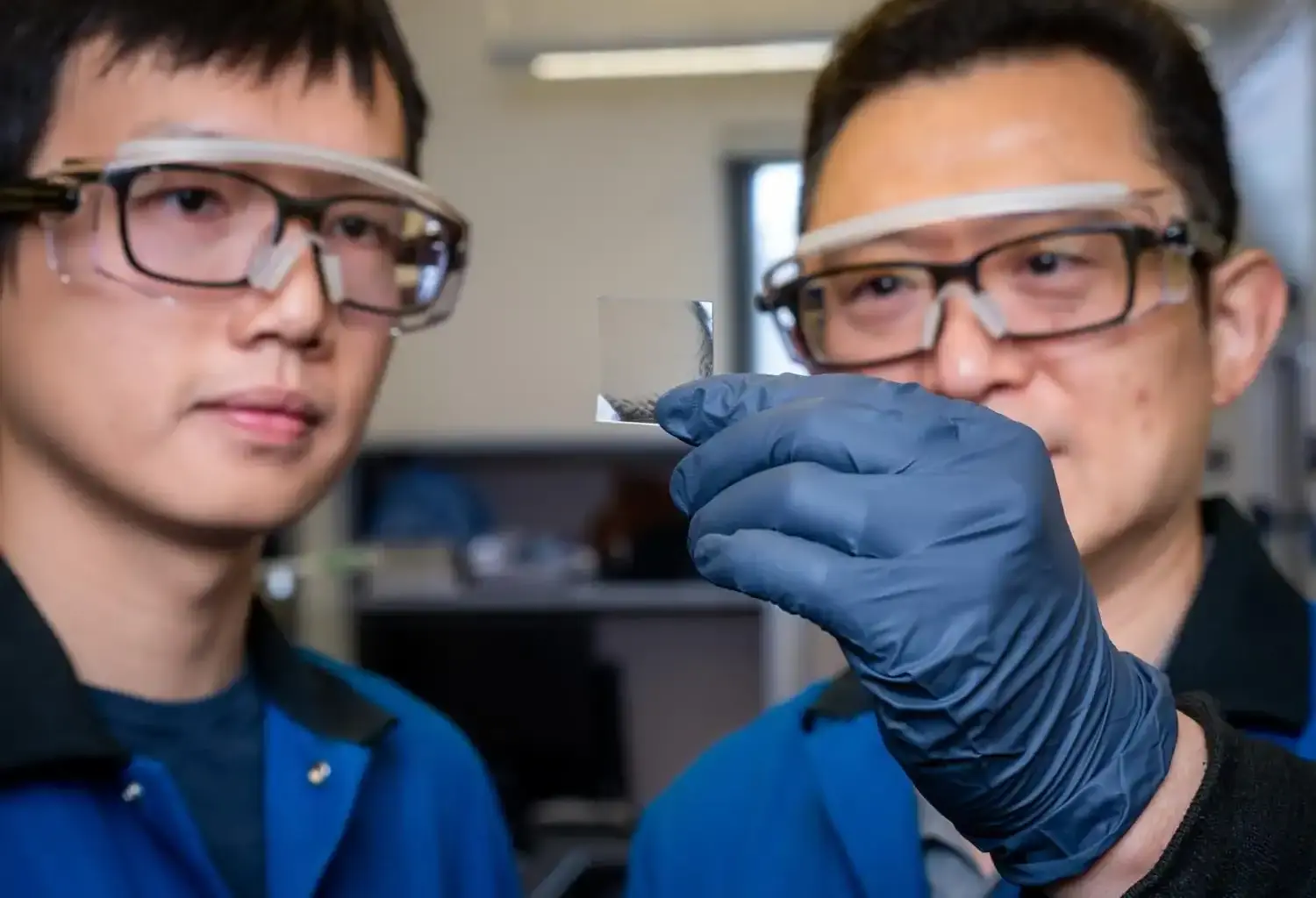
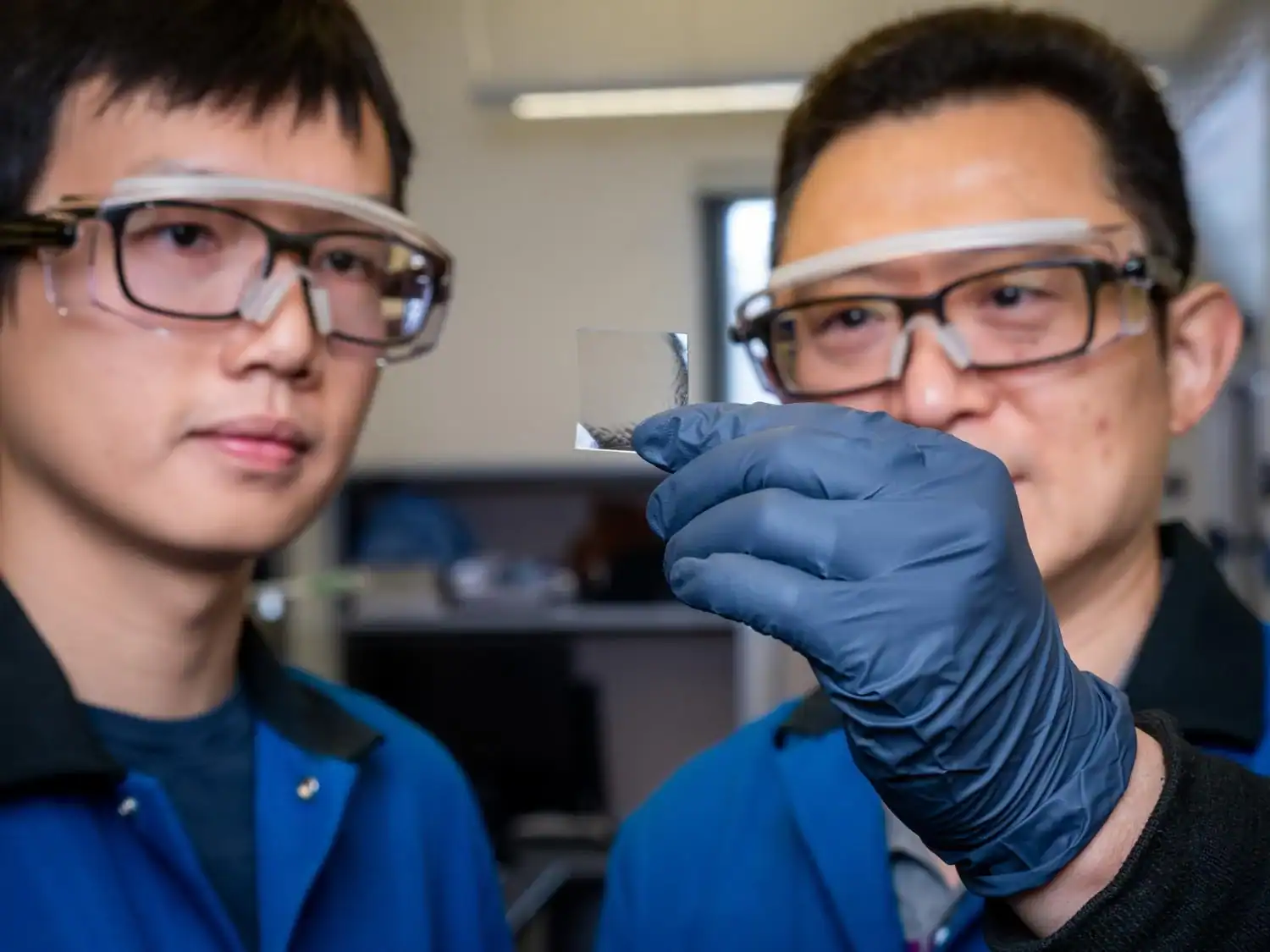
 Chemistry chair Wei Zhang (right) and Graduate Research Assistant Zepeng Lei study plastic materials in the Zhang Lab. Credit: Patrick Campbell / University of Colorado Boulder.
That plastic bottle you just threw away in the recycling bin? According to the latest US industry figures, there is still less than a one-in-three chance that it will be recycled. The US collection rate for PET bottles stood at 30.2% in 2024, while the average recycled content in US PET bottles reached 15.9%.
Even when a bottle is recycled, it may not be turned into another food or beverage bottle. It can instead become packaging, clothing fibre or another product. Repeated processing, contamination and additives can gradually damage the plastic’s properties and limit what manufacturers can make from it.
But what if there was a way to recycle plastic a third, tenth, or even one-hundredth time? Researchers at the University of Colorado Boulder believe this is indeed possible for certain plastics designed with recycling in mind. They described how they broke down a type of hard plastic used in aerospace and microelectronics into its basic building blocks. They then used those building blocks to make the same type of plastic again without sacrificing its desirable properties.
Making and remaking plastic
This sort of highly durable and hard plastic, known as a thermoset polymer, is notoriously challenging to recycle because it can withstand extreme heat and harsh conditions by design. Even if cost was not an issue, conventional recycling can destroy or reduce the properties that make the polymer useful. But a different chemical method could change that.
The material tested by the team was a polycyanurate thermoset, not the PET used to make ordinary drinks bottles. The breakthrough therefore does not provide an immediate way to recycle bottles repeatedly. Instead, it shows how scientists might design future plastics so they can be taken apart and rebuilt.
“We are thinking outside the box, about different ways of breaking chemical bonds,” said Wei Zhang, lead author of the study and chair of the chemistry department at the University of Boulder.
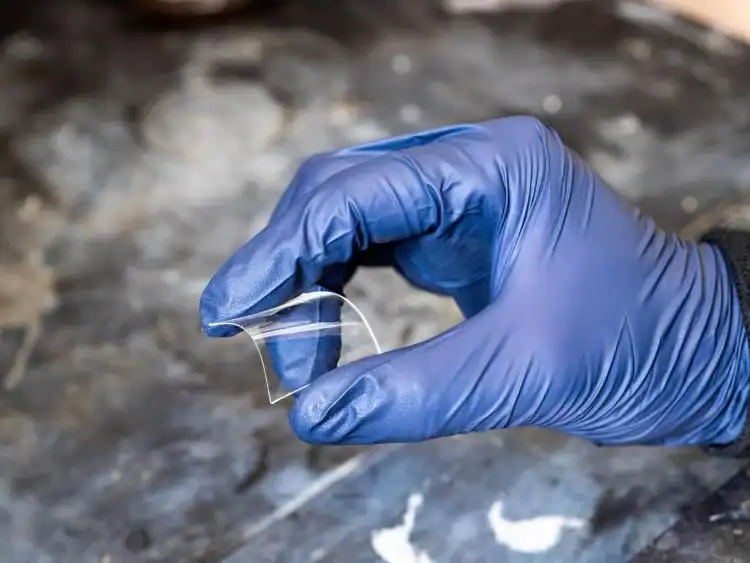 A detail of recycled plastic. Photo by Patrick Campbell/CU Boulder.
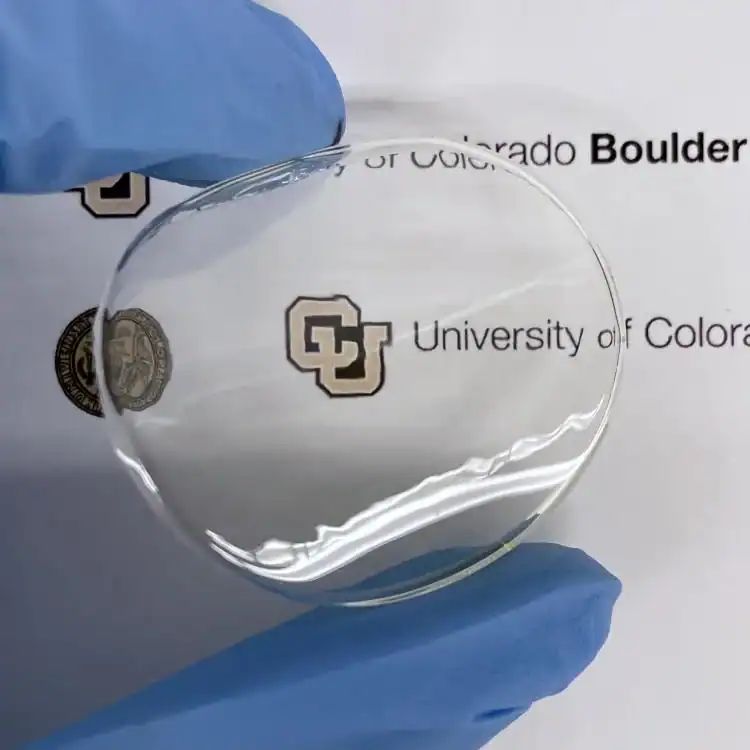 The PCN film directly peeled off from the glass substrate shows high transparency and flexibility. Photo by Zepeng Lei.
Rethinking recycling
In a conventional recycling plant, plastic waste is mechanically sorted, washd and shredded into flakes. The flakes are separated from labels, caps and other contaminants before they are dried, melted and processed into pellets or new products.
Burning plastic is generally considered disposal or energy recovery rather than recycling. Bacterial enzymes are also not normally used in conventional plants, although researchers and companies are developing enzymatic recycling processes for plastics such as PET.
×
Thank you! One more thing…
Please check your inbox and confirm your subscription.
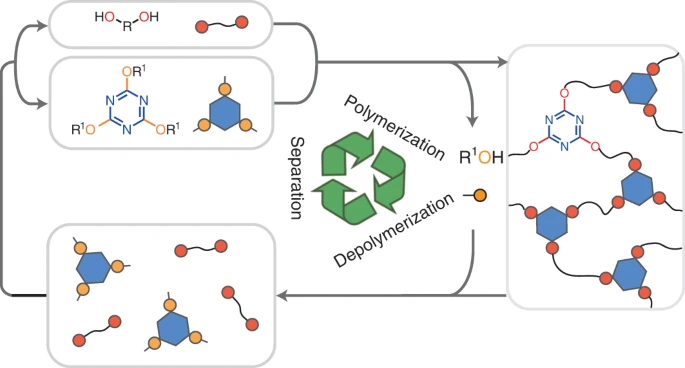 Credit: Nature Chemistry.
Once a recyclable item goes through recycling, the plastic’s quality can degrade with each iteration until it becomes difficult or uneconomical to recycle again. The speed of that decline depends on the type of plastic, its colour, its additives, contamination and the conditions used to process it.
This means that a plastic bottle will not necessarily return as another plastic bottle. Some recovered PET is used to make new bottles, while some becomes food trays, packaging straps or polyester fibres for clothing and carpets.
When plastic is turned into a product that cannot be recycled into material of the same quality, the process is often called downcycling. It can extend the material’s useful life, but it does not create a truly closed loop. Eventually, the plastic may still end up in a landfill, an incinerator or the environment.
Zhang and colleagues decided to follow a different route to plastic waste processing by breaking down the polymers into single monomers, a method the researchers call reversible or dynamic chemistry. These chemical units essentially represent a new class of plastic material that can be used to build things, break them apart, and rebuild them over and over again.
“This chemistry can also be dynamic, can be reversible, and that bond can be reformed,” said Zhang. “We are thinking about a different way to form the same backbone, just from different starting points.”
Although this dynamic chemistry method was tested on a particular type of hard plastic used in niche applications, the researchers claim it could be used on a broad range of classes of plastic. This means there’s a good chance the same method could be applied to reuse those pesky plastic bottles time and time again. The chemical method can be adapted to current industrial recycling plants, the authors claim.
“It can really benefit future design and development of plastics to not only create new polymers, but it’s also very important to know how to convert, upcycle and recycle older polymers,” said Zhang. “
By using our new approach, we can prepare many new materials—some of which could have similar properties to the plastics in our daily life.”
For now, the work remains a laboratory demonstration rather than a solution ready for ordinary recycling plants. It has not shown that a single object can be recycled one hundred times, nor has it made today’s drinks bottles endlessly recyclable.
But it offers something recycling has long lacked: a way to give durable thermoset plastics an escape route. Instead of accepting that strength and recyclability must work against each other, researchers are learning how to build both qualities into the same material.
This article was originally published in 2023 and has been edited to include additional information.
The findings appeared in the journal Nature Chemistry.