
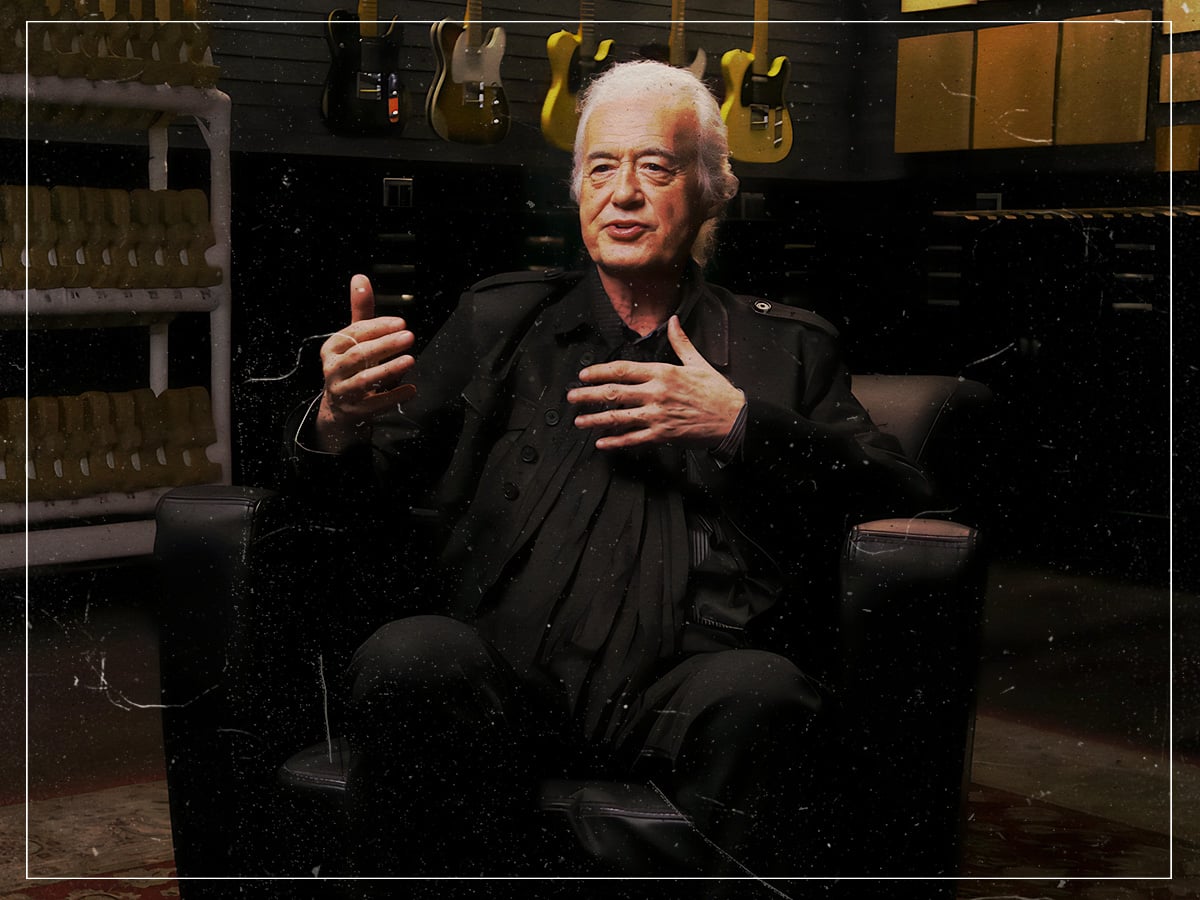
Credit: Far Out / YouTube Still
Sun 2 August 2026 15:37, UK
Jimmy Page never claimed to be one of the greatest guitarists in the world.
As much as he may have loved the blues, he knew that the greatest guitarists who ever walked the Earth came out of the blues tradition, bending the strings and singing songs that came straight from their souls. Although Page had his eye on the blues working with Led Zeppelin, he had something else in mind when working on ‘Stairway to Heaven’.
Having shaped the British blues scene in The Yardbirds, Page’s main focus was to take the rock genre into new places with Zeppelin, featuring songs that formed the foundation of the modern guitar riff. Although Page had tried working on ballads before ‘Stairway to Heaven’, the piece that he had in his mind got its start in classical music.
When talking about the song’s origins, Page told BBC, “I wanted to try to put something together, which started with quite a fragile acoustic guitar playing in the style of a poor man’s ‘Bouree’ by Bach, that sort of aspect”.
While the opening guitar lick bears no resemblance to the initial movement of Bach’s signature piece, the delicate picking pattern Page employs is among the most recognisable in rock music, setting the scene before Robert Plant’s vocals come screaming in.
Despite the tender nature of the intro, Page wanted to make a cinematic experience with the piece, explaining, “The idea of ‘Stairway’ was to have a piece of music whereby it would just keep unfolding with more layers and more moods and the intensity would accelerate on every level.”
It was this kind of ambition that set Led Zeppelin apart from the rock set. While their contemporaries were still concerned with getting harder and faster, Page was looking for classical inspiration to elevate the group. He knew that music needed to evolve and not stagnate in the ideas of what rock and roll should be. ‘Satirway to Heaven’ was, as the name might suggest, a gradual ascent that took stock of every step along the way.
Further reading: From The Vault
The tune is also notable for how dedicated it was to Page and the band’s notion of arrangement. They would resist the urge to reveal their hands too quickly and instead beg the reader to stay with them as they unfurled the full landscape of the track in front of them before reaching the inevitable crescendo. By the time Page finally unleashed his celebrated solo, it felt earned, giving the performance a dramatic weight that has helped define the song ever since.
Crafted as a musical story, the song opens with no drums until three minutes in, with John Bonham playing understated hits compared to his animalistic side. Once the rest of the band starts to kick in, though, everything comes to a standstill before Page’s guitar solo takes over, sounding like he’s in a fierce battle with his guitar throughout the runtime.
By the time the rest of the band follows behind with Bonham’s drum fill, Plant has gone from his tender croon into a feral shriek, singing about the wonders that await him when he finally reaches that eternal stairway. Once the band have exhausted the groove for all its worth, the song gently guides the listener back down, as Plant reiterates the critical line of the song before Page’s haunting arpeggio from the beginning.
Although Page admitted to not knowing that they had created a masterpiece, he did think that they were in an excellent creative place when recording, noting, “It was a very inspired time for us. Eating, sleeping, making music, day after day after day. You can sort of tell when you hear the fourth album, but ‘Stairway’ is a sort of byproduct of it. But it’s obviously been substantial for Led Zeppelin.”
Even though Page may have been looking to go outside the conventions of song structure, ‘Stairway to Heaven’ was beyond anything the rock world had ever seen. Although The Beatles and Bob Dylan may have pushed songwriting forward with their compositions, ‘Stairway to Heaven’ feels like a living entity throughout its entire runtime.
ADD AS A PREFERRED SOURCE ON GOOGLE  The Far Out Led Zeppelin Newsletter
All the latest stories about Led Zeppelin from the independent voice of culture.
Straight to your inbox.