
Council chiefs have tried to reassure the club but a consultation on future management is happening soon
06:00, 06 Aug 2026Updated 09:46, 06 Aug 2026
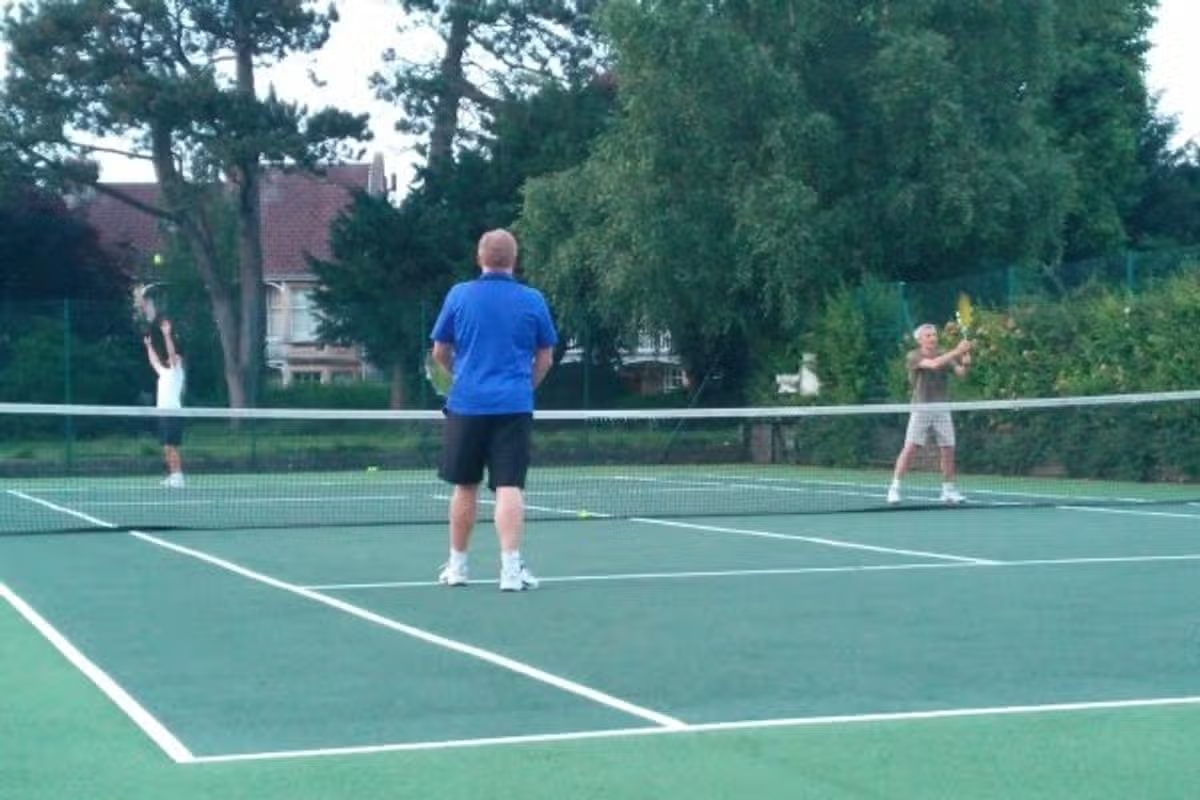
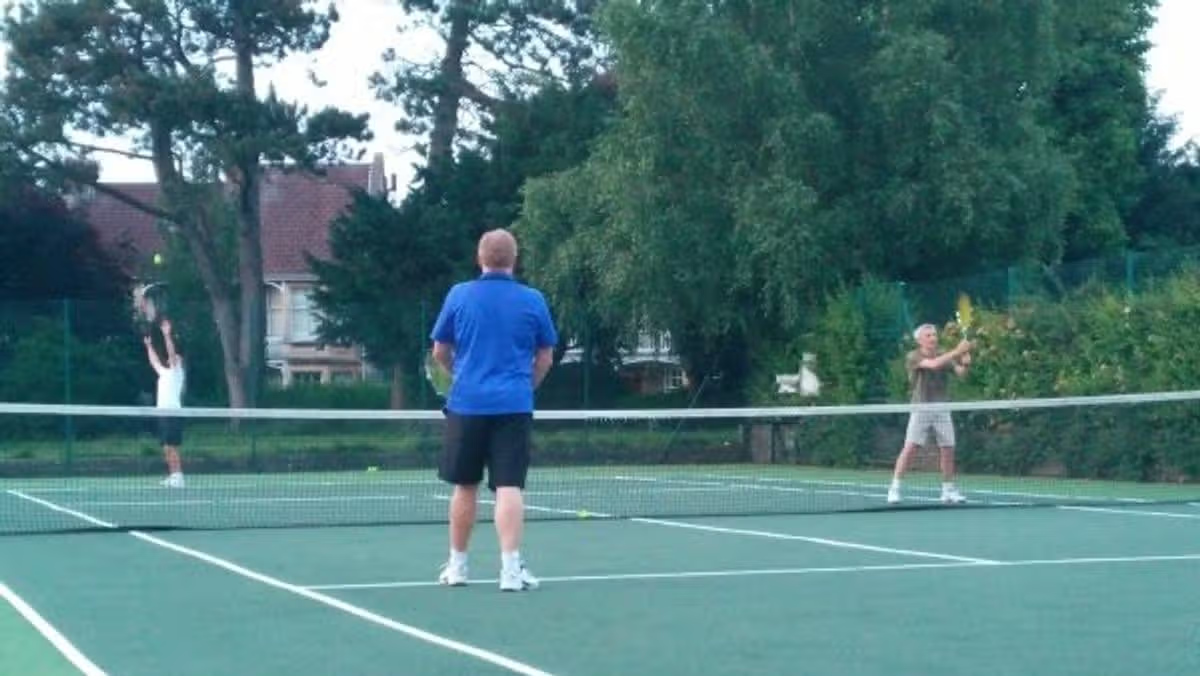
Greville Smyth Tennis Club, based in Greville Smyth Park in Ashton Gate, Bristol(Image: Greville Smyth Tennis Club)
Council chiefs have tried to reassure hundreds of members of a popular tennis club in South Bristol that they are not about to take over their courts and hand them over to a private operator.
But those running the tennis club said they fear a new council consultation on the future of the courts in the park in Ashton Gate could see the end of their club.
The Greville Smyth Tennis Club has almost 500 members – joining is easy for anyone who wants to play tennis on the courts next to the bowls club in popular park near Ashton Gate Stadium.
People can join up for three, six or 12 months and from there, playing is free, with leagues, tournaments, social events and coaching available.
But the council owns the courts and the lease with the club has run out. Instead of renewing it, Bristol City Council is going to start a formal consultation on the future of the courts, and who should run them.
The council owns eight sets of tennis courts in parks around the city and in the past few years five of them have been transferred to the West of England Sports Trust – Wesport – which takes over the courts, brings them up to a better standard if they need it, and then opens them up to anyone with online booking systems and a pay-to-play method.
That has happened at courts in parks in St George, Eastville, Canford, Dingle Park in Sea Mills and Redcatch Park in Knowle. That has been controversial in some of those places, especially where the courts were just open and free to use before, and the Wesport ‘Park Tennis’ model meant people had to start booking and paying.
At Redcatch Park in Knowle there was a huge row between those who wanted the tennis courts to remain being open and maintained by the local park charity volunteers, and those who wanted Wesport to take over and refurbish and maintain them.
At Greville Smyth Park in Ashton, tennis club chair James Mikkelson said the club is committed to supporting the LTA’s vision of making tennis more accessible and inclusive, and added that he believes the current community-led model is already delivering those goals successfully. He said he sees no justification for a different model.
“If this happens, the courts will be taken over, likely by Wesport, who run several other tennis courts within parks around Bristol,” he told members.
“Wesport have done a good job taking over dilapidated, under-utilised courts that don’t have active clubs. The story is different at Greville Smyth TC.
“We’re a self-managed, self-funded community club with almost 500 members, with a long legacy and deep roots in the local community. We don’t believe it’s the right move. And we’re gearing up to fight,” he added.
“In recent years, Greville Smyth TC’s engagement with the local community, and broader Bristol tennis community, has grown.
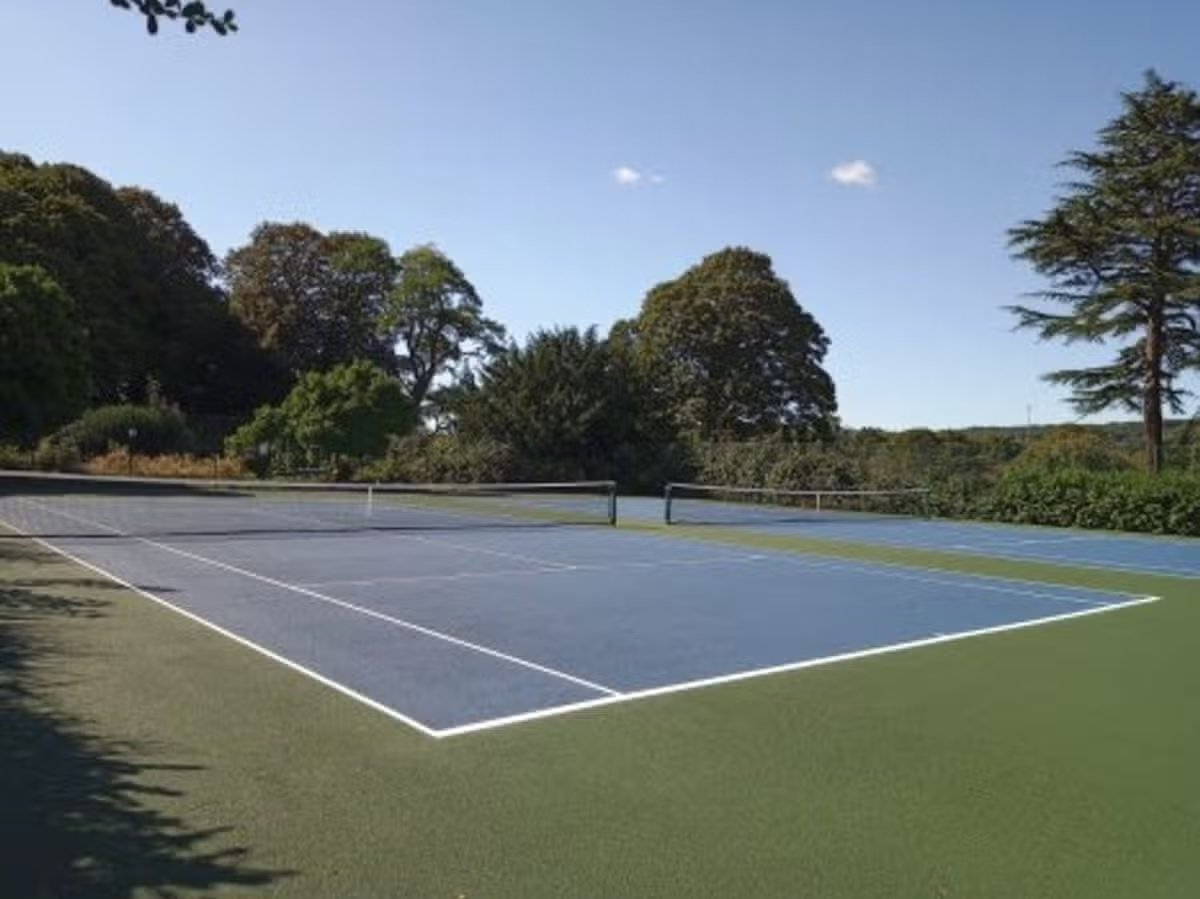
Greville Smyth Tennis Club, based in Greville Smyth Park in Ashton Gate, Bristol(Image: Greville Smyth Tennis Club)
“Through social sessions on and off the court, free walking tennis, new teams in the Avon Tennis league and more, we’ve been working hard to make Greville Smyth an inclusive space to make friends and enjoy tennis.
“And we’re just getting started; with future plans for Floodlight, toilet facilities, PAYG court bookings, and to expand our Equality, Diversity and Inclusion (EDI) tennis sessions,” he added.
Club member Scott Canning said the council has engaged with the tennis club, but believes the communication has been inconsistent and that greater transparency would help build confidence in the process.
He said Greville Smyth TC was one of the largest tennis clubs in South Bristol, and was much more than a ‘booking-only, transactional tennis’ model could provide.
“There’s a community social hub,” he explained. “The club provides opportunities for people to meet new players, build friendships and take part in regular social activities. Replacing the club with a booking-only model risks losing the community spirit that has been built over many years.
“Beyond transactional tennis bookings the club offers far more than court access, including walking tennis, social tennis sessions, competitions, coaching and community events for players of all ages and abilities,” he added.
Bristol City Council said that, while a consultation was about to start about the future of the tennis club, no decisions had been made and it may well be that the council simply decides to offer a new lease to the existing tennis club.
But the main driver for the council to consider is whether its ‘affordable, accessible and inclusive’ for people to play tennis at Greville Smyth Park.
“We have no intention of ending our arrangements with Greville Smyth Tennis Club, and no decisions have been made regarding the future lease of the courts,” said Cllr Stephen Williams, the chair of the communities committee that runs Bristol’s parks.
The council said that it doesn’t get any extra income from the ‘Parks Tennis’ model it has put in place with Wesport at five of the city’s eight courts – any money Wesport makes goes back into making tennis ‘more accessible and affordable for residents’.
What happens at Greville Smyth Park will be keenly watched by the local groups that still operate the tennis courts in two other parks – the Ardagh in Horfield and in Victoria Park on the other side of BS3.
“Before any decision is made, the club and local residents will be invited to have their say through a formal consultation on how the courts should be operated,” added Cllr Williams.
“Any future arrangements will seek to ensure that tennis remains affordable, accessible and inclusive for Bristol residents,” he said.