
 Play Brightcove video
After ITV News exposed years of failure from the health authorities to protect and monitor those exposed to the drug, ministers have now commissioned research on DES, as ITV News Social Affairs Correspondent Sarah Corker reports
The Department of Health has asked scientists at Exeter University to carry out research into the long-term impact of the controversial pregnancy drug DES, following an ITV News investigation.
Diethylstilbestrol, commonly known as DES, was a synthetic hormone prescribed to an estimated 300,000 women on the NHS between the late 1930s and 1980s to treat several issues, including miscarriage, until it was linked to rare cancers and infertility in the daughters of those who took it.
After ITV News exposed years of failure from the health authorities to protect and monitor those exposed to the drug, ministers have now commissioned research on DES, which is expected to take at least six months.
Researchers at Exeter University are looking for women exposed to DES during pregnancy, their children, grandchildren and great-grandchildren to share their experiences. Those taking part in the project will receive £28.
It is part of a systematic review of evidence on the drug, and aims to examine the physical and mental health effects on families over time, as well as identifying gaps in the current evidence for future research.
A leaflet sent to DES campaigners from the university states that “the people exposed to DES before birth may have a higher risk of some health problems, and it may also affect later generations”.
“This study will help provide a clearer and more up-to-date understanding of the long-term impact of DES,” researchers said.
A bottle of Stilboestrol tablets, also known as Diethlystilbestrol or DES. Credit: ITV Tonight / Royal Pharmaceutical Society Museum
NHS England has also set up a DES advisory group made up of senior clinicians to ensure that women receive the right medical treatment.
The remit of the group, which includes the Patient Safety Commissioner, will be to help establish local treatment pathways for DES patients within the NHS, and to ensure that frontline staff are aware of the intergenerational effects of the drug.
It will also consider whether lifelong cancer screening is needed, something that DES patients in other countries such as the Netherlands are offered.
If you or anyone you know has been affected by this issue or has a story to share, you can get in touch by emailing: socialaffairs@itv.com
Henrietta Hughes, the Patient Safety Commissioner, said: “What we’ve seen in other countries is that centres of excellence have been established where there is routine screening and monitoring of people who’ve been exposed to DES; that’s what I would like to see happen here.
“We need a real join-up in the system so that gynaecologists, cancer specialists and also those dealing with the psychological aspects are all brought together in one place.”
In 1970, Jennifer Bradley, from Hale in Greater Manchester, was prescribed DES for six months during her pregnancy with her daughter, after suffering a miscarriage.
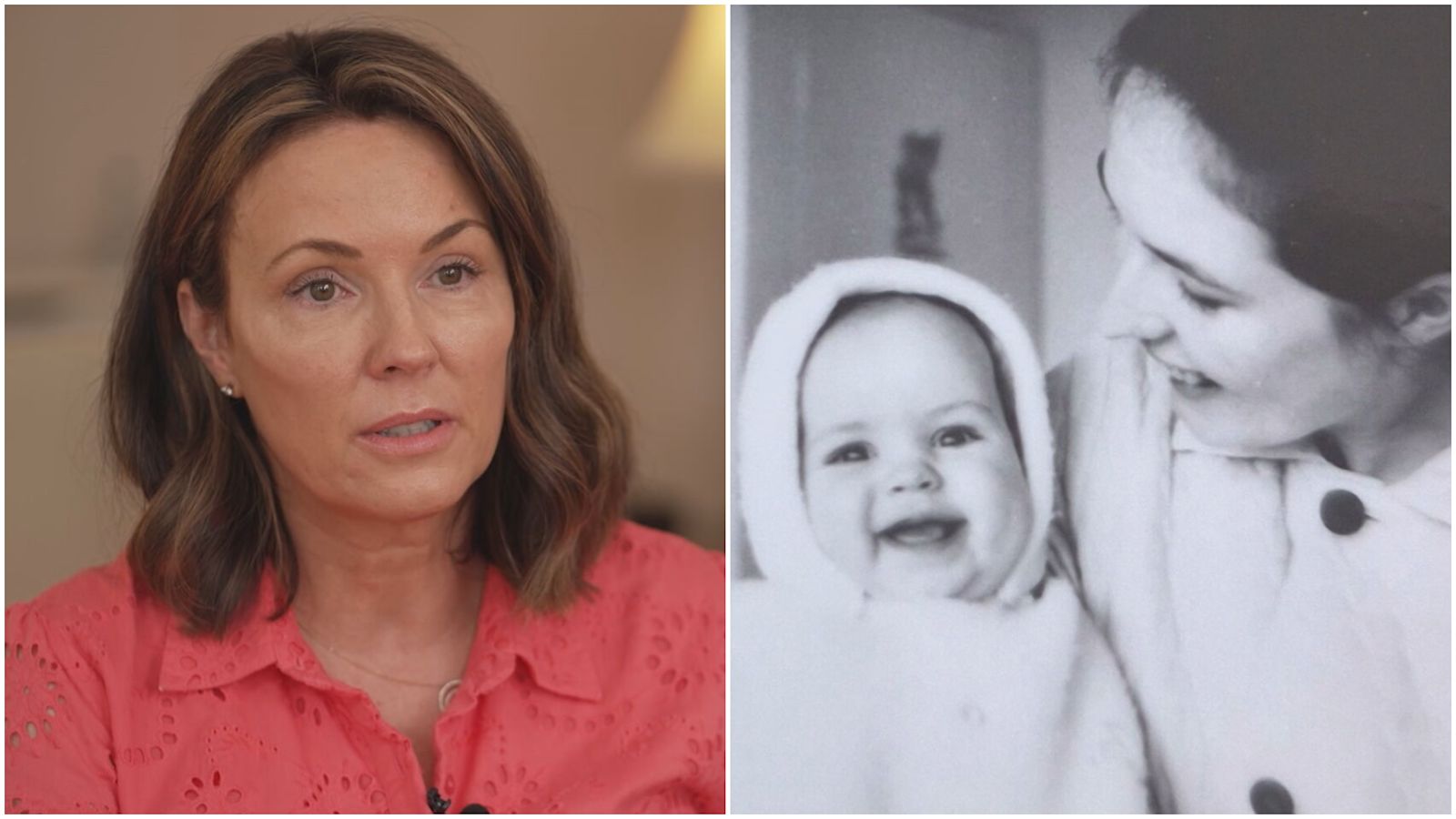
Susie Martin (right) and her mother Jennifer Bradley, from Hale in Greater Manchester. Credit: ITV News
She recalled being told that the drug was “completely safe” by doctors. Yet at that time there was already mounting scientific evidence from around the world of the drug’s sinister side effects.
Ms Bradley recalls watching a news report in the mid-70s about DES and raised concerns with her GP.
“He wouldn’t even look at my notes, and he completely dismissed it,” she told ITV News.
“He said that you don’t worry about things that never happen: ‘You may walk out of here and go under a bus, so don’t worry about it’.
“I was outraged.”
The truth was her daughter Susie Martin had been poisoned in the womb by DES.
She has had lifelong gynaecological problems, and since her teenage years has had more than 20 surgeries and operations to remove abnormal cells.
“I am 40 times more likely to get cancer than those not DES exposed; it’s not just reproductive cancer, it’s breast cancer, pancreatic cancer,” Ms Martin told ITV News.
“It’s always hanging over you: are you suddenly going to get a debilitating cancer? Most medical professionals still don’t know about the drug; that’s why this new research project is so important.”
Ms Bradley said she was “absolutely furious” when she found out the truth, and added she “feels so sad and guilty for what happened” to her daughter.
DES was once hailed as a wonder drug to prevent miscarriage, prescribed around the globe to millions of women. It’s become a medical disaster.
Susie Martin as a baby, with her mother Jennifer Bradley. Credit: ITV News / supplied
Medical research suggests pregnant women who took DES may have a 30% higher risk of breast cancer.
Their daughters are 40 times more likely to develop clear cell adenocarcinoma of the vagina and cervix, a rare and aggressive form of cancer.
A long-running ITV News investigation into DES found that authorities did not act upon warnings about the dangers of the drug, and the links to cancer were ignored for years.
It was only after our team scoured through the public health archives that we exposed the scale of failure.
The Medicines and Healthcare products Regulatory Agency (MHRA) had falsely claimed that doctors were advised to stop using the drug for use in pre-menopausal women in 1973, a statement that our reporting has exposed as inaccurate.
The regulator then admitted that information was incorrect, and the drug was not stopped for use in pregnancy until the late 1980s, more than a decade after cancer risks were known.
An ITV News investigation exposed that warnings over the sinister side effects of the drug DES were not acted on for decades, Social Affairs Correspondent Sarah Corker explains
In September, the MHRA admitted it had misled the public for up to 25 years about when the drug was withdrawn and issued an apology.
The Department of Health has requested the regulator locate, where possible, medical records detailing how many women were prescribed the drug.
Drawing parallels with other pregnancy drug scandals such as Thalidomide, Sodium Valproate and Primodos, the Patient Safety Commissioner Henrietta Hughes told ITV News: “I think this is one of the great scandals that we have in our health system that the years roll by.
“The health system doesn’t listen, the government doesn’t act. Patients may experience cancer, they may experience other harm and may die waiting to get an answer. I think that’s totally unacceptable.”
In November 2025, the government admitted “the state got this wrong” on DES, and the then-Health Secretary Wes Streeting personally apologised to those impacted.
Streeting wrote a letter to victims of the scandal recognising and apologising for their “harrowing” experiences, adding that women “understandably feel that their healthcare system failed”.
The Labour MP for Bournemouth West, Jessica Toale, who is leading the calls for change at Westminster, warned that many doctors still don’t know anything about DES.
“One woman I met had to buy a medical encyclopedia herself just to try to find out what was wrong with her,” she said.
“Symptoms are minimised, pain is diminished, women are disbelieved, ignored, often dismissed. That’s why it’s so important that GPs know about this issue and know about some of the symptoms and complications that these women can face.”
“We massively need to change the way women’s health is treated within the entire health system.”
Clare Fletcher, partner at Broudie Jackson Canter, representing the UK victims of the DES scandal, said campaigners are demanding a full public inquiry to get answers
Alongside specialist treatment, what many DES women now want is a full public inquiry into how they were failed so catastrophically for decades.
Clare Fletcher, partner at Broudie Jackson Canter, representing the UK victims of the DES scandal, stressed the urgency of an inquiry for survivors and their families, as many are getting older.
“If we don’t get the answers we need, we will be going to the new secretary of state and pushing for a full meeting and demanding a full statutory public inquiry, so that they can get the answers to what happened to them,” she told ITV News.
“The mothers are now in their 80s and 90s, and they carry with them a huge guilt about the drug that they took in good faith, and the impact that has had on their children.
“For them, hearing the truth about what happened, understanding that it wasn’t their fault and that the guilt that they’ve carried wasn’t their to carry at all, is such an important thing.
“Truth without accountability causes more harm than not.”
A Department of Health and Social Care spokesperson said: “The effects of DES are still being felt across generations, yet for too long health professionals were unaware of its impacts and the support that should be available to those exposed. But that is now changing under this government.
“We are working with local Cancer Alliances to ensure every NHS clinician is alive to the impact of DES and the associated screening guidance, and we have commissioned a systematic evidence review on the intergenerational effects of DES, to help strengthen support for those impacted.”
Information or support about the issues raised in this report can be found online:
If you or anyone you know has been affected by this issue or has a story to share, you can get in touch by emailing: socialaffairs@itv.com
Reporting History sees journalists join News At Ten anchor Tom Bradby to revisit their remarkable on-the-day reports of the defining events of the modern age. Listen to the episodes below…