
That gap continues to be bridged by its ownership structure. In 2025, the parent company waived £16.7m of debt, effectively recapitalising the business and allowing directors to sign off the accounts on a going-concern basis.
This is a club with strong demand, rising revenues and a full membership — yet one that still depends on deep-pocketed backing to sustain itself.
An aerial shot of Loch Lomond Golf Club and Rossdhu House (Image: Gary Lisbon)
It is not an isolated case so much as an extreme expression of a wider truth: in Scottish golf, value increasingly sits around the course rather than within it. Nowhere is that clearer than in the property market.
New analysis by HomeBench shows East Lothian has overtaken St Andrews and the wider Fife market for high-end golf home sales. There were 91 transactions above £500,000 in East Lothian in 2025, compared with 68 in St Andrews and Elie & Earlsferry, a shift that has continued into 2026.
Archerfield now leads Scotland on price, with average values close to £1.6 million, while Gullane and Elie have also moved beyond the £1m mark. St Andrews, by contrast, sits just below that level.
The implication is not that St Andrews has diminished, but that demand is spreading — and that proximity to tournament venues, modern resort infrastructure and lifestyle offerings is reshaping where capital flows. The Genesis Scottish Open underlines that shift.
Archerfield has become one of Scotland’s most active luxury golf property markets (Image: Will Scott)
This year’s event drew a record 91,128 spectators, up from 88,735 in 2025, with strong daily attendances despite disruption from haar on the Saturday. As a co-sanctioned event between the PGA Tour and DP World Tour, it continues to deliver consistent exposure to a US audience.
That matters because the capital following that audience is already visible.
According to Thorntons, North American involvement in Scottish golf investment has increased noticeably across the past two years. From Cabot’s expansion in the Highlands to investment at Carnoustie and development at Feddinch, overseas buyers are targeting assets that combine golf with accommodation, property and multiple revenue streams.
The model is clear. Pure golf operations, even at the high end, can struggle to generate sustainable returns on their own. Wrap them in real estate, hospitality and destination appeal, and the economics begin to look very different.
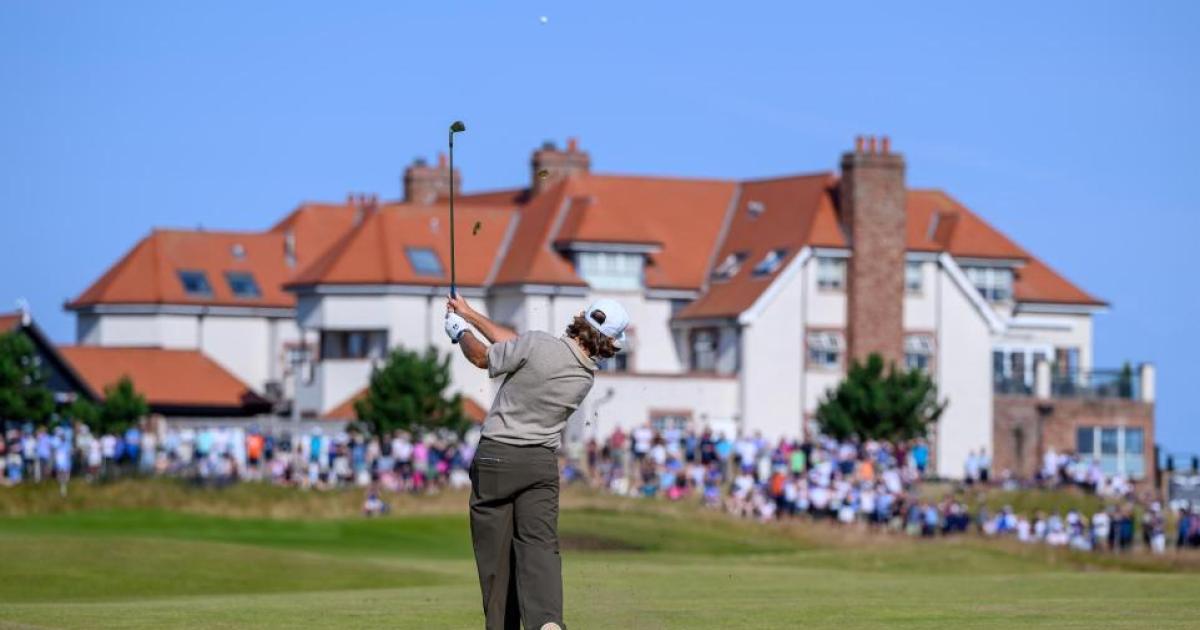
Tom Kim celebrates his 2026 Genesis Scottish Open victory (Image: Malcolm Mackenzie/PA)
That helps explain an apparent contradiction at the heart of the sector.
On one side sit globally-recognised venues attracting record crowds, rising property values and sustained international investment. On the other are operating businesses managing tight margins, rising costs and, in some cases, structural dependence on external support.
Scottish golf is not short of demand. It is not short of capital. But those two forces are not always landing in the same place.
Loch Lomond shows what it takes to maintain a top-tier private club. East Lothian shows where buyers now see lifestyle value. The Scottish Open shows how that story is being sold to the world.
The question is whether the underlying business of running a golf club is keeping pace with the value being created around it — or quietly falling behind.