
Divers monitoring rare seahorses in Studland Bay in Dorset have witnessed more than they bargained for this summer, observing elaborate courtship dances between couples, the passionate intertwining of tails, and even one male seahorse giving birth.
However all the data collected by the Isle of Purbeck Sub Aqua Club and researchers from the University of Southampton is helping scientists understand more about the protected species and its fragile seagrass habitat.
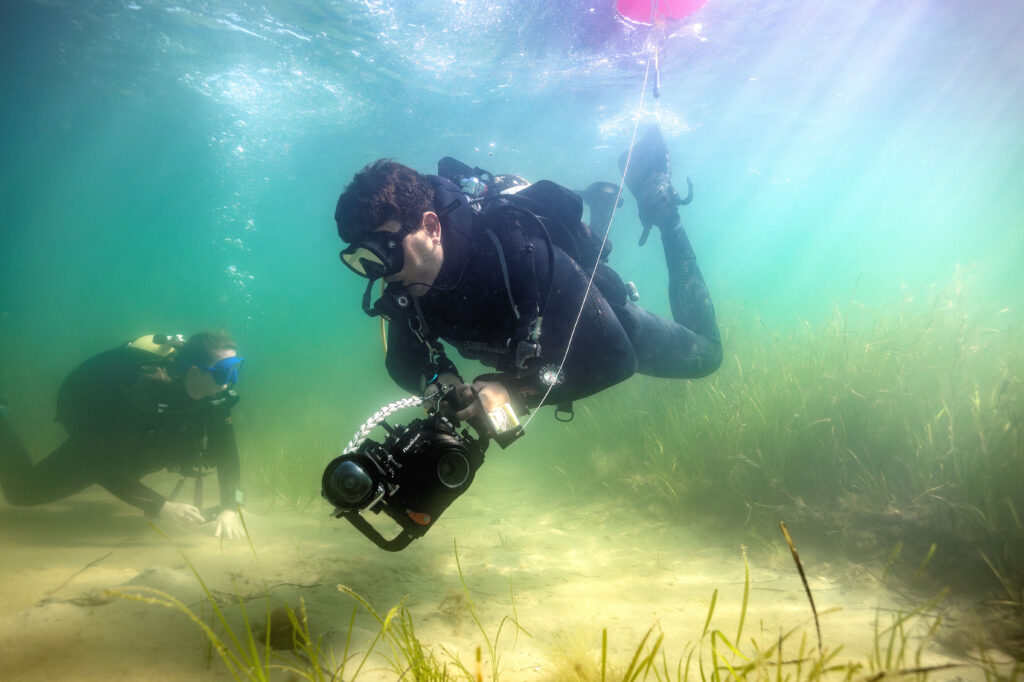 Brad Wakefield / The National Trust
The seahorses are recorded and photographed as part of a long-running monitoring programme organised by the University of Southampton, with specialist licences held by The Seahorse Trust
Hidden underwater world
The information about the seahorses will also be published on a new Studland Bay Marine Partnership website informing more people about what is going on beneath the waves at South Beach in Studland.
The volunteer divers say they are regularly locating seahorses during surveys, but it’s too early to draw conclusions about the 2026 population trends.
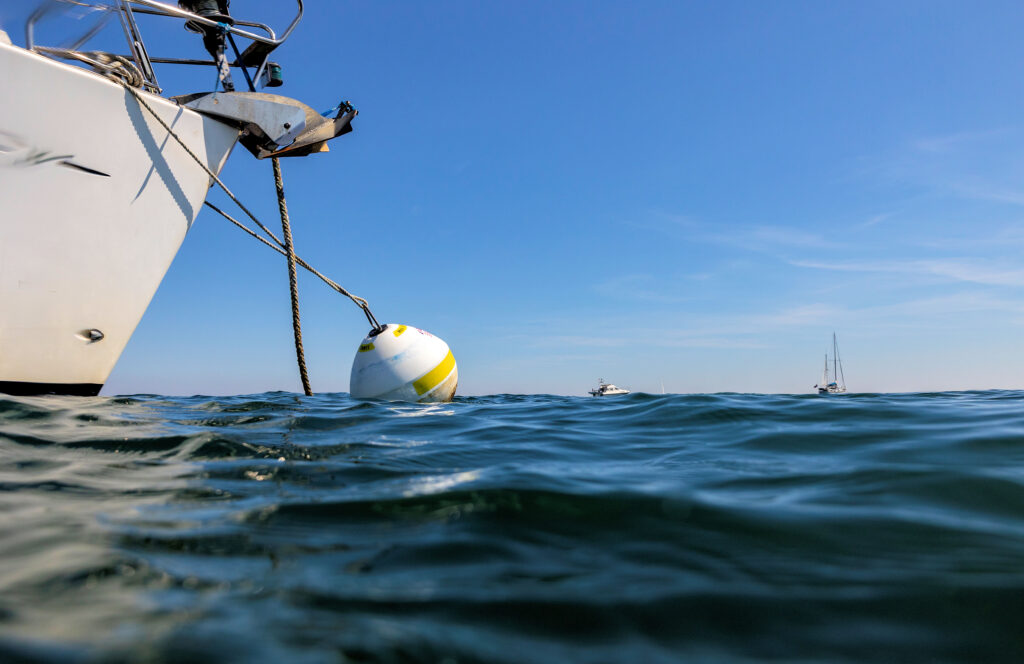
The website also explains how boaters can help protect this rare and fragile marine habitat by using eco-moorings rather than traditional anchors, which can uproot the seagrass.
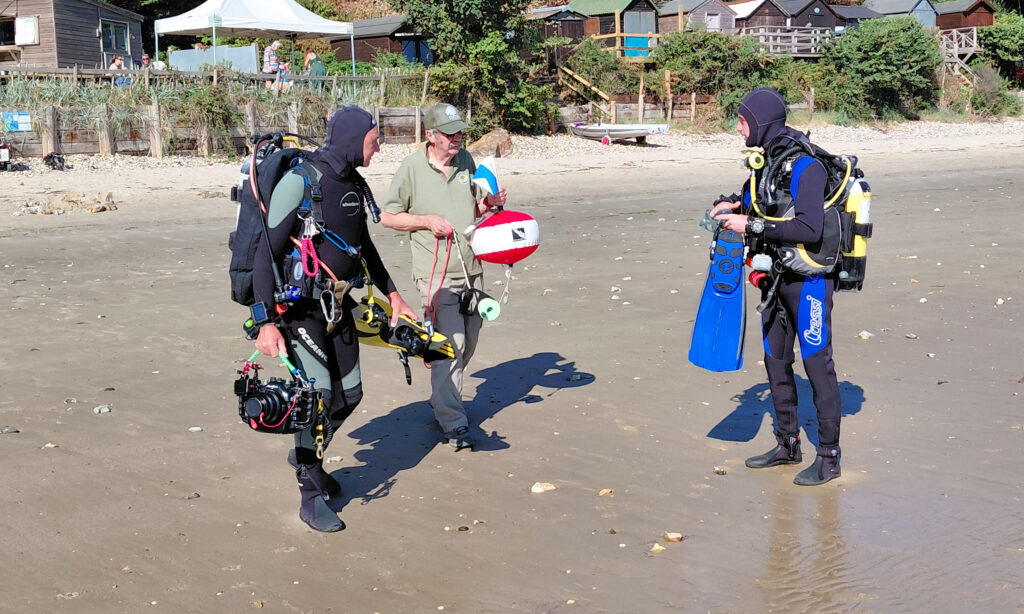
Ken Collins with two divers preparing to go out on another session at Studland
“Hopeful signs of a healthy population”
Ken Collins, research fellow and diving officer at the University of Southampton, was fortunate enough to witness a male seahorse giving birth, and said:
“The really exciting thing about our last dive, two weeks ago, was seeing a number of pregnant male seahorses and one about to pop.
“Male seahorses fertilise the eggs inside their brood pouch and incubate them for a month, controlling the water flow, oxygen, and nutrient levels to the young, so it is a true male pregnancy.
“After a month they are then about ready to start releasing them through strong body spasms, several hundred fully formed, tiny fry – but like most fish, they leave the young to fend for themselves, so very few survive.
“This year, we have seen the courtship dance between males and females, and the young being released, these are all hopeful signs of a healthy population in Studland Bay.”
“We might see three in an hour’s dive, but the encouraging thing is that the number we are seeing tends to be increasing.
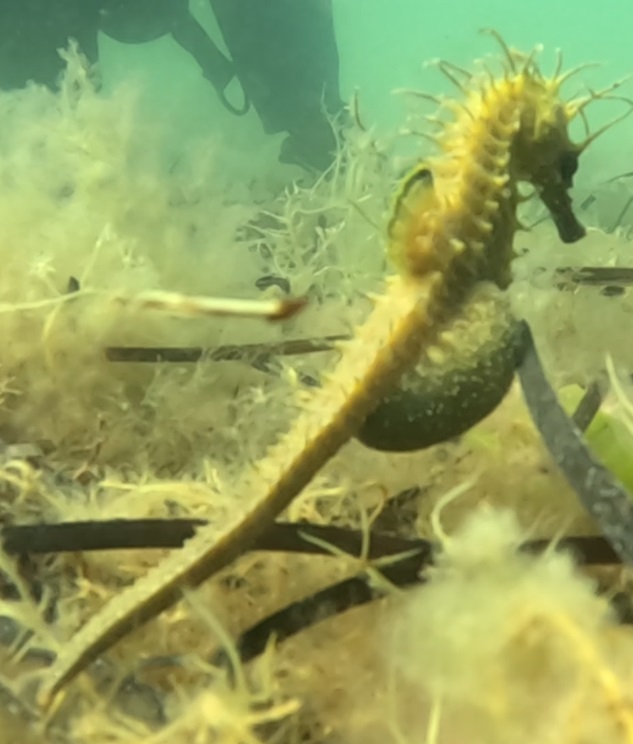 KEN COLLINS
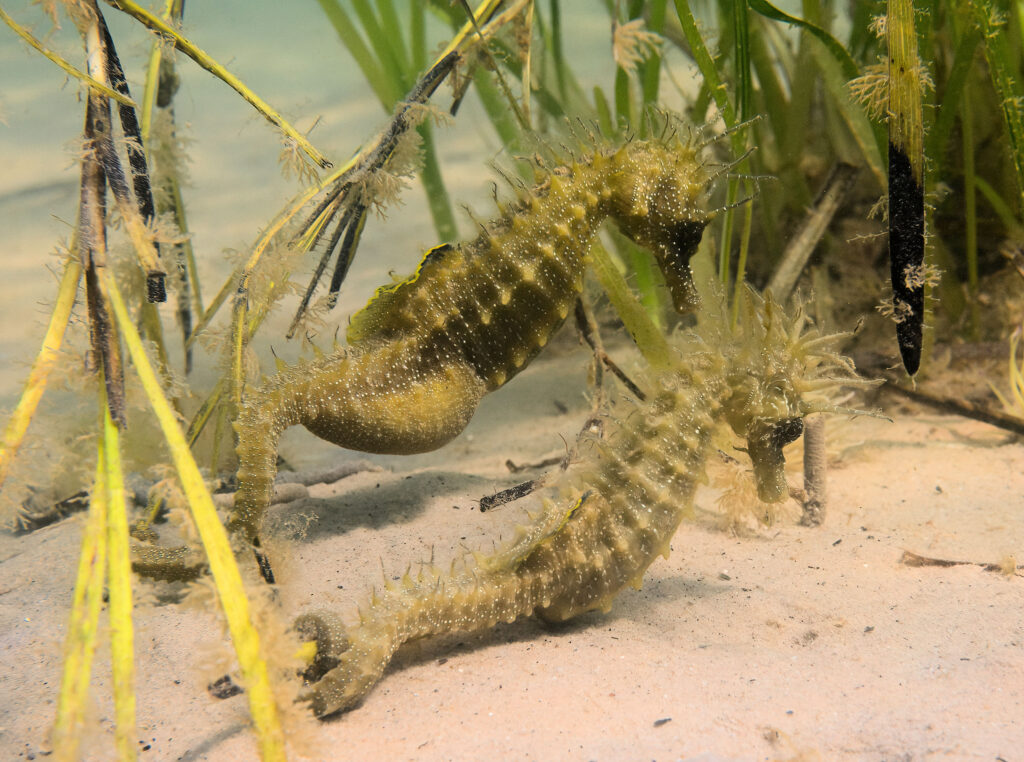
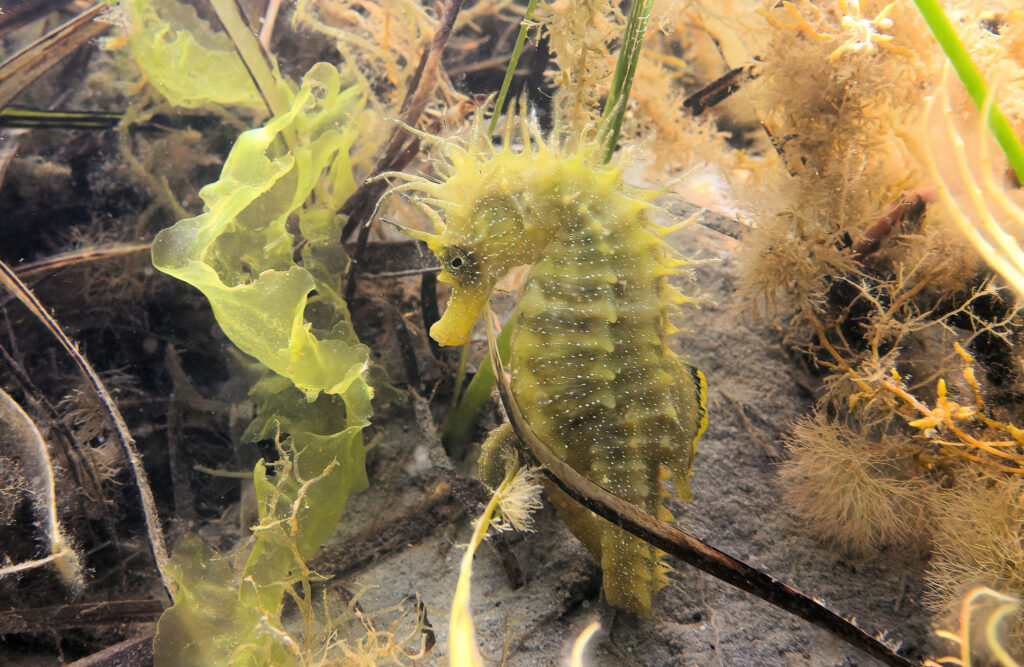
A pregnant male spiny seahorse spotted off South Beach, Studland, by Ken Collins of Southampton University
“Stars of the show”
Ken Collins added:
“They are very well camouflaged, so they are not very well studied, and we don’t go out with an expectation of seeing them. As a scientist, I can say that the trend is looking good, but it’s difficult to quantify.
“The seahorses may be the stars of the show, but they are also indicators of the wider health of the seagrass ecosystem. Our volunteer divers have spent thousands of hours collecting information about the species and habitats found in Studland Bay.
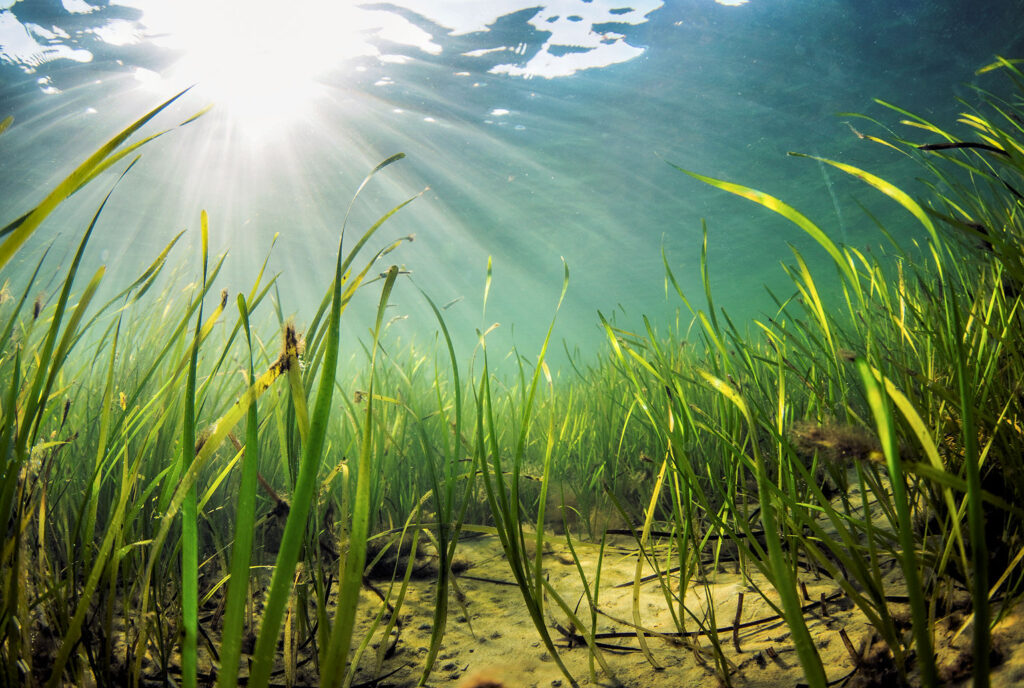
“Seagrass is a great habitat for baby fish to hide in and we have seen a whole variety of them, so even when we don’t get to see seahorses we will find a lot of other life in the seagrass meadows, like wrasse, pollock, bream, and sand eel.
“One of the most encouraging things is that old holes in the seagrass meadows caused by anchoring chains are filling in again thanks to the voluntary no anchor zone, so the fields are gradually recovering.
“Our divers have been seeing encouraging numbers of seahorses this summer, but it is still too early to say whether the population has increased in 2026, and natural populations fluctuate anyway, year on year.
“We do have lots of evidence that the meadow is getting stronger year on year, and the increase in seahorse sightings has coincided with getting protection for the bay.”
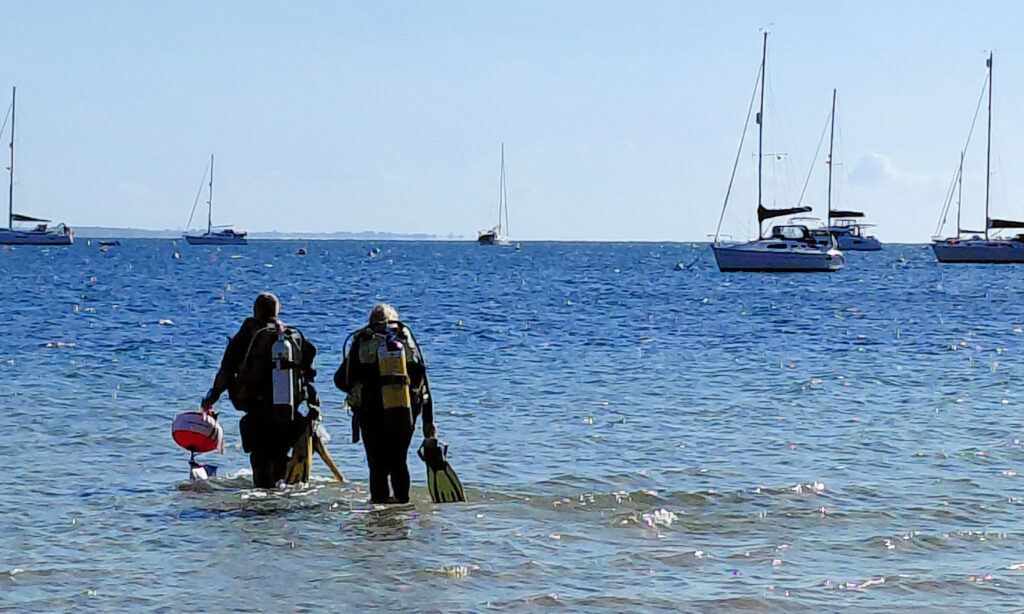
Another pair of divers head out to the seagrass meadows of Studland Bay
Not everyone chooses to pay
The protection comes through Studland Bay’s voluntary no-anchor zone, introduced in 2021 to reduce damage caused by traditional anchors dragging through the seagrass.
Instead, boaters are encouraged to use one of the bay’s 87 ecomoorings, which hold vessels securely without anything scraping across the seabed.
Although the ecomoorings are becoming increasingly popular, maintaining them costs around £100,000 a year, with the voluntary £7.50 daily mooring charge covering only about a fifth of those annual costs, as not everybody chooses to pay.
Teams from Studland Water Sports at Knoll Beach patrol the project, like ambassadors, and will go up to moored boats to explain how important it is to use them, and even take payment if necessary.
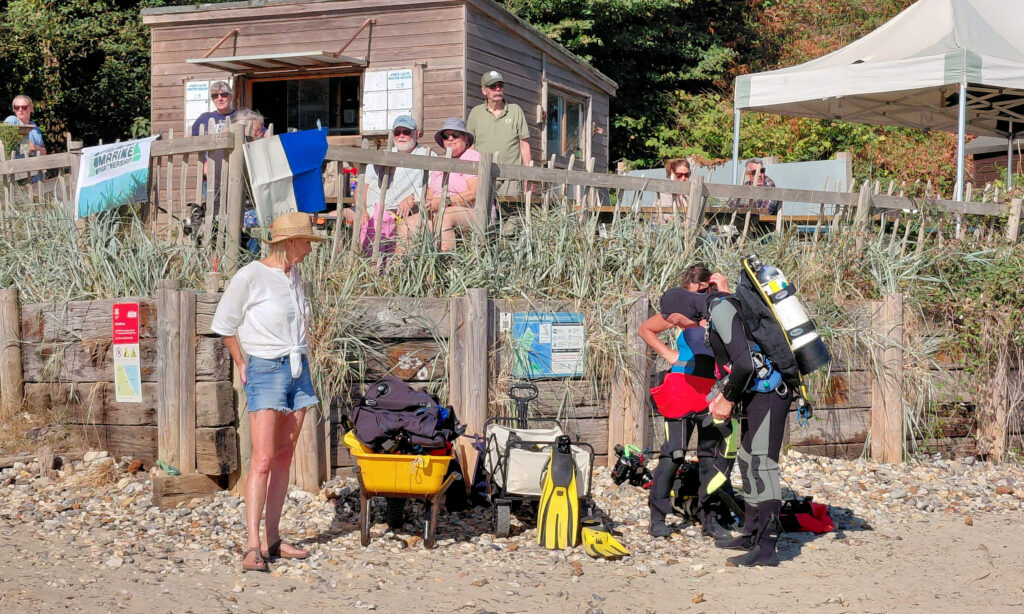
Studland Bay Marine Partnership communications officer Cathy Lewis, left, with the team from Southampton University
“Rich and thriving marine landscape”
Cathy Lewis, communications officer for the Studland Bay Marine Partnership and the National Trust, said:
“People are often amazed to discover that beneath the surface of Studland Bay is a rich and thriving marine landscape.
“Our new website aims to bring that hidden world to life. Seahorses capture people’s imagination, but they are just one part of a much bigger story.
“Whether people are interested in marine wildlife, seagrass conservation or boating, we want them to understand why this habitat matters and how small actions can make a real difference to its future.”
The annual figures of seahorses in Studland Bay and other related data won’t be available until the end of the diving season in autumn 2026.
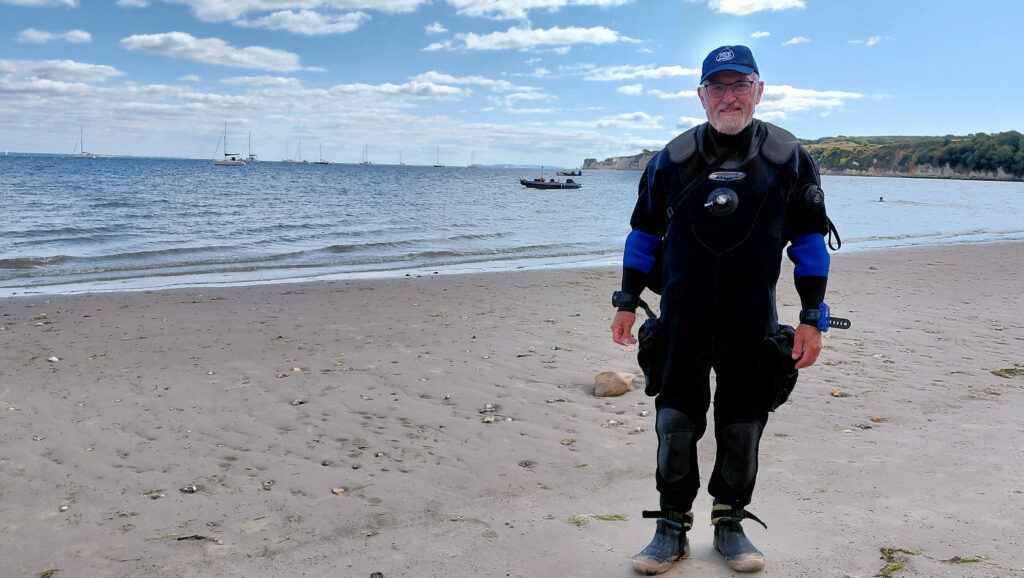
Nick Reed is one of several Swanage divers from the Isle of Purbeck Sub Aqua Club who have helped monitor the seahorses this year
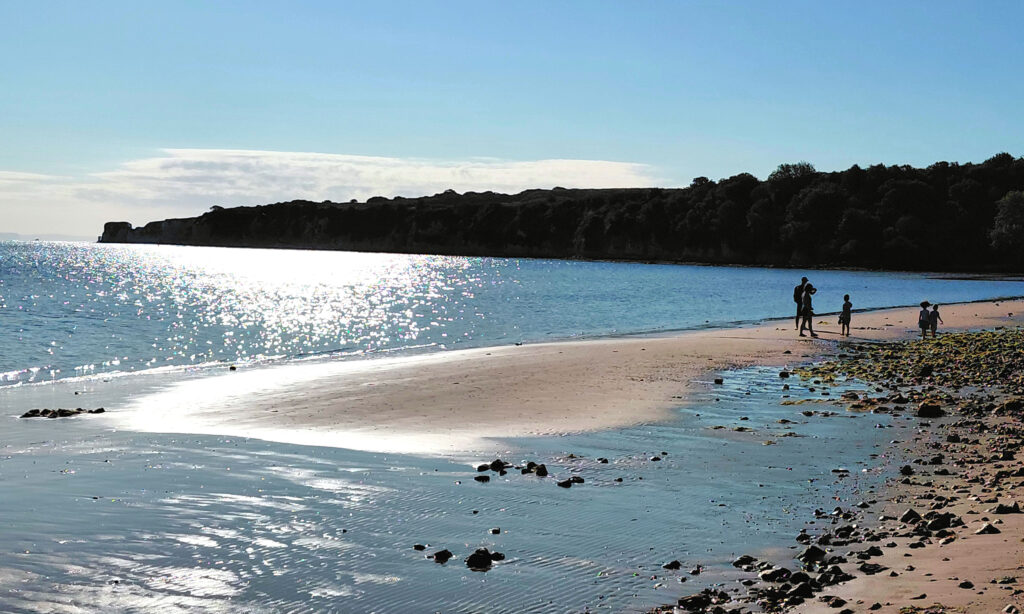
South Beach, Studland, looking beautiful in the morning light
 TOM MILLS
Divers have witnessed a number of seahorse courtship dances in their monitoring sessions this year
 Brad Wakefield / The National Trust
Ecomoorings in Studland Bay are helping the seagrass meadows to repair themselves and grow strongly again
 JON BUNKER
Studland’s seagrass meadows are now hosting all kinds of marine life in addition to the seahorses
 TOM MILLS
One of Studland’s spiny seahorse herd
Further informationWatch video of a pregnant male seahorse at Studland