
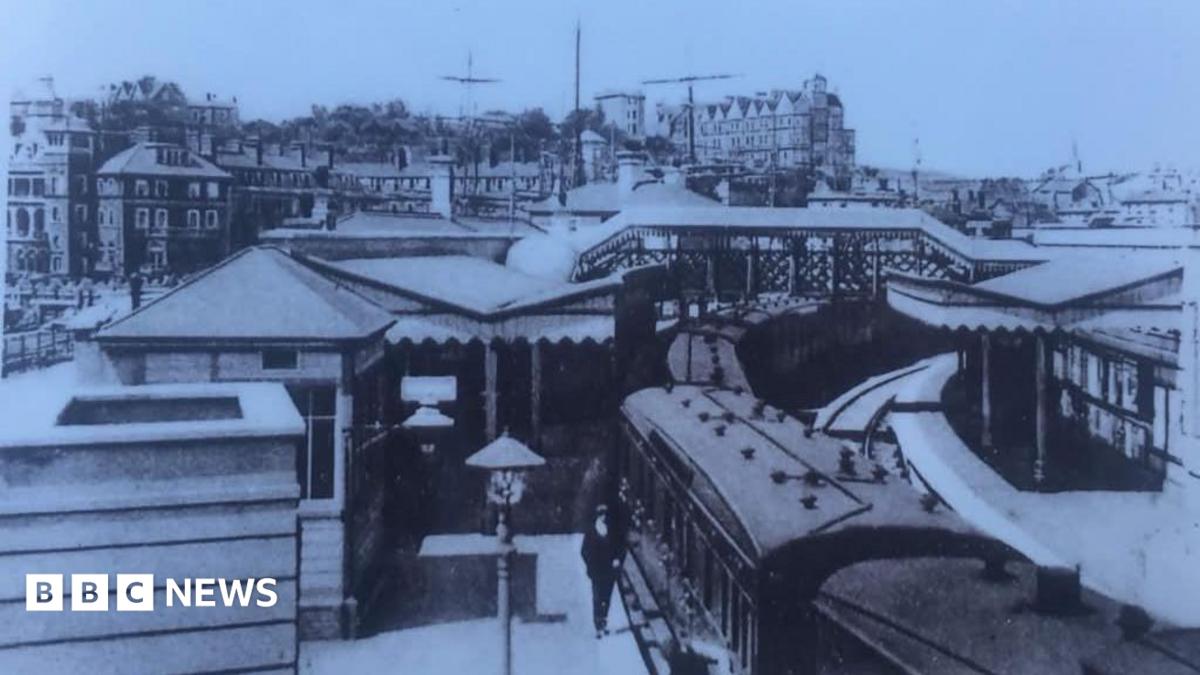
Opened by South Eastern Railway, the station was a direct competitor to the London Chatham and Dover Railway, also operating in Kent to help people reach France.
By 1900, about 200,000 passengers were believed to be using Folkestone Harbour each year, and that number had risen to half a million by 1911.
After the war, the station’s fortunes began to fade.
“The Channel Tunnel saw the end of the station,” Hill says.
He added: “It was becoming very, very tired with not a lot of investment.”
Nowadays, the surrounding Harbour Arm has been repurposed as a site for people to have a drink, a bite to eat and a day out, but the station still remains as a walkway to services across the seafront.
But despite its changes, its history is still of huge significance to visitors, Hill says.
He said: “I’m very proud to still be sitting on the edge of the platform.
“A lot of residents still remember it as it was, but it has been gentrified now – it’s become a very nice place to visit.”