
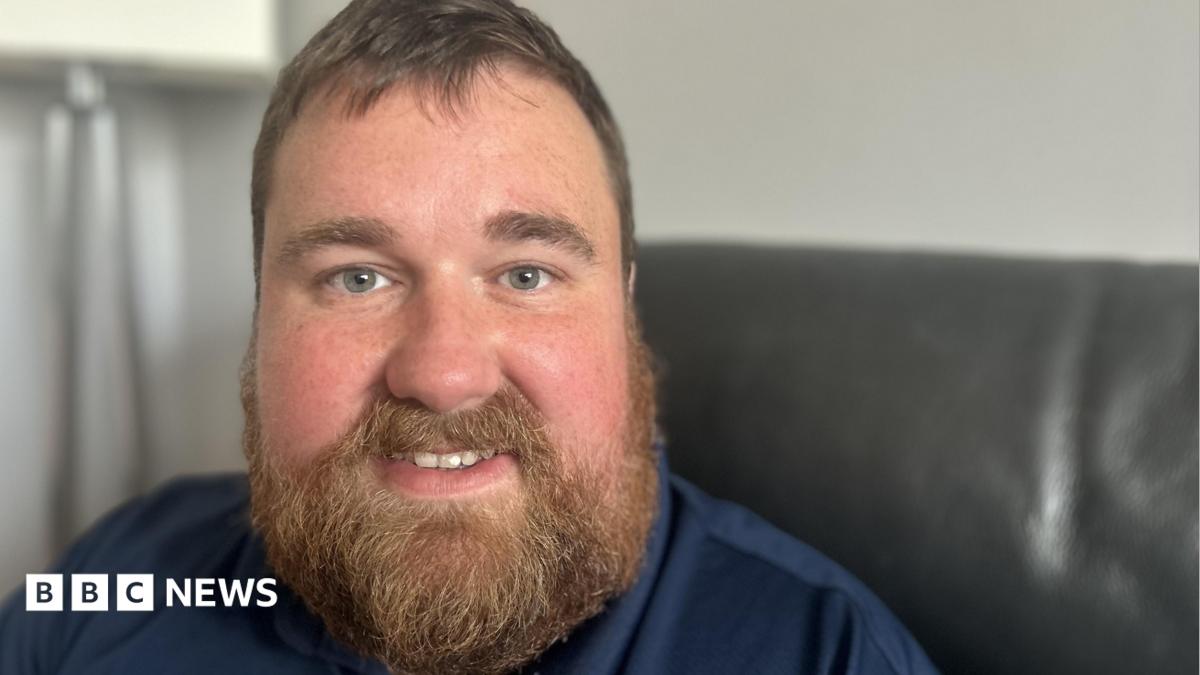
For years, Kevin Clemitson thought his exhaustion was just part of his busy working life.
As a programme manager for a major logistics company, his job involved long days travelling across the country from his home in Wallsend, North Tyneside.
But, when doctors told him he might have sleep apnoea – repeatedly stopping and starting breathing at night – “everything changed”.
Concerned he might fall asleep at the wheel, he started using public transport instead. “It had a real impact on my work,” he says.
“I stopped driving long distances immediately. That added hours to every journey because, instead of driving, I needed to get the train.
“I just wanted to get it sorted as quickly as possible.”
Clemitson says he had never slept well and thought he was just a “bad sleeper”. It was only when his wife Victoria – who was usually a deep sleeper – was unwell with a cold and sleeping badly herself that she noticed he would stop breathing during the night.
She recorded a video which shows Clemitson not breathing for almost a minute.
“When Victoria showed me that I got a shock,” he says.
People with sleep apnoea are often left exhausted and with an increased risk of wider health problems.
“I was tired during the day and grumpy which impacted family life,” Clemitson says. “I thought that was just who I was. I had no idea it was because of this.”