
Revenues grew by 6.9%, while public spending grew at 4.8%.
In total, Scotland raised £98.3bn in tax and non-tax revenues in 2025-26, representing 8.0% of all revenues raised across the entire UK.
Income Tax Receipts rose by £1.5bn, driven by the Scottish Government‘s decision to freeze higher tax bands, alongside general wage growth and inflation.
But it was National Insurance Contributions (NICs) that saw the largest jump, rising by £2.4bn, an 18.5% increase.
Former Chancellor Rachel Reeves’ decision to hike employer NIC rates in the 2024 budget kicked in last year.
North sea tax revenue saw the largest fall (Image: PA)
Offsetting these tax rises, Scotland’s geographical share of North Sea oil and gas revenue fell by £0.4bn to £3.2bn.
North Sea tax revenue saw the largest fall of any major revenue line in the report. Fuel duties, tobacco duties and alcohol duties also fell, but by smaller amounts.
GERS attributes the North Sea fall directly to weaker oil and gas prices over the year. UK-wide, the underlying figures show a decline in North Sea corporation tax receipts, from £2.2bn to £1.8bn, while the Energy Profits Levy held roughly flat at £2.5bn.
North Sea revenue has now fallen for three consecutive years, from £5.5bn UK-wide in 2023-24 to £3.9bn in 2025-26.
That decline lands at a politically awkward moment. A decision from the UK Government on whether to grant consent for the Rosebank and Jackdaw fields is expected in the coming weeks, once a public consultation on revised environmental assessments closes on 17 August.
Including the North Sea, Scotland’s per-person revenue was £17,718, virtually identical to the UK average of £17,720.
Without oil and gas, Scotland’s per-person revenue was £17,150, which is £514 lower than the UK average of £17,664.
Public spending rose to £123.6bn, up 4.8% from £117.9bn the previous year, equivalent to 53.1% of Scotland’s GDP.
Social protection remains the single largest spending category, costing £36.5bn, nearly 30% of all Scottish spending, and rising by £2.1bn over the year.
Within this, spending on benefits set and paid by the Scottish Government grew by 11%, almost double the 6% growth rate for social protection spending as a whole.
The Adult Disability Payment (ADP) was responsible for more than half of the £6.55bn total spent on benefits devolved under the Scotland Act 2016.
Direct spending on ADP rose to £3.38bn in 2025-26, up from £3.13bn the previous year and £2.63bn in 2023-24.
This represents an 8.0% increase over the past year, following a larger 19.0% jump the year before as the benefit rolled out.
Health was the second largest category of public spending, rising by £1.5bn to reach £21.1bn, over 17% of the total budget.
Total defence spending attributed to Scotland rose to £5.23bn in 2025-26, up from £5.1bn the previous year. The increase of around 2.7% comes as the UK Government seeks to ramp up defence spending.
HMS Glasgow being outfitted at the BAE Systems shipyard at Scotstoun. (Image: Colin Mearns/NQ)
Total public spending per person in Scotland was £22,281, which is £2,720 higher than the UK average of £19,561.
Scotland’s deficit of -10.9% of GDP is significantly larger than the overall UK average deficit of -4.2% of GDP — and the gap between the two widened over the year, even as Scotland’s own figures improved.
While Scotland’s deficit narrowed by 0.6 percentage points, the UK’s overall deficit narrowed faster, by 1.0 percentage point, over the same period.
João Sousa, senior research economist at the IFS said the notional deficit had “little if any bearing on the Scottish Government’s finances”.
“It is subsumed within the wider UK fiscal deficit, which the UK government needs to borrow to cover,” he added.
“But each year GERS is inevitably interpreted in the context of the debate about Scotland’s constitutional future.
“If Scotland were to become independent, it would become responsible for managing its own public finances in full.
“The long-run structure of Scotland’s economy and public finances could look very different post-independence, and would depend to a large degree on future policy decisions.
“Nevertheless, GERS is a reasonable starting point for understanding the fiscal issues an independent Scotland would likely face on day one.
“A deficit on the scale currently implied would be unsustainable and require some combination of higher taxes or lower spending – unless economic growth could be sustainably and significantly increased, which is certainly possible but far from assured.”
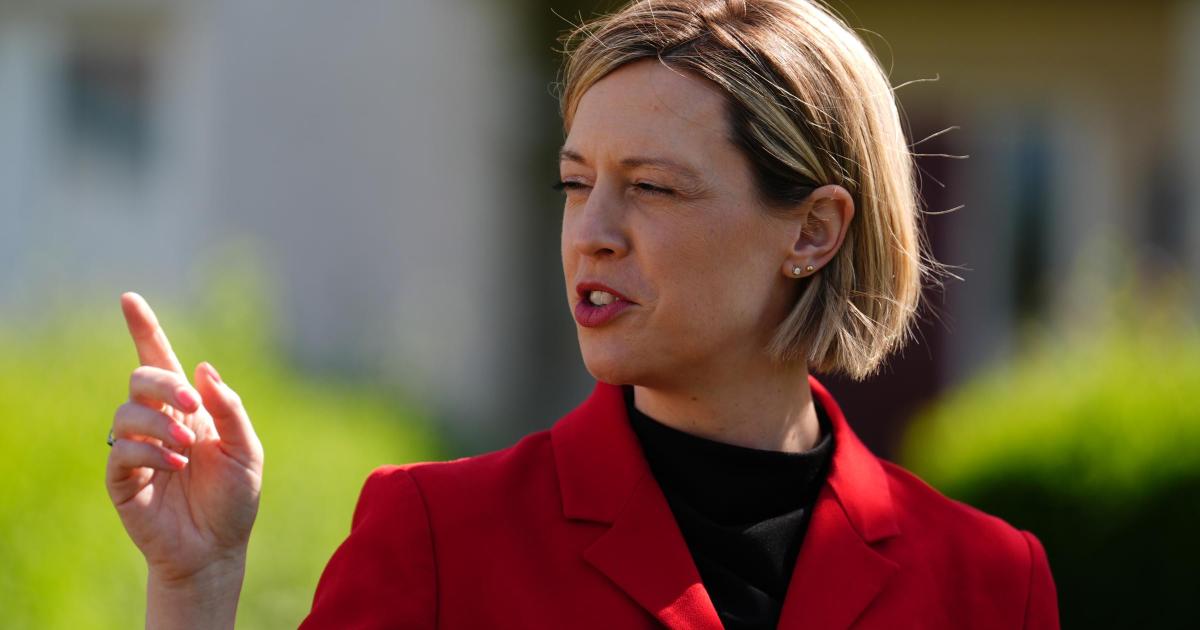
Deputy First Minister and Finance Secretary Jenny Gilruth said: “The latest GERS stats show that total and devolved revenues grew faster than spending – showing in particular that in the areas where our Government has control, we are delivering sustainable finances.
“The significant increase in income tax revenues shows that the decisions which this Government has taken are helping to deliver additional funding for measures to ease the cost of living like the Scottish Child payment, free prescriptions, bus travel for under-22s and free university education.
“GERS provides notional estimates for Scotland’s deficit as part of the UK – it simply does not show what an independent Scotland’s position will be.
“With the powers of independence we would be able to chart a different path, ensuring we grow the economy to allow Scotland to reach her full potential.”
Douglas Alexander, the Scottish Secretary, said the statistics “clearly demonstrate the value to people in Scotland of being part of a strong United Kingdom”.
He added: “By pooling and sharing resources across the country, people living in Scotland benefit from significant additional public spending. That means £2,720 more per person compared to the UK average, which the Scottish Government can spend on vital services like schools, hospitals and transport.
“Our new Prime Minister has been clear that we will deliver good growth for every postcode in the country. We will continue working with the Scottish Government and other partners to build a fairer country.”
Scottish Conservative shadow finance secretary Craig Hoy said Scots were “now benefitting from a record Union dividend”.
He added: “Every single Scot is over £2,700 better off because we are part of a strong United Kingdom.
“Yet John Swinney and the SNP want to put an end to all of this with their obsessive push for Scottish independence.
“That would be disastrous for the nation’s finances. Things are already bad enough after two decades of SNP economic incompetence, which sees ministers continue to squander a record Union dividend on their pet projects and imposing the highest taxes in the United Kingdom.”
Malcolm Offord, leader of Reform UK in Scotland, said the figures were “the usual damning indictment of how the SNP spends taxpayer money”.
“It’s time to challenge the money evaporating into a bottomless welfare bill, the quarrel of quangos and politically ideological net-zero policies,” he said.
“That money that could be spent on more nurses, more teachers and more money returned to people’s pockets.”