
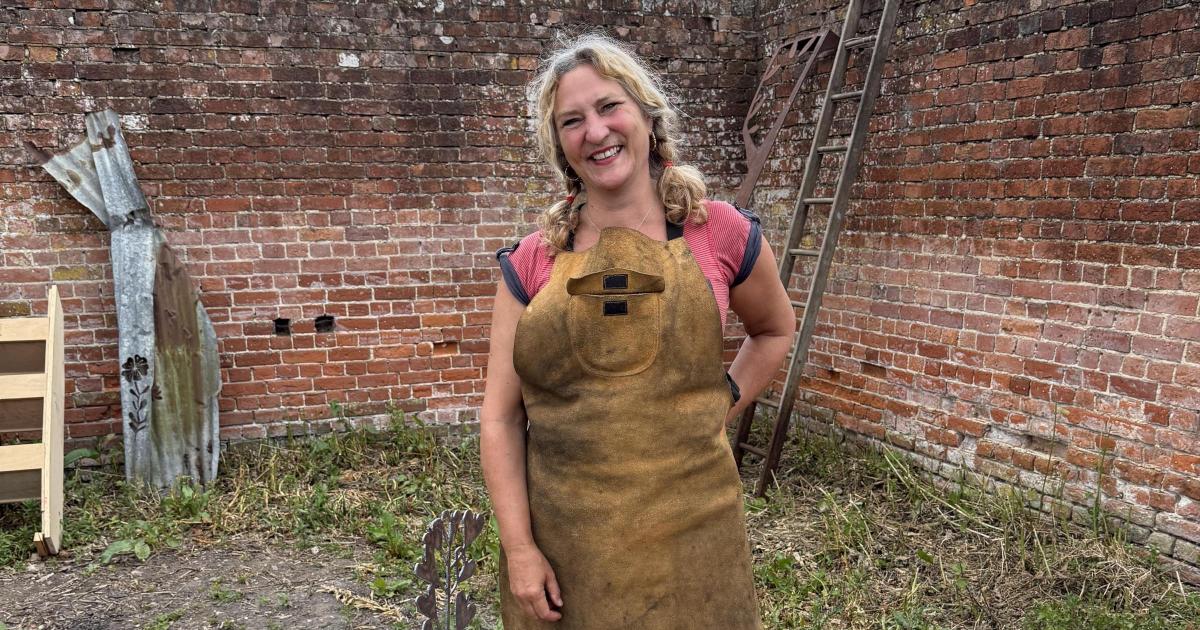
Growing up in Norfolk, Kate Munro developed an early love of landscape, creativity and the natural world. After completing a foundation course at Norwich School of Art, Kate moved to London to study sculpture at the Wimbledon School of Art. A self-confessed country girl, she took with her a bale of straw and a collection of pebbles gathered from the Norfolk coast – a small piece of home.
The early months at art school were filled with intensive practical training in traditional sculptural skills, including welding, stone carving, bronze casting and construction. Once that period ended, they were given the freedom to pursue their own ideas and develop their practice independently. While creatively liberating, it also demanded resilience and self-motivation.
(Image: Kate Munro)
One of the most significant relationships Kate formed during those years was a friendship with fellow sculpture student Lisa Lindqvist, whose mother originated from the Swedish Arctic. Lisa introduced her to stories of snow-carving festivals held in remote northern landscapes. Fascinated, the pair submitted a design from their student accommodation via fax and were thrilled when they were accepted to take part.
The experience proved transformative. Weeks spent among snow-covered mountains and vast Arctic wilderness sparked a lifelong passion for working with ice and snow. What began as a student adventure developed into a creative partnership spanning more than three decades. Together, they have travelled extensively, participating in snow and ice festivals across Greenland, Japan, China, Estonia and beyond.
A career highlight came in 2024 when the pair were commissioned to create the Ceremonial Hall at the renowned ICEHOTEL in northern Sweden. The hall, a monumental space crafted entirely from snow and ice, hosts weddings, baptisms and other important life celebrations. Their installation, Gaia’s Bloom, transformed the interior with an abundance of frozen flowers cascading across the walls, creating a striking and befitting environment.
(Image: Kate Munro)
Back in the UK, a pivotal chapter began at Barrington Farm in Walcott, a residential community for adults with learning difficulties that included an art barn. It was here that Kate discovered a passion for community and participatory arts. The work created within the studio was vibrant, instinctive and deeply authentic. Free from the need for lengthy explanations or artistic theory, it celebrated creativity in its most direct form and profoundly influenced her own approach to making art.
After several years in Brighton, Kate returned to Norfolk with her husband, Adam, and their young family. The years that followed were a balancing act of family life, piano teaching, community arts projects and public art commissions across the country, including work for the Eden Project and projects in Bristol. Much of her community work centred on Great Yarmouth and the wider Norfolk area.
Driven by a desire to contribute more directly to her local community and deepen her understanding of the sea, she also joined the Sheringham Lifeboat crew. For many years she was the only woman on the crew, an experience that broadened her knowledge of navigation, seamanship and teamwork, while strengthening her connection to the coastline that has always informed her work.
The Covid lockdown marked another turning point. With community projects paus
(Image: Kate Munro)
ed and teaching disrupted, she found herself focussing more fully on her own artistic practice. Using emergency Arts Council funding, she purchased a plasma cutter and rented a small workshop on a farm at Oulton. There she began creating sculptural gates and panels from corten steel.
The work quickly evolved and she moved into a larger barn on the same site. Working directly with a handheld plasma cutter, she creates intricate silhouettes inspired by the natural world. Fire, sparks and the physical transformation of steel have become central elements of the creative process.
Over the last five years, she feels she has found a distinctive artistic voice. Her site-specific commissions respond closely to the landscapes and wildlife, while smaller sculptures often emerge from salvaged materials and overlooked objects rescued from skips and farmyards. Throughout, there is a sense of optimism, playfulness and wonder.
(Image: Kate Munro)
Community engagement remains at the heart of her work. Kate runs weekly drawing classes in Cromer, works as an artist educator at the Sainsbury Centre and contributes to intergenerational projects that bring together schoolchildren and care-home residents through creative activity. Most recently, she was awarded a commission to transform drawings by local children into two large cut-steel panels for Cromer seafront, celebrating 125 years of Cromer Pier.
Whether working with snow, ice, steel, music or community projects, a common thread runs through everything Kate does: a fascination with transformation. Few artists move so comfortably between Arctic ice cathedrals, lifeboat stations, school classrooms and steel workshops, yet for Kate Munro they are all part of the same continuing story..
katemunro.co.uk