
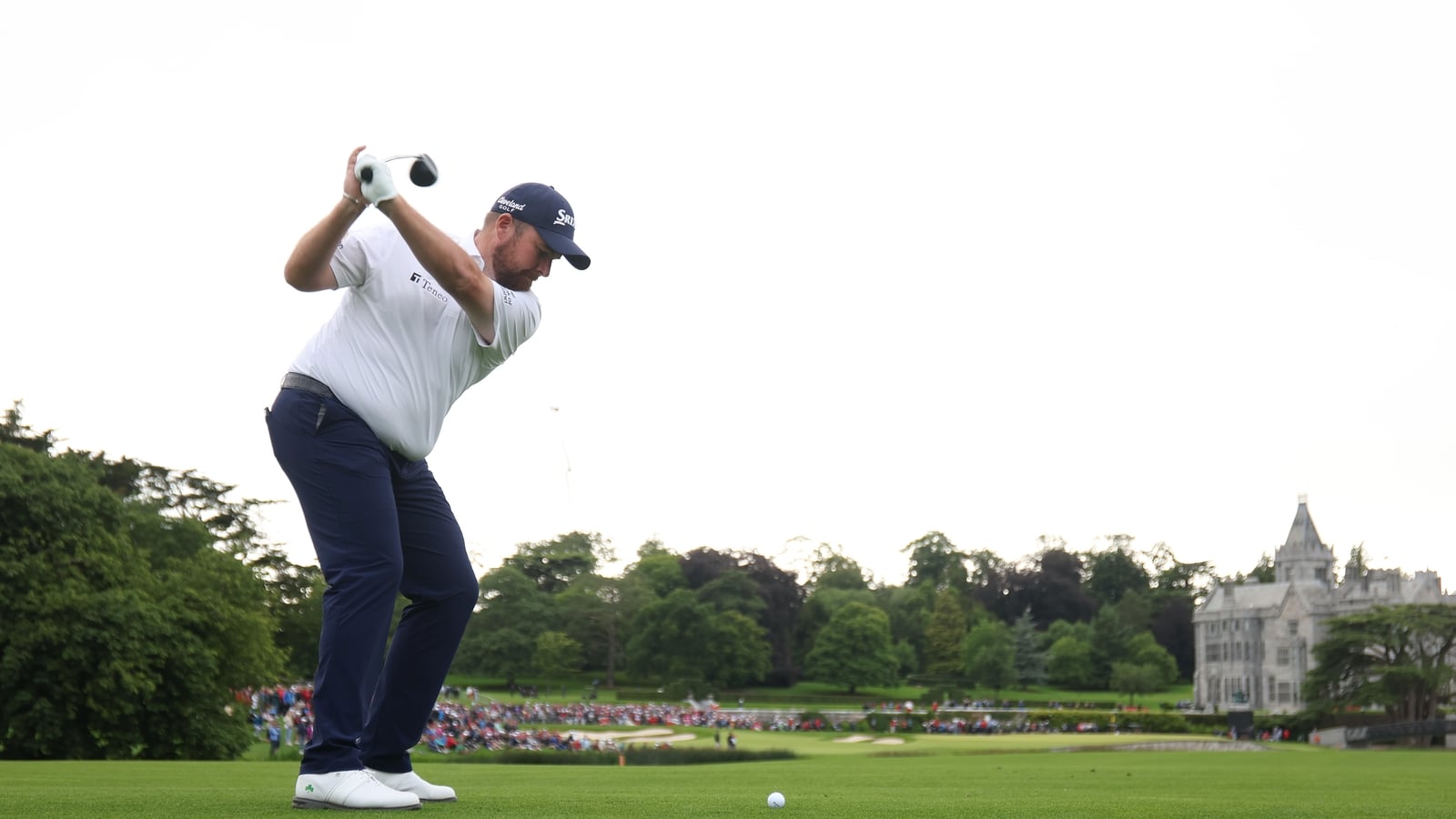
Analysis: Ireland is home to some of the oldest golf courses in the world and keeping these unique spaces up to date requires careful maintenance
Ireland has a long history of golf clubs dating back to the mid-1800s. In the 1890s alone, more than 100 golf clubs were established in Ireland, and there are now over 300 different courses dotted across the island .
Historically, there were a few reasons why golf clubs developed in Ireland. Railway infrastructure played a major role, as did land reforms, but more importantly, it served as a social space for an emerging middle class, as the sport represented respectability and leisure.
While that explains golf’s establishment, maintaining this popularity to the present day is no mean feat. Ireland is very much blessed with good geographical features and climate, and much of its high reputation is down to the many greenkeepers and managers who maintain and improve these courses.
We need your consent to load this rte-player contentWe use rte-player to manage extra content that can set cookies on your device and collect data about your activity. Please review their details and accept them to load the content.Manage Preferences
From RTÉ Archives, the country’s largest golf academy opens in Dublin
“We have all these places in which people will fly in from all over the world just to be able to play these because they are so unique,” explains Eamon Kealy, turfgrass specialist and lecturer in horticulture at Teagasc. “It is a mixture of how lucky we are to have unique features within the island itself, as well as the training of the guys who are so committed to actually maintaining the surfaces as well.”
Maintaining the courses
There are two main types of golf course in Ireland: links courses are developed on free draining soils along the coast, and parkland courses are built inland on heavier soils and are usually tree lined. Both types of courses have a strong international reputation, attracting golfers from all over the world to play.
While Ireland’s natural landscape and cooler climate helps, a key factor is those working on the ground, ensuring that these courses and the surrounding areas are cared for.
Most links courses in Ireland use fescue grasses, as they require little nutrition or water, making them sustainable year-round.
Teagasc has a long history of training greenkeepers, dating back to the 1980s, and has developed a close-knit network of experts who collaborate. While there is a history of greenkeepers who continue the tradition within their families, education, technology and science plays major roles, especially with the changing climate and emerging challenges.
“Greenkeepers share the knowledge and information they have freely” Kealy says. “It’s vitally important because if you don’t have educated people, you won’t be able to manage and maintain these surfaces to a high standard. We need people who are dedicated to understanding the biodiversity and ecology of the landscape that they work in, treating these areas with the best care.”
You would be forgiven for thinking that golf courses just need to be maintained, but that’s only a small part of it. Much thought goes into how it is designed and relates to the surrounding landscape. It even boils down to the type of grass grown on each course. Most links courses in Ireland use fescue grasses, as they require little nutrition or water, making them sustainable year-round.
We need your consent to load this rte-player contentWe use rte-player to manage extra content that can set cookies on your device and collect data about your activity. Please review their details and accept them to load the content.Manage Preferences
From RTÉ Radio 1’s Mooney Goes Wild, Terry Flanagan heads to Blainroe Golf Club in Co Wicklow to check out the wildlife in situ on the course
Focus on conservation
A larger factor that may be overlooked is golf courses’ growing role in conservation. While their environmental impact has been well scrutinised, work has increasingly focused on providing a holistic resource.
“Greenkeepers have always been aware of the importance of nature and are very conscious of looking after the environment,” says Kealy. “These are people who work outside every day of the year. They understand how nature works and the rhythms it goes through. Any actions they take would consider the important elements like habitat biodiversity. For example, links courses are fantastic for orchids and wildflowers that flourish in the out of play areas.”
In recent years, Golf Ireland has launched its own sustainability action plan and appointed a head of sustainability. Courses like the Royal Dublin on Bull Island have implemented their own conservation and sustainability initiatives. It is designated as a native Irish honeybee conservation area by the Native Irish Honey Bee Society, with sustainable water resource management and wildlife protection.
We need your consent to load this rte-player contentWe use rte-player to manage extra content that can set cookies on your device and collect data about your activity. Please review their details and accept them to load the content.Manage Preferences
From RTÉ Archives, Don McManus reports for RTÉ News on a golf clinic and exhibition match with Jack Nicklaus and Severiano Ballesteros at the Royal Dublin Golf Club in 1986
These efforts and more are recognition of what the natural landscape offers and the responsibility these clubs have to the wider population. “Golf courses are now putting biodiversity initiatives at the top of their priority list,” adds Kealy. “30 years ago you would never have seen that and the knowledge learned will be shared with everybody.”
Some golf clubs also act as habitat corridors, allowing wildlife and biodiversity to flourish. As the greens managed are only a small part of the overall land, there is greater leeway to develop the natural ecosystem and support biodiversity.
All these efforts tie back to the tradition and efforts of greenkeepers and those who work on these courses. While there is a long way to go, the steps they’re taking will set these courses on a path to sustainability and holism.
We need your consent to load this rte-player contentWe use rte-player to manage extra content that can set cookies on your device and collect data about your activity. Please review their details and accept them to load the content.Manage Preferences
From RTÉ Radio 1’s Today with David McCullagh, Dr David Nolan from DCU on the sporting side of golf
“Ireland is golf mad and has been blessed to have some of the greatest golf course designers like Tom Morris, Alistair MacKenzie and James Braid shape the fairways across the island,” Kealy says. “These clubs are proud to keep up that lineage and always present them in world-class condition.
“With training greenkeepers, there’s a lot of disinformation. People think it’s just cutting grass, but there are layers of science behind that. Even when it comes to grass species, understanding the type of grasses you have, influences your maintenance practices, and how you manage the golf course.”
Follow RTÉ Brainstorm on WhatsApp and Instagram for more stories and updates
The views expressed here are those of the author and do not represent or reflect the views of RTÉ