
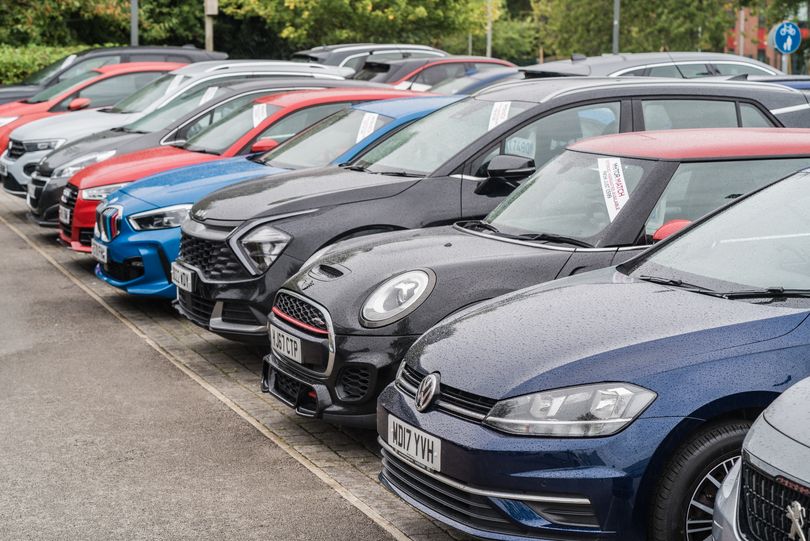
If you’re looking for a new car and reliability is one of your top priorities, a mechanic has identified the brand of vehicle he claims “never needs repairs”. Robert Hannah, who owns East Kilbride Autocare in South Lanarkshire knows where the value lies when it comes to used cars.
While many motorists might favour a more sporty, powerful manufacturer that’s quick off the mark, flair, acceleration and luxury comfort isn’t everything, according to the mechanic. Instead, he went on to share his thoughts on a more modest, Japanese brand of car he believes will be low maintenance – the Toyota.
“I never see them coming through the garage requiring engine repairs,” Robert told the Telegraph. “They’re cheap to run and fairly cheap to purchase.”
As for a specific Toyota model, he highlighted the Yaris – specifically a petrol hybrid.
Fellow mechanic, Charlie Sterrett, who owns Sterrett’s Auto Centre in Northern Ireland is also an advocate for Toyota, meanwhile, stating that he favours an automatic Aygo – provided it’s serviced on an annual basis.
As for a manufacturer to avoid, one that appears to have united sceptical mechanics is the Jaguar Land Rover (JLR).
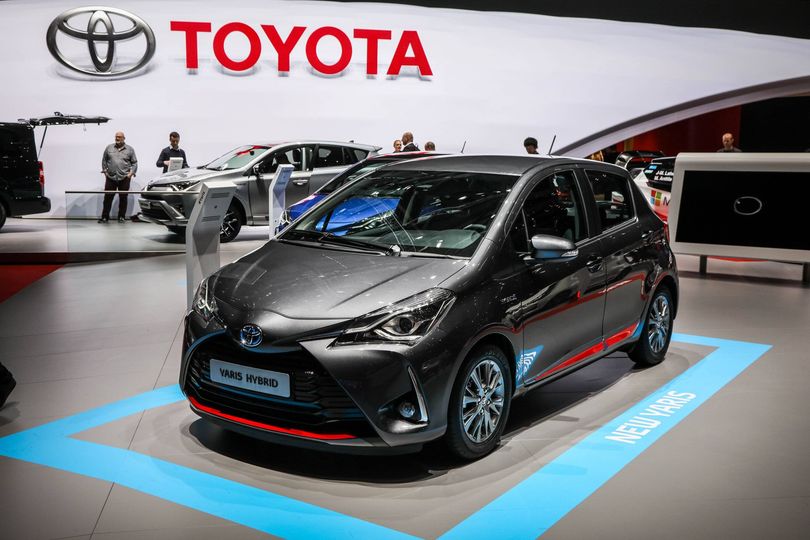
A Toyota Yaris -Credit:Getty
Owner of North London garage, Diagnostic Service & Repairs (DSR), Alex Alfano claims Land Rover cars suffer recurring issues related to involving oil leaks and air suspension systems.
“They’re lovely to drive, but they can be very expensive cars to own,” he explained, before sharing his thoughts on JLR’s Ingenium diesel engine in particular.
“I think someone at JLR seriously sabotaged the future reputation of the brand by designing this hateful engine,” he added.
Alex also alleged the cars’ internal combustion engines are “extremely poorly built and unreliable”, noting: “We see lots of I-Paces with charging, high-voltage insulation, as well as heating ventilation and cooling faults.”
Earlier this month, our very own car expert Christopher Sharp put a Yaris to the test – in a like-for-like experiment alongside a Vauxhall Corsa. “On paper these cars should handle very similarly,” he explained. “They’re both front wheel drive, they both have hybrid systems, they both have grippy tyres; so there shouldn’t be much between them; but you’d be wrong.”
Chris continued: “The Vauxhall sits slightly higher and is slightly softer than the Toyota. Look at the photos and you’ll notice the Toyota is squarer, slightly lower, with slightly lower profile tyres. On twisting back roads the Toyota hugs the tarmac a bit more, especially as you go over crests, it feels lighter than the Vauxhall, but the extra stiffness means it feels more vulnerable to big potholes.”
However, he went on to note: “On the flipside the Vauxhall is bigger, softer, taller. It leans a scintilla more, but it has a lot more low down punch than the Toyota.
“The Toyota’s engine is a bit more raucous accelerating up to motorway speeds. Meanwhile, the Vauxhall doesn’t quite hug the inside of a corner, but it is stable and neutral. Both cars have very little understeer and remain neutral for the most part.”