
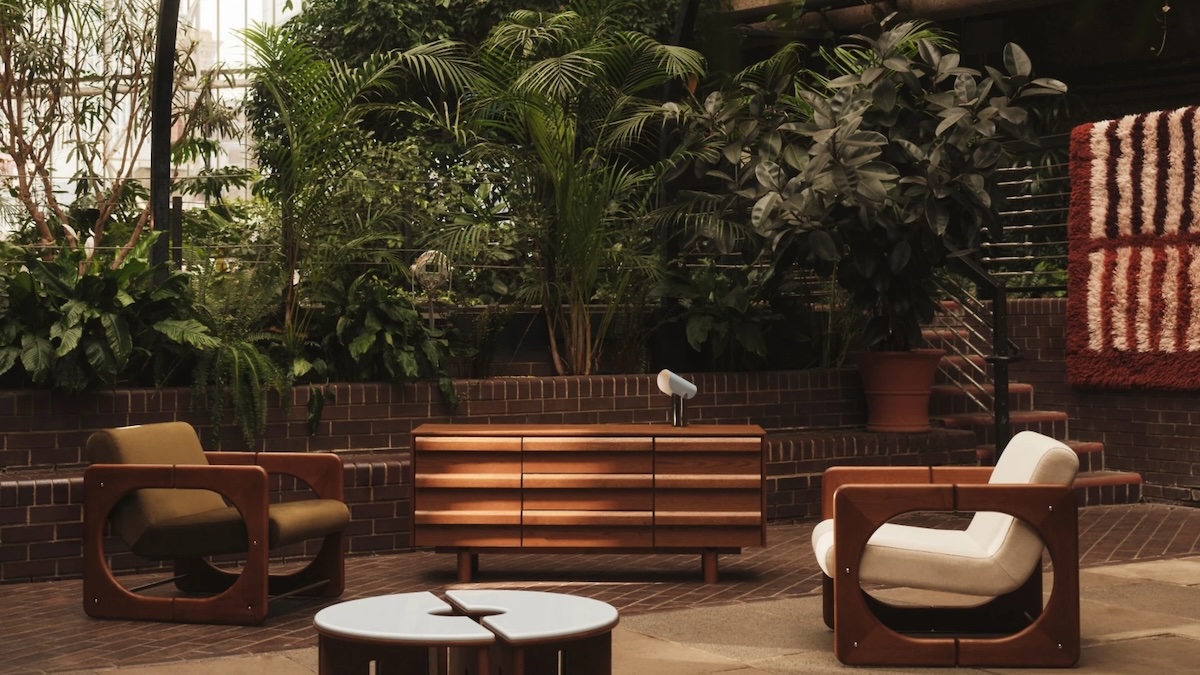
Amid the renewed interest in Brutalist architecture in recent years, numerous buildings around the world have found themselves back in the spotlight. London’s Barbican is one such example. If you have ever visited London, chances are you did not miss it, especially its arts hub, the Barbican Centre, a regular destination for a dose of art thanks to its excellent exhibitions.
The wider Barbican Estate, located in central London, is one of the best-known examples of British Brutalist architecture. The vast postwar complex brings together housing, culture, public spaces, gardens, terraces and distinctive elevated walkways. At its heart is the Barbican Centre, one of London’s most important cultural institutions. It is precisely this combination of architecture, design and everyday life that makes the Barbican such a compelling point of departure for contemporary design.
Courtesy of Barbican
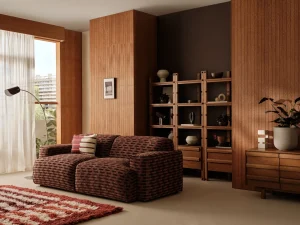
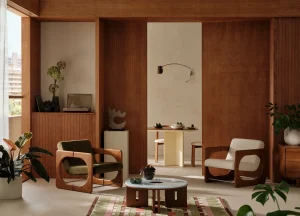
British design brand MADE has joined forces with the Barbican on MADE x Barbican, a collection that reinterprets distinctive elements of the Barbican Estate’s architecture and interiors for contemporary living. The collection comprises 23 pieces, including furniture, lighting, textiles and decorative objects, and will be available to purchase at MADE.COM from 17 August 2026.
Courtesy of Barbican
From Brutalist architecture to the living room
The idea behind the collection was not to create a literal copy of the Barbican or turn its architecture into yet another retro homage. Instead, MADE and the Barbican began by exploring its design legacy and sought to translate certain architectural principles into objects that could work in today’s home. The collection grew out of archival research, original floor plans and the interiors of the Barbican Estate, with a particular focus on the work of designer Miriam Howitt, whose pioneering interior design forms part of the story the collection revisits. The meeting of archival material and contemporary design is the most compelling aspect of the project. Here, the Barbican remains a relevant source of ideas about how we live in cities, while also offering an opportunity to bring the unique language of Brutalism into your living room. Its distinctive geometry, materials, spatial rhythm and the way its architecture and interiors were conceived as a unified whole become the collection’s own design language.
Why is the Barbican so important to design?
The Barbican Estate was conceived as an ambitious postwar vision of urban life. Its monumental concrete architecture, elevated walkways, terraces, gardens and rigorous geometry have made it one of the most important examples of British Brutalism. But it is not just the architecture that makes the Barbican so compelling. From the very beginning, close attention was also paid to everyday life within the complex, from furniture and lighting to colours, textiles and spatial layouts.
The original furniture for the Barbican Centre was designed by renowned British designer Robin Day, whose pieces were conceived as an integral part of the Brutalist architecture and the experience of the space. Today, the Barbican is rethinking its public spaces and furnishings as part of the Centre’s wider renewal, further underscoring the importance of furniture design to the institution’s identity.
MADE x Barbican therefore arrives at a time when the Barbican’s legacy is once again being closely examined, not only as architectural history but also as a possible source of inspiration for contemporary living.
The collection is getting an installation of its own
The project will extend beyond the products themselves. MADE and the Barbican will present the collection through an immersive installation at the Barbican during the London Design Festival, from 12 to 20 September 2026. The installation will allow visitors to delve into the Barbican’s archives and explore the design references that shaped the collection. In other words, the project will not simply showcase the finished products but will tell the story of how one of London’s best-known architectural complexes served as their creative brief. This is also why MADE x Barbican feels more like a cultural and design project than a conventional commercial collaboration. The collection seeks to demonstrate how architectural heritage can be reinterpreted without turning it into nostalgia.