
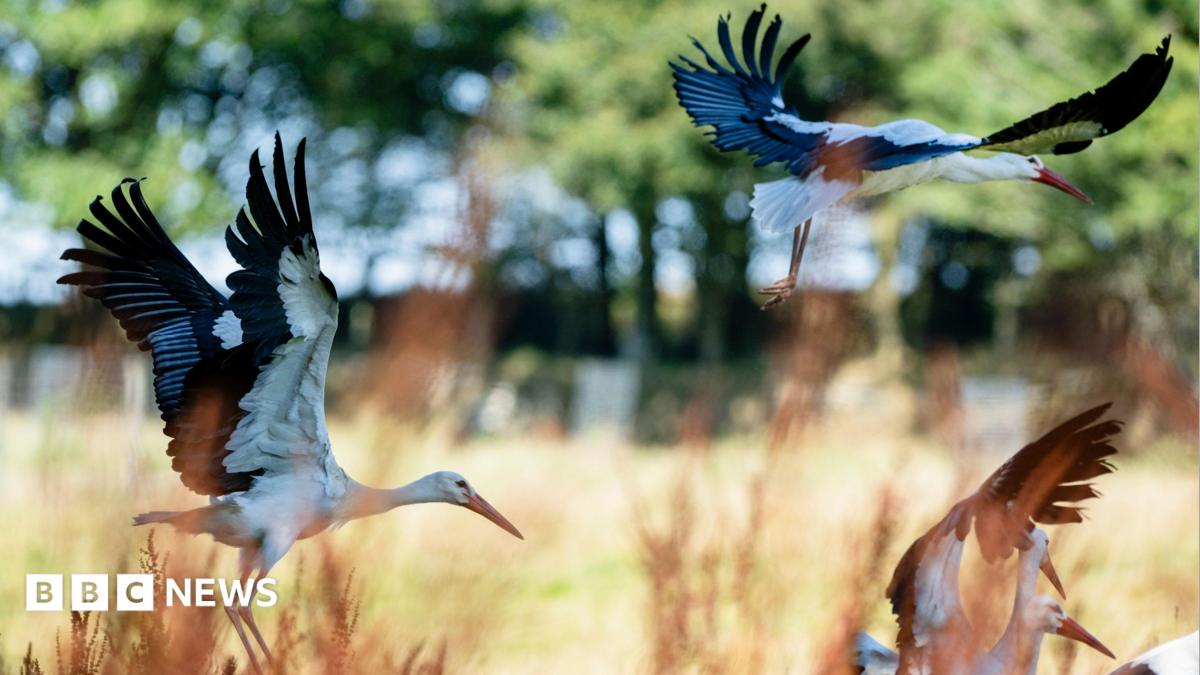
“When these storks come back they need food on the landscape in order to thrive,” Swiderski explained.
“They need insects, small mammals, reptiles and amphibians – earthworms they eat as well, so if we can do all those things then the storks can do really well.”
In order to help their habitats, he is also carrying out a separate project to reintroduce beavers to the whole of Cornwall.
Beavers, he said, create “amazing wetlands” full of “all those creatures”.
“The beavers will create habitat not just for the stork but for many other things.”
To help track the birds’ movements, anyone who sees one of the ringed storks is encouraged to report their sighting via the Cornwall Stork Project website.
Follow BBC Cornwall on X, external, Facebook, external and Instagram, external. Send your story ideas to spotlight@bbc.co.uk, external.