
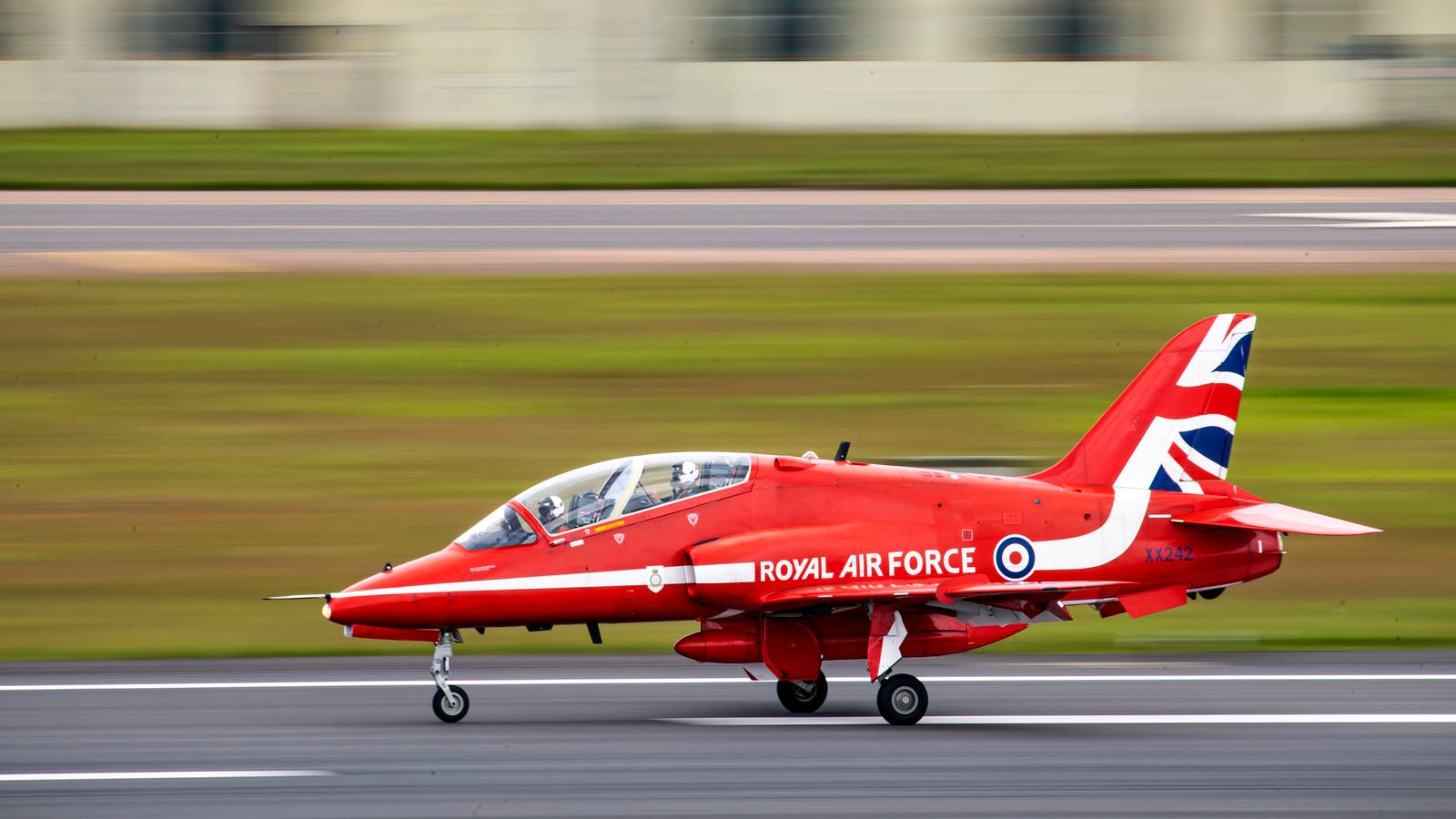
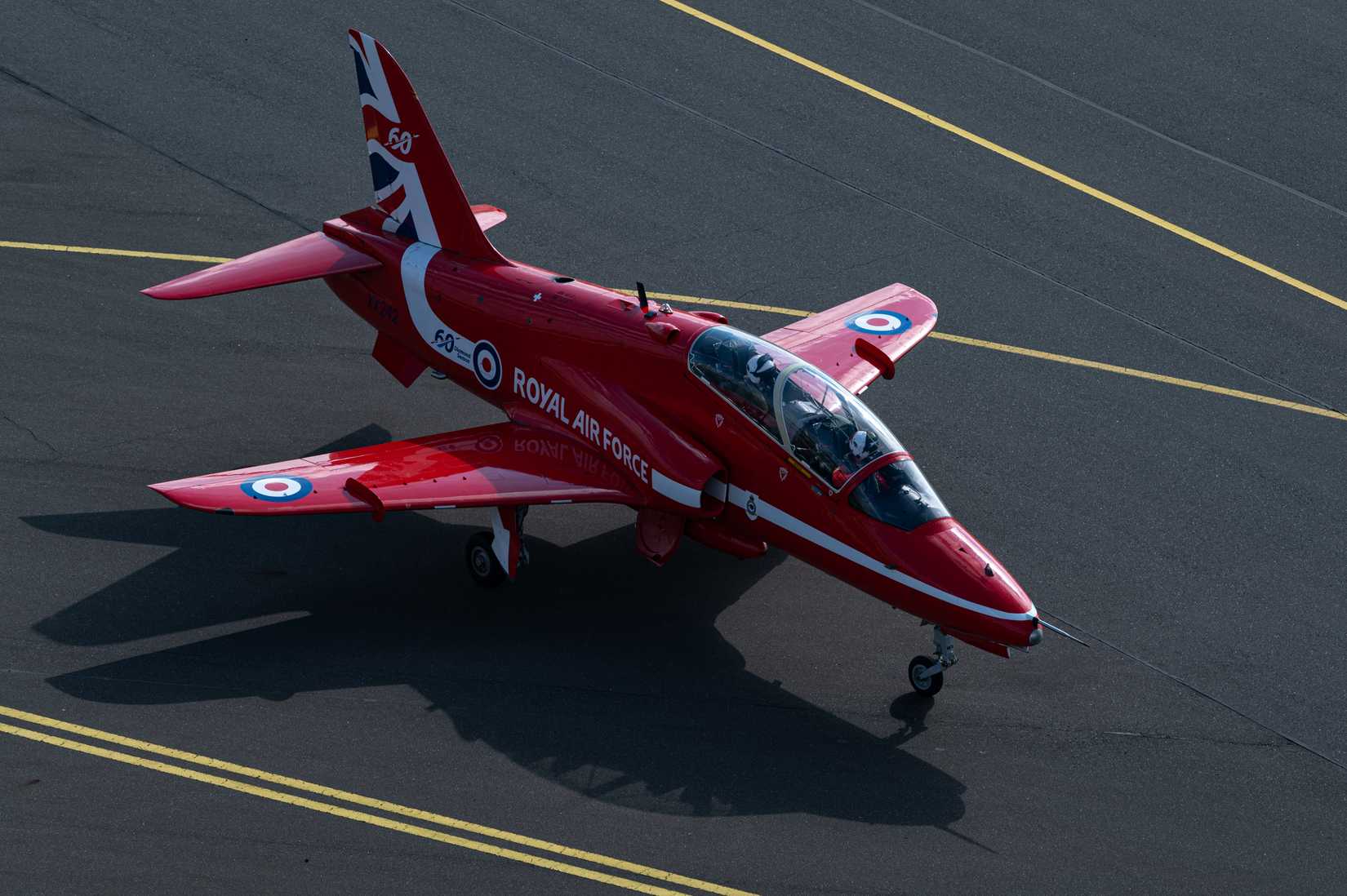
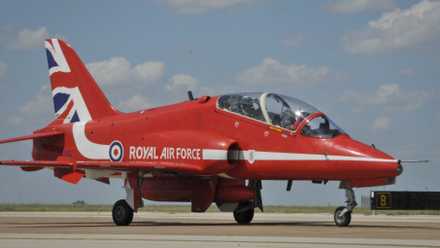
The Red Arrows are the aerobatic team of the Royal Air Force (RAF) and are based at RAF Waddington. Initially, the Red Arrows used the Folland Gnat, but this was replaced by the BAE Systems Hawk T1 in 1979, which was built at RAF Bitteswell in Leicestershire, England. However, the BAE Systems Hawk (originally the Hawker Siddley Hawk) is now aging, and the RAF will need to find a replacement for the Red Arrows, as well as the RAF’s T2 trainer.
Attention is turning to what aircraft those replacements will be and to the fact that the British trainer industry has withered, making it difficult to produce a true British replacement aircraft. The development underscores not only Britain’s decline in being able to fully design and produce aircraft domestically, but also Britain’s specialization in high-value sectors of the aerospace industry.
British DIP Commits To Hawk Replacement
Credit: US Air Force
A recent British Government report published in the House of Commons Library says the four-year Defence Investment Plan (DIP) commits to funding for the replacement of the Red Arrows Hawk T1. It says that “the DIP commits to recapitalising the jet trainer system programme and the procurement of a new aircraft to replace the Hawk, including as a platform for the Red Arrows.” It then highlights that the DIP states the UK will “deliver both sovereign and international training and with a significant UK workshare.”
The report notes that BAE Systems’ Hawk production line in Brough, UK, shuttered in 2020, “leaving the UK with no sovereign industrial capability for manufacturing fast jet training aircraft.” The Hawk T1 is the variant used for the Red Arrows, while the Hawk T2 is used by the RAF as its advanced jet trainer (as well as for the Royal Navy).
Both of these need to be replaced. The T1 Hawks used by the Red Arrows are scheduled to be retired by the end of the decade. The Hawk T1 is the original British trainer variant that entered service in 1976. The Hawk T2 is a much more modern trainer that entered service in 2009 with the RAF. Besides upgraded avionics, it has a modernized glass cockpit, modern mission computers, a modern HUD, and more.
Collapse Of Aeralis
Credit: Rolls-Royce
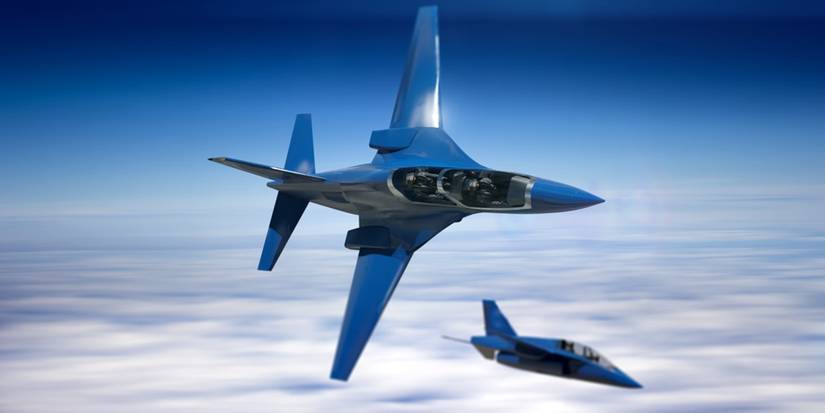
One of the only options the UK had to produce a sovereign jet trainer was Aeralis Limited. The company was a British developer of modular light jet aircraft and was considered a leading candidate to replace the Red Arrows Hawks. However, it entered administration in May 2026 due to cash flow problems and pressure associated with delays to the UK’s Defence Investment Plan.
Aeralis had developed a modular light jet aircraft that was designed to support military training, operational support, and aerobatic display requirements and had offered its design as a future aircraft for the RAF’s Red Arrows. With Aeralis gone, the UK doesn’t have a domestic-only option left standing. The realistic contenders now are foreign-designed jets with UK industrial partnerships.
It appears this is the end of Aeralis and its aircraft program, which never got off the drawing board. Aeralis never produced a flying prototype, with scale models being the farthest it got. Another issue is that if another company were to purchase Aeralis’ designs, it would likely take too long to develop a working trainer to meet the RAF’s requirements by the beginning of the 2030s.
Related
Here’s Why The Royal Navy May Never Fill Its Aircraft Carriers With F-35s
Will the UK’s Fleet Air Arm be cut down to size?
T-7 Red Hawk Is The Leading Option
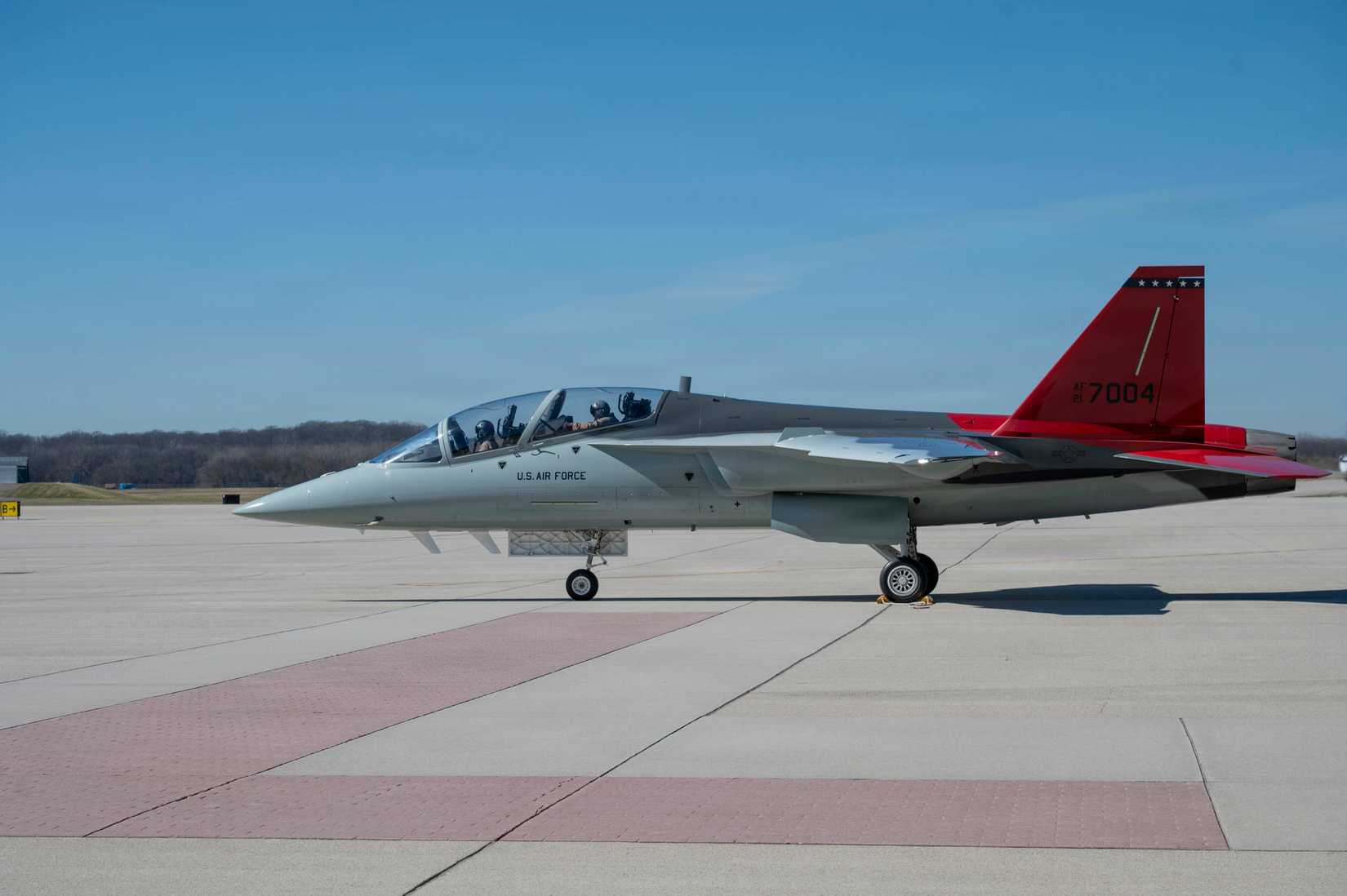
Credit: US Air Force
In July 2026, Reuters reported that BAE Systems, Boeing, and Saab have signed a deal to advance their partnership to offer the United Kingdom a new fast-jet trainer based on the Boeing-Saab T-7 Red Hawk set to enter service with the United States Air Force. This builds on an announcement in November that they would work together and that they were “committed to a new final assembly plant and other facilities in Britain.”
BAE CEO Charles Woodburn said that “our offer represents a modern, integrated training solution which aligns with the ambition of the Defence Investment Plan, while strengthening the UK’s sovereign industrial capability.” Reuters reports that the T-7 trainer will incorporate flying with advanced simulation and train pilots to fly the RAF’s (and Royal Navy’s) Typhoons, F-35s, and future GCAP/Tempest sixth-generation fighter jet in development.
BAE also hopes this will assist in attracting other export orders for the trainer. Reuters adds that the trio is looking for a suitable location for a final assembly plant in the United Kingdom. The T-7 Red Hawk is expected to reach Initial Operational Capability in 2027 in the USAF. Other leading contenders for the next British trainer/aerobatic aircraft are the Leonardo M-346 (Italian, with existing UK industrial footprint), and possibly a version of the Korean T-50.
US Also Relies On Foreign-Designed Trainers
Credit: Wikimedia Commons
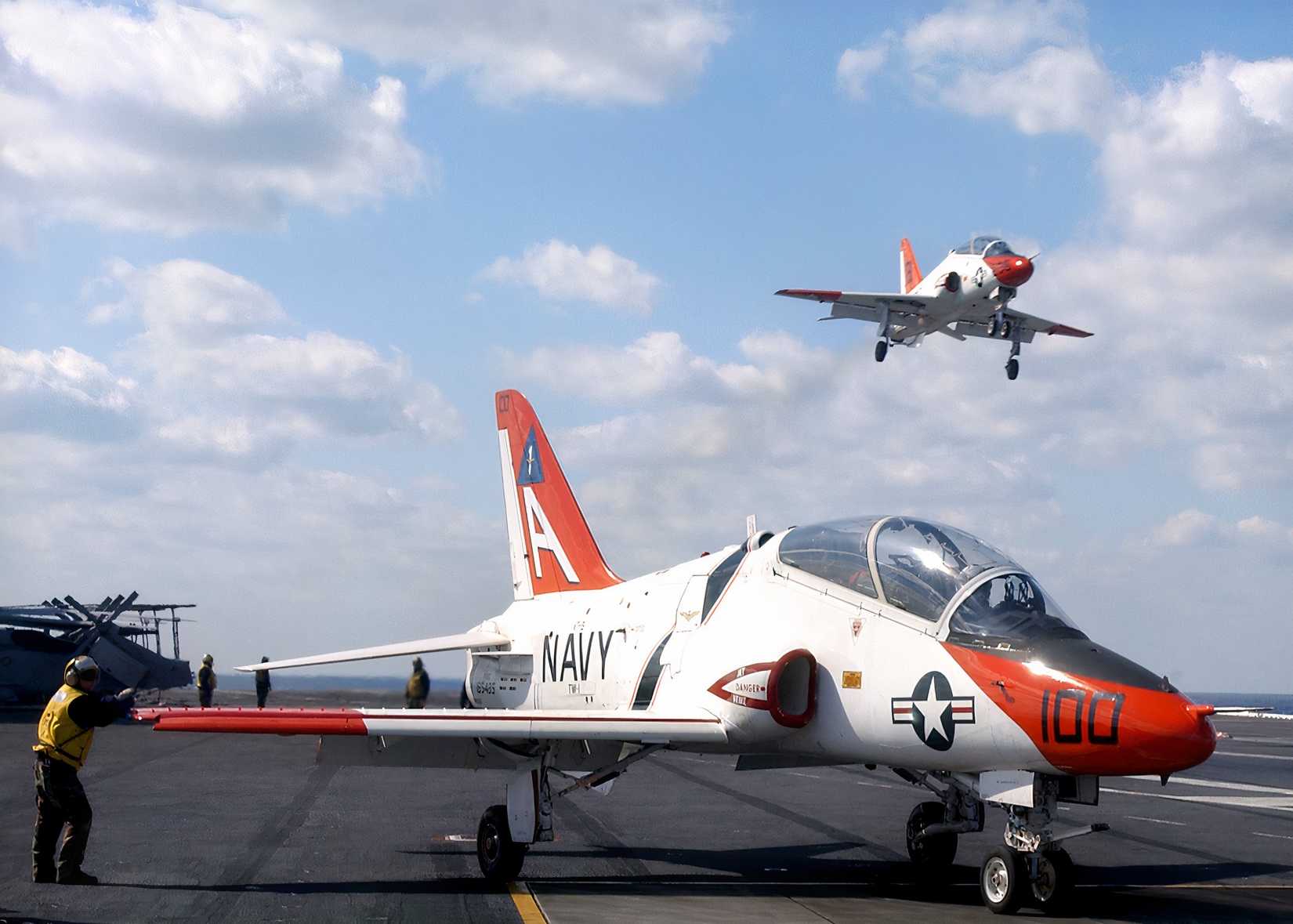
There is some irony about the sentiment that the “UK can’t build trainers,” and it potentially misrepresents how the British aerospace sector has evolved. With that being said, decline as a characterization is not without merit. It may surprise many that the United States has not developed its own fully domestic trainer in a very long time. The current US Air Force Beechcraft T-6 Texan II (to be replaced by the T-7) is a license-built trainer based on the Swiss Pilatus PC-9.
Northrop’s T-38 Talon is a fully US-designed aircraft. The US Navy’s McDonnell Douglas (now Boeing) T-45 Goshawk is a highly modified version of the British BAE Systems Hawk. Meanwhile, as the name suggests, the T-7 Red Hawk is built in partnership by Boeing with Sweden’s Saab. The US Navy is currently tendering for a replacement for its T-45, with initial proposals being US companies pairing with Korea’s KAI, Turkey’s TAI, Sweden’s Saab, and Italy’s Leonardo (formerly Aermacchi).
BAE Systems’ Hawk trainer (per BAE Systems)
Number built
1,000+
Number in service
650+
Countries in-service with
16
Projected period in service (globally)
Until 2050
Pilots trained
25,000+
With that being said, Boeing (with Saab) and Lockheed Martin (with KAI and TAI) have dropped out. This leaves just Textron (with Leonardo) and Sierra Nevada Corporation (with Northrop Grumman and General Atomics) as the remaining two bidders for the Navy’s future trainer. The next US Navy trainer may be a fully American design if SNC’s Freedom Trainer is selected. However, it is still telling that of the four original teams, three were based around existing foreign-derived aircraft.
Related
Sources: Boeing & Saab Look To Partner With BAE On New RAF Trainer
There may be a new contestant for the next RAF trainer jet.
How The British Aviation Industry Has Transformed
Credit: Shutterstock
Some may lament that “Britain can’t build aircraft anymore,” but again, this is perhaps an unfair characterization of the British aerospace industry. While there are few aircraft that come with a “made in Britain” sticker, almost all Western aircraft, both commercial and military, are at least “made with British components and intellectual property.” Besides the Eurofighter Typhoon, perhaps one of the best examples is the Swedish Saab Gripen.
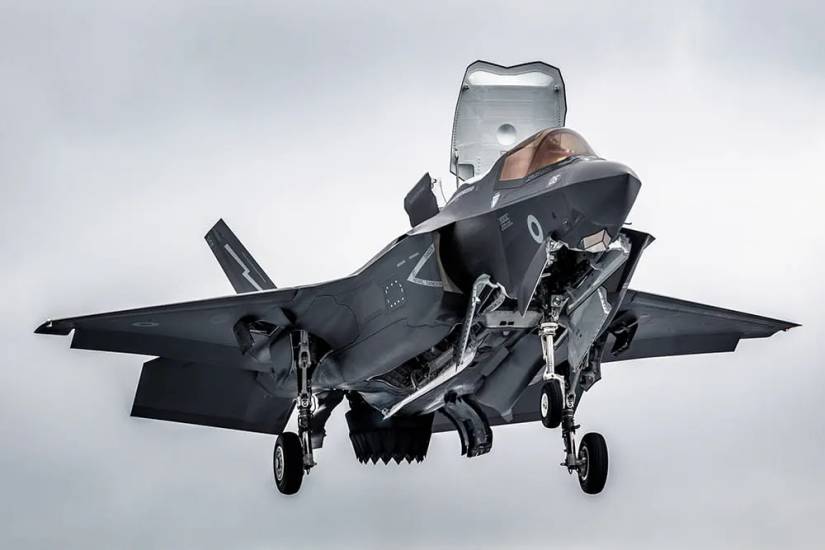
Around a third of that aircraft by value and intellectual property is British, with the BBC even putting the share at 40% “made in the UK,” although that depends on what is counted. The American F-35 is around 15% British (depending on counting method), with a higher share for the F-35B variant. The French Rafale is one of the best examples of a Western fighter jet with almost complete national ownership over its intellectual property and supply chain, and yet it comes with a British Martin-Baker ejection seat.
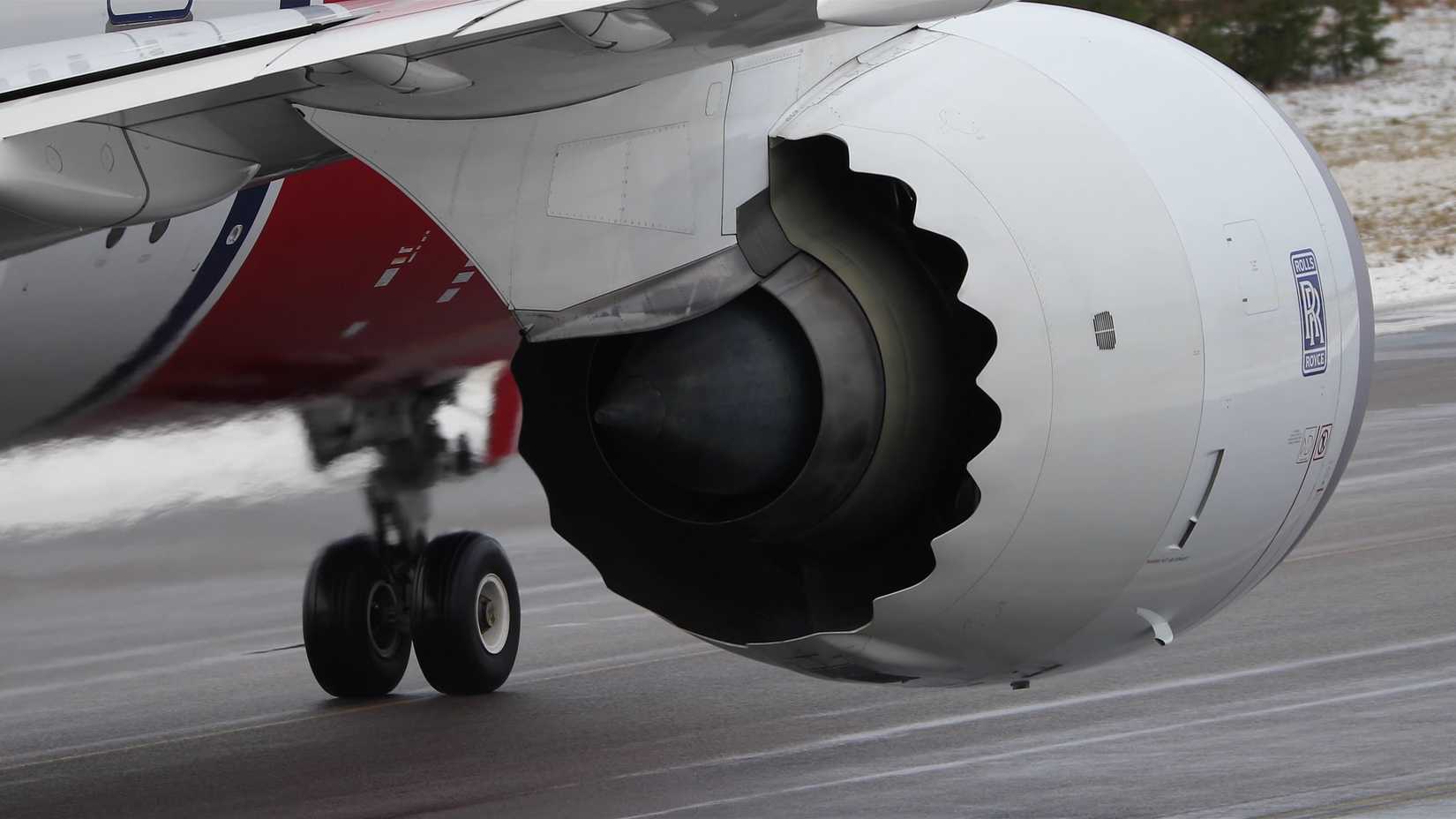
British DNA can be found in almost all Western fighter jets as well as South Korean jets and the Sino-Pakistani JF-17 (via the ejection seat). Many may be familiar with the fact that Boeing built the special Dreamlifters to transport components for the Boeing 787 from Italy and Japan. However, it is less well known that the British contribution is likely higher by value, at around 20% for those powered by Rolls-Royce Trent 1000 engines and less, but still substantial for those with GEnx engines.
Specialized Into High-Value Aerospace Sectors
Credit: Royal Navy
It is possible to view the loss of a fully British-designed and built trainer aircraft for the Hawk not so much from the point of view of decline of the British aerospace industry, but as representative of its transformation. Britain has moved from being primarily an aircraft-system integrator and complete-aircraft producer to being a major supplier of aerospace systems, engines, structures and intellectual property embedded in aircraft designed and assembled elsewhere.
In truth, it is now extremely difficult for any country to fully design and build aircraft alone. In the commercial sector, this was highlighted by Russia in the wake of 2022 sanctions. It is also worth noting that the British aerospace sector tends to be the strongest in some of the most technologically advanced, most specialized, and high-value sectors.
Britain’s overall share of the commercial aerospace sector can be reasonably estimated to be around 10%, depending on factors, although the higher figure of 17% is sometimes floated online. Examples include Rolls-Royce (engines, LiftFan), Martin-Baker (ejection seats), BAE (avionics, electronic warfare, mission systems, software and major aircraft structures).
Britain may no longer be able to build the BAe 146, Hawk, Harrier, VC10, or Canberra-type aircraft entirely under British ownership. Rather than viewing the story simply as one of decline, it may be better understood as a combination of decline in sovereign aircraft production and specialization in high-value aerospace technologies.