
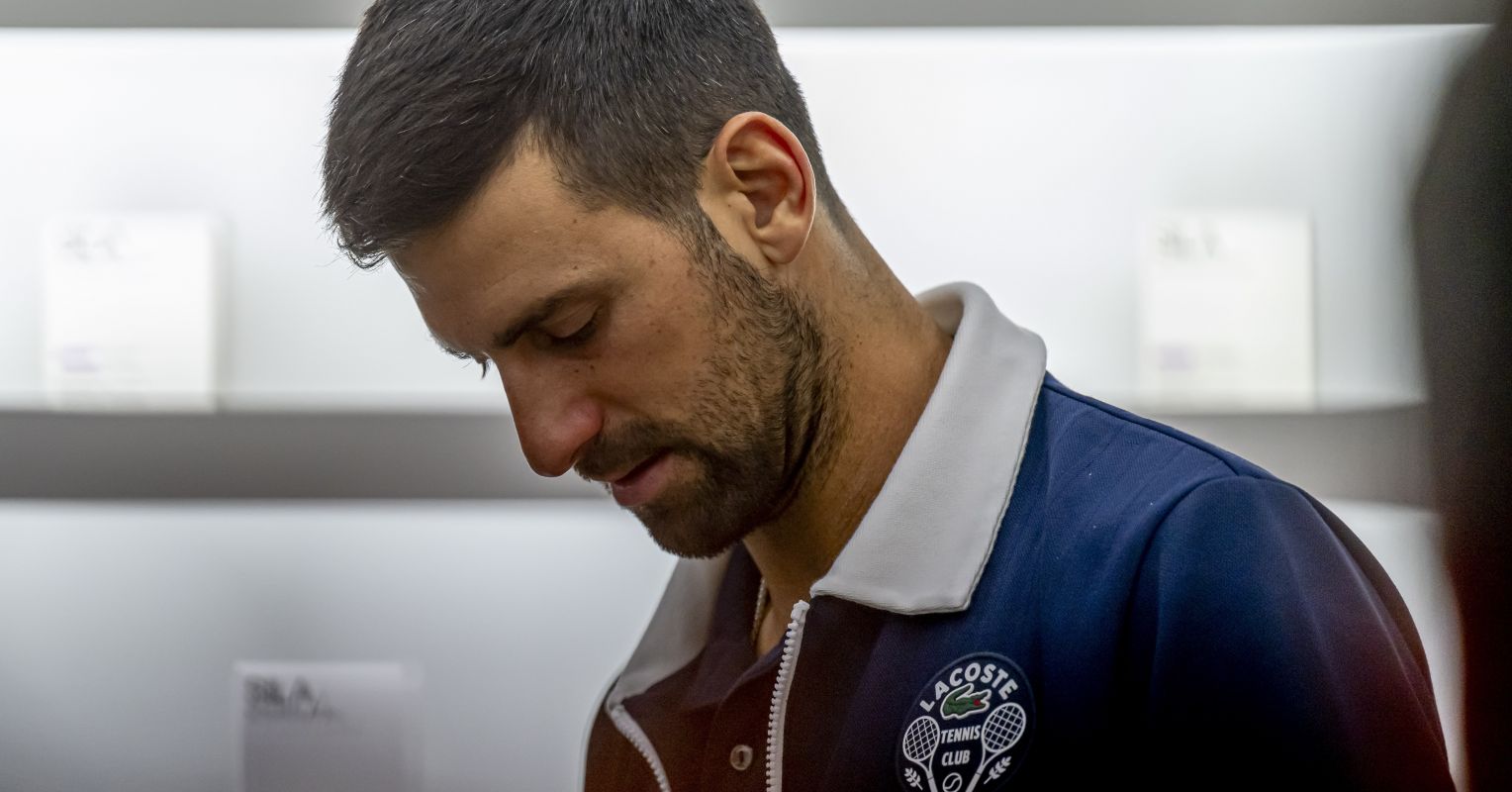
Novak Djokovic has achieved virtually everything possible in professional tennis. He is widely considered one of the greatest, if not the greatest, players of all time. Yet in the newly released documentary Novak Djokovic: The Wolf in Winter, he reflects on something deeply vulnerable that may be familiar to all of us: “The feeling of not good enough has been with me for a very long time. It’s still with me.”
There is something both striking and human about hearing those words from such an accomplished icon who often portrays so much bravado and confidence on his stage.
We live within a culture that repeatedly encourages us to compete, compare, perform, achieve, and prove ourselves. Today’s performance is no longer good enough tomorrow. We tackle one goal, and we immediately begin pursuing the next. We become better than before, but we quickly compare ourselves to someone else or to another standard we have yet to meet.
Achievement can become an attempt to secure something deeper that our biology is seeking: safety, resources, approval, belonging, or a sense that we are finally good enough.
Djokovic’s honest reflection is a powerful reminder that achievement, even at the highest level, does not necessarily erase the deeper physiological imprint of never feeling like we are enough.
In the documentary, Djokovic describes what can happen when our own achievements continually raise the bar for what is considered enough. He calls it the “curse of achieving every possible achievement,” because anything less can begin to feel not good enough. Elsewhere, he acknowledges, “I cannot say I feel content with what I have and who I am.”
When this happens, performance becomes more than something we do. It becomes something we depend upon to establish who we are and whether we are enough. Importantly, this shift is not necessarily the result of a conscious decision made by Djokovic, or any of us. It can become embodied within our physiology itself. Beneath his record-setting Grand Slam titles, Djokovic’s relationship with the tennis court and with achievement may have been shaped, in part, by a physiological imprint formed through his early experiences in childhood.
When he was 12 years old, his father revealed to his entire family how little money they had left, and how much of it was going toward supporting Novak’s development. It was a tremendous sacrifice and gamble that the entire family understood. For Djokovic, that decision appears to have carried a very powerful and relentless pressure to perform. He remembers, “I had to become more serious, more stern, more stable, more of a man rather than a boy.”
Whatever meaning tennis held for Djokovic before that moment, something had changed. Succeeding became intertwined with responsibility, family resources, sacrifice, and the knowledge that the people he cared about most were depending upon him. Imagine how that might feel at only 12 years old.
Recognizing this does not mean we have to stop competing, pursuing goals and dreams, working hard, or committing ourselves to what matters to us. But perhaps we can develop a different relationship with achievement and become more attuned to the physiology accompanying what motivates us.
We can’t know exactly what continues to drive Djokovic today, but his own reflections give us a useful lens through which to consider what may sit beneath his relentless pursuit of more.
So when I see Djokovic still competing today, pressing hard, sacrificing whatever it takes, and even struggling physically at times, I don’t see someone who simply believes he can still compete with the best, or someone who doesn’t know when to stop. I see that same little boy, still shaped and fueled by the physiological imprint of what winning has always meant.
And when I think back to Djokovic breaking down in tears, running into the stands, and collapsing into his mother’s arms after finally winning Olympic gold, I see more than an athlete celebrating the achievement he wanted most, and one that had eluded him. I see the little boy who had taken on so much responsibility at such a young age, almost as if he were saying, “Mom, I did it. I didn’t let you or the family down.”