
 Play Brightcove video
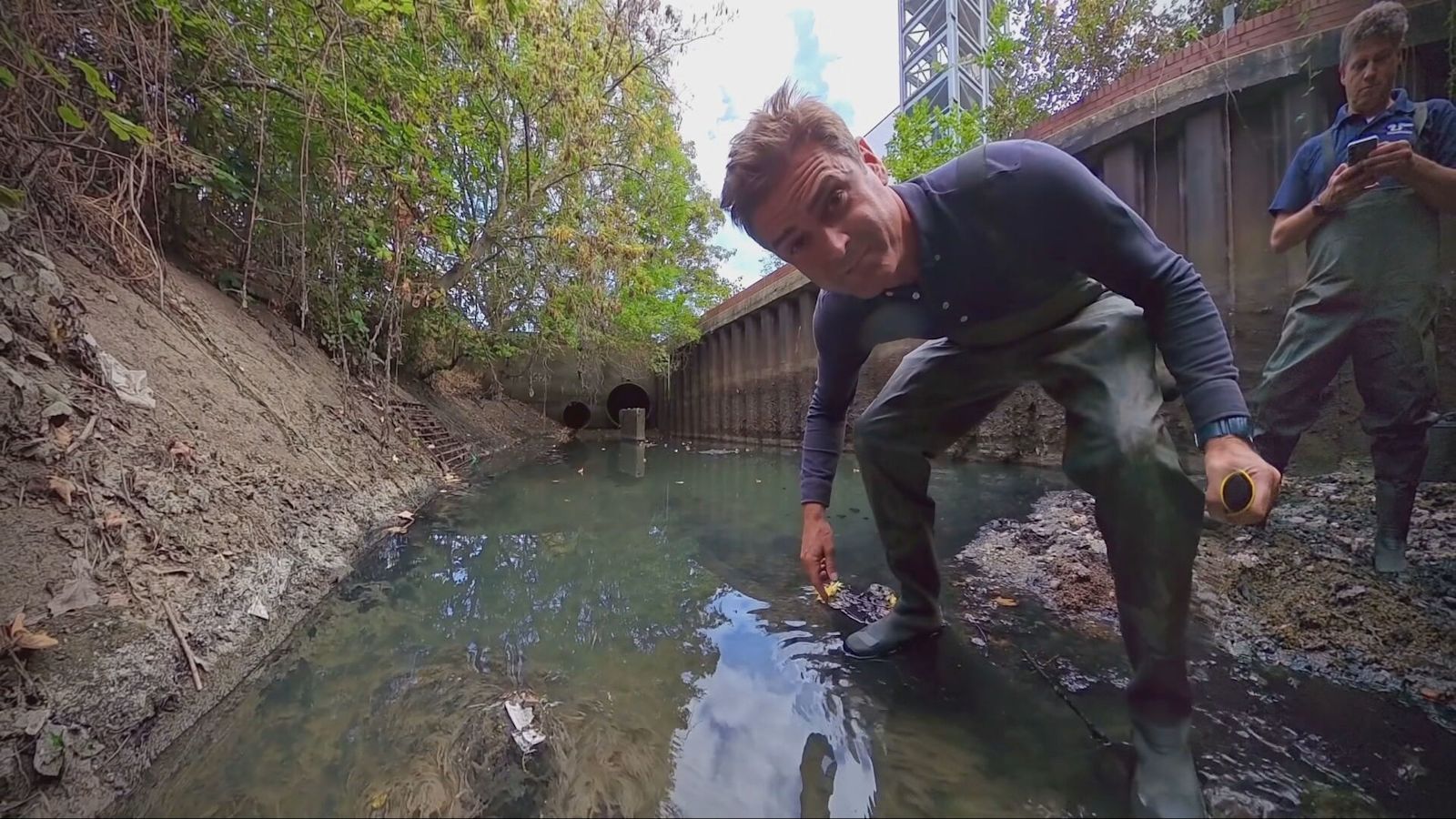
The equivalent of 240 Olympic-sized swimming pools of sewage-contaminated water could be entering the River Roding every year in Essex and north-east London, according to a new study.
Volunteers estimate around 600 million litres of polluted water may be flowing into the Roding and its tributaries annually.
One of the biggest problems is sewer misconnections according to the environmental charities Thames21 and the River Roding Trust.
This is when wastewater from homes or businesses is incorrectly connected to pipes designed to carry rainwater, allowing sewage to flow into rivers instead of being taken away for treatment.
Examples include toilets, washing machines or other wastewater appliances connected to the wrong pipe.
The study identifies Cran Brook, a tributary of the Roding, as the single biggest source of sewage pollution found in the Lower Roding.
Researchers say widespread misconnections and faulty drainage infrastructure around the brook are allowing sewage-contaminated water to enter the river.
Pollution is also coming from a historic landfill site.
Liquid known as landfill leachate can carry harmful chemicals and other pollutants as it moves through waste and into the surrounding environment.
Environmental charities behind the research are calling for urgent action to stop the pollution at its source.
They want Cran Brook made a priority for restoration, including repairs to sewage infrastructure and action to correct misconnections.
They are also calling for wetlands and other nature-based solutions to help remove pollutants before they reach the river.
Subscribe for free to our weekly newsletter for exclusive and original coverage from ITV News. Direct to your inbox every Friday morning.
Thames Water says it is already investigating the Roding catchment through its Surface Water Outfall Programme, known as SWOP.
A spokesperson said the report highlights the serious environmental impact caused when wastewater appliances are connected to the wrong drainage system.
The company said it had found signs of pollution across a large part of the catchment, with the majority of the cases identified caused by misconnections on private properties.
Thames Water said the size of the catchment means its investigation could take up to a year.
It said progress depends on property owners allowing access for surveys or, where necessary, the company applying to court for a warrant of entry.
The company said most misconnections were likely to have happened accidentally, but responsibility for correcting them remains with the property owner.
Thames Water is urging freeholders and developers carrying out new plumbing work to make sure connections are installed correctly.
Charities Thames21 and the River Roding Trust say the research shows the Roding’s pollution problem is not simply about occasional sewage spills.
They want those sources identified, repaired and stopped before more sewage-contaminated water reaches the River Roding.
Want a quick and expert briefing on the biggest news stories? Listen to our latest podcasts to find out What You Need To Know…