
SAINT-GERVAIS-LES-BAINS, France—As the last rays of summer light disappeared behind the French Alps, the guard dog began to bark.
Above, a flock of sheep spread across an isolated mountain pasture. Below, the lights in the resort town of Chamonix flickered to life. Ahead stood a small shepherd’s cabin and a milk-white Great Pyrenees dog.
“Normally the shepherd is bringing the sheep in at this time,” said a volunteer with the French pro-carnivore organization Ferus. “But look. Here the sheep are spread all over the mountain, there’s little fencing, and only one patous” — the French name for the large dog breed.
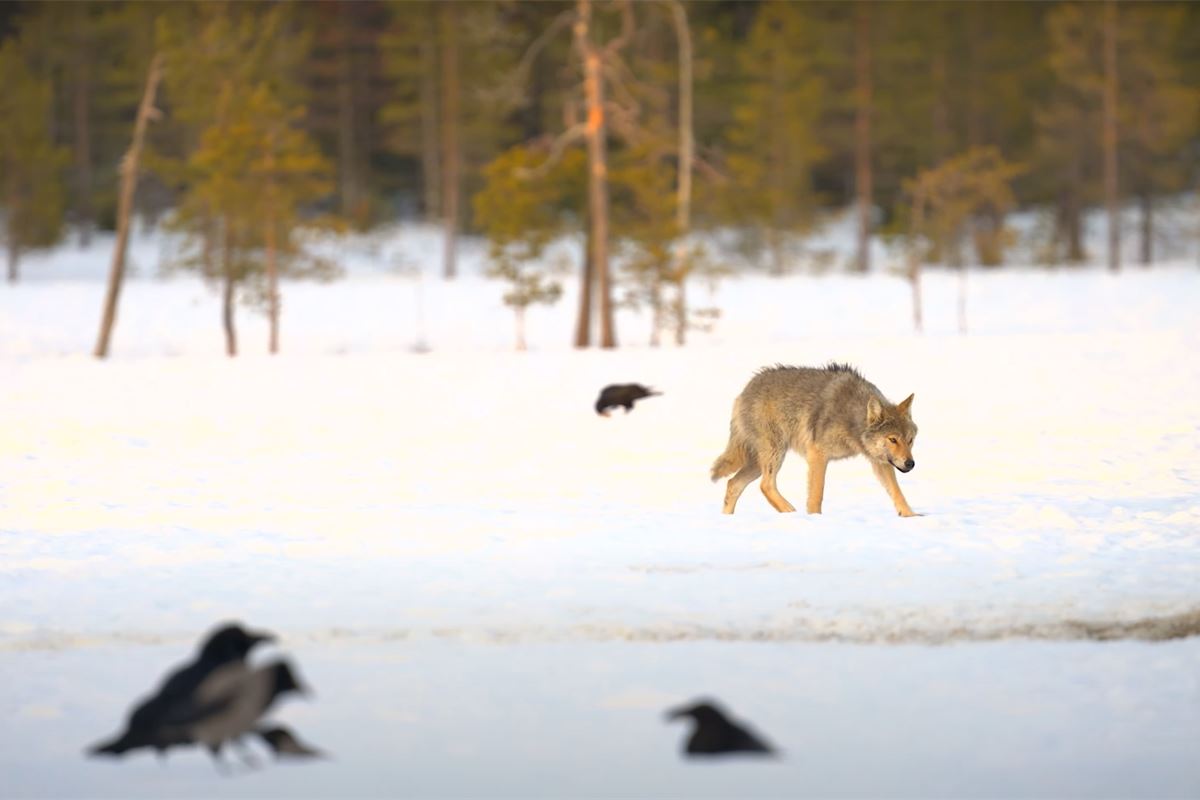
But the predator the dog was meant to keep away was nowhere to be seen: Canis lupus, the European wolf.
Europe spent decades bringing wolves back from the brink of extinction. Now, as they have returned to landscapes where sheep grazing has taken place for centuries, a major conservation success story has collided with the interests of livestock farmers and the complex politics of Europe’s rural communities.
In 2025, the European Parliament voted to reduce the wolf’s protection under EU law, giving member states greater freedom to control their wolf populations. Since then, countries across Europe, including France and Germany, have loosened their rules on shooting the animals.
But the move has generated howls of frustration across Europe. Scientists and conservation groups say the law change was driven more by a political need to appeal to rural voters than by the science on the status of the species itself. Now, the fight over the wolf’s future is playing out in places such as the French Alps, where farmers, ecologists, tourists and local governments are confronting the question of how much room there is for Europe’s returning predator.
Up on the mountain, the conflict was visible even without a wolf in sight.
The Ferus volunteer, who asked to remain anonymous for fear agricultural groups might drop manure at his house, scanned the pasture through night-vision binoculars. Darkness fell. No shepherd appeared. The electrical fencing lay in the mud, leaving more than 1,000 sheep with only a single guard dog for protection. “It’s easy for the wolves,” he said.
Bringing back the wolves
For much of the 20th century, there was little reason for European shepherds to worry about wolves. Hunting, deforestation and poisoning had driven the species close to extinction across much of the continent.
That changed in 1992, when the European Union passed the Habitats Directive, providing strict protection to more than 1,000 species, including the wolf. The policy worked. Today more than 20,000 wolves roam the European Union. “Because of this strict protection, we still have wolves in Europe,” said Gaia Angelini, president of Green Impact, a nonprofit organization advocating for Europe’s wolves.
But conservation success brought an old conflict back with it. Wolves eat sheep. They kill more than 65,500 head of livestock in the EU each year, according to data collected between 2017 and 2022 by the European Commission.
As rural frustration grew, the EU began considering whether it was time to reverse course. In May last year, the European Parliament voted to change the wolf’s status from “strictly protected” to “protected.” Both the European People’s Party and political groups further to the right voted heavily in favor of the proposal, which was also backed by the powerful Copa-Cogeca agricultural lobby in Brussels.
Under the former rules, wolves could only be killed under special circumstances, such as when an individual animal caused severe damage, said Ettore Randi, professor of biology at Aalborg University. The new rules are more pliable.
“Member states now have additional flexibility in managing their local wolf populations,” said a Commission spokesperson, “and they can take measures adapted to regional circumstances to better protect humans and livestock, and prevent incidents.”
Conservation scientists, however, sounded the alarm. Some argued that European wolves had yet to reach the “favorable conservation status” required to justify the loosened protection — meaning that their populations and range should be sufficiently stable and their habitats secure, Randi said.
The change, said Sabien Leemans, senior biodiversity policy officer at the World Wildlife Fund’s European Policy Office, “turned one of Europe’s greatest conservation successes into a political bargaining chip, putting science-based policymaking at risk.” Now pro-wolf groups are suing the EU in the European Court of Justice to reverse the change.
Managing wolves
The argument is now playing out across Europe, but with very different consequences depending on the country.
Germany, which had some of the strongest wolf protections in the EU and a recovering population, has now established a hunting season for wolves, and some states are already issuing permits, according to Sybille Klenzendorf, director for wildlife conservation at World Wildlife Fund Germany.
The shift has been politically charged. Reducing the wolf population became an issue in Germany’s coalition negotiations in 2025, even though scientists say the country’s wolves haven’t reached the standards to be considered a fully recovered population.
For some pro-wolf activists, the move smacked of political expediency. “It’s low-hanging political fruit that makes it seem as if they’re doing something for the agricultural community,” said Klenzendorf. “Even though it’s not the right thing.”
In Sweden, where three wolves that migrated from Finland have grown into a 300-strong population in the country’s south, the government has pursued winter hunts with the goal of slashing the population by half.
“The politicians would rather shoot the wolves than solve the problem of coexistence, to live side by side,” said Kjell Bäcklund, secretary general for the Swedish Carnivore Association. The situation is similar in Norway, which shares a small cross-border wolf population with Sweden.
Austria has gone even further. Wolves only returned to the country in 2016, and now number a mere eight packs, yet 20% of the population was shot last year. “Local politicians said no,” explained Christophe Pichler, a wildlife biologist with World Wildlife Fund Austria.
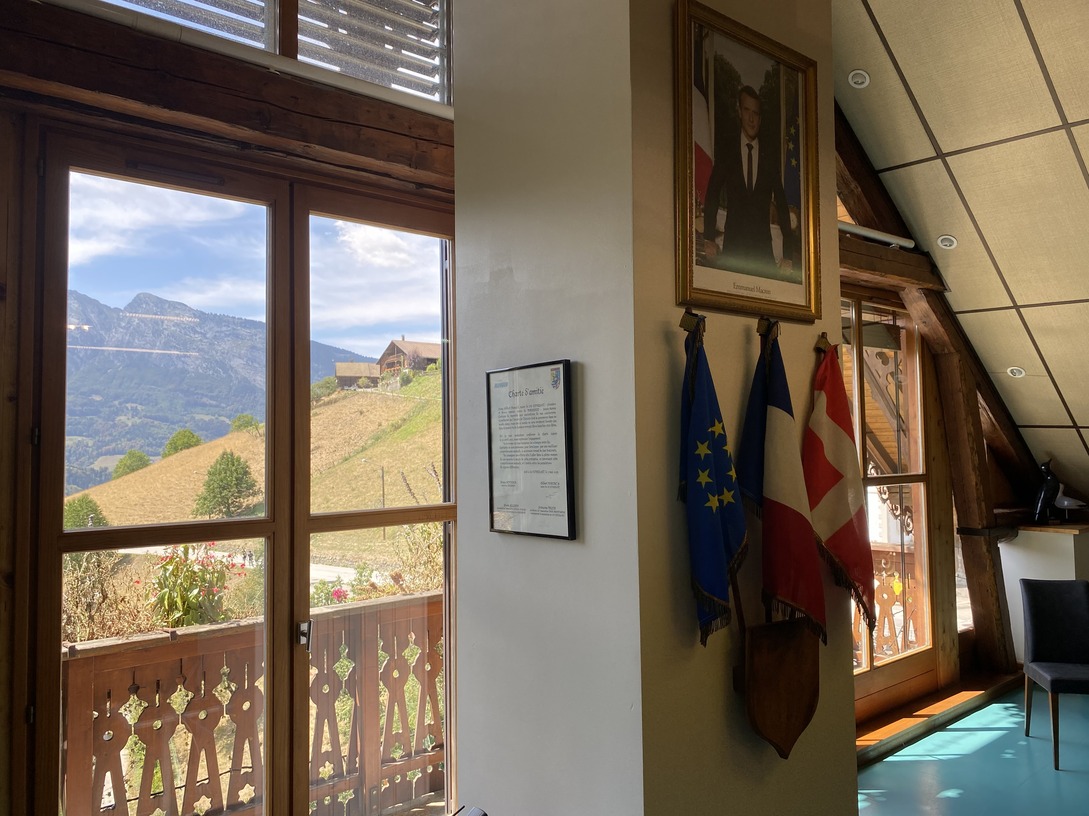
The city hall chamber in the French town of Manigod, where wolves and shepherds often come into conflict in August, 2026. (Peder Schaefer)
Rural communities saw it as unfair for decisions to be made in Brussels while they were left to live with the consequences. The European Court of Justice had already ruled against Austria’s wolf hunting practices in 2024, before the EU loosened its protections.
Austria is not an isolated case. Several countries including Sweden, France and non-EU Norway also killed wolves under the former strict-protection regime. Wildlife groups argue that many of those killings were illegal.
French shepherds fight back
The city hall chamber in the tranquil French Alps mountain town of Manigod looks out over pastures that have long hosted flocks of sheep. But for herdsmen Patrick Gallay and Renaud Bozon-Liaudet, those mountains have now become filled with threats — and bureaucratic headaches. Between 10,000 and 12,000 sheep are killed by wolves in France each year, according to the National Research Institute for Agriculture, Food and Environment, and Manigod is one of the most predated communes in the entire Haute-Savoie department.
In 2023, wolves attacked Gallay’s sheep despite the measures he had put in place, which included electric fencing. Over the course of five attacks, 38 of his animals — a quarter of his flock — were killed.
“We feel a knot in our stomachs, and we’re only happy when we shut the fences to the goat pen, knowing for sure the flock is inside,” said Bozon-Liaudet, who is also Manigod’s deputy mayor for environment and agriculture. “You have to experience it — you have to live through it — to know what it’s like.”
France has allowed its farmers to fight back. For over a decade, the government has permitted targeted culling of wolves that are actively attacking livestock. After the EU changed its rules, France swiftly increased the number of wolves that can be killed each year to a maximum of 23%, or 248 animals. Since April 1, farmers have also been allowed to carry out defensive shootings regardless of whether their flocks are properly protected. “I want the power to protect my sheep flock,” said Franck De-Nale, another sheep farmer in the region. “That means being able, in the event of an attack, to shoot it. If I kill it, well, I kill it.”
While the expanded license to kill has angered pro-wolf activists, who feel farmers aren’t doing enough to protect their flocks, some shepherds argue the changes don’t go far enough. For years, French farmers have been required to use electrical fencing, human shepherds and livestock guardian dogs. Those measures can be expensive and difficult to maintain — and they can also create problems of their own.
In tourist areas like Manigod, guard dogs can pose a risk to hikers. In July, a hiker in Manigod had to be evacuated by helicopter after being attacked by a guard dog, said Bozon-Liaudet.
More fundamentally, shepherds say the required protection measures and soaring wolf attacks are changing a way of life that has existed in the Alps for generations. “I think we’re protecting the animal too much at the expense of our heritage,” said Joany Cassina, head of the sheep farmer’s union in the Haute-Savoie. “This is destroying pastoralism.”
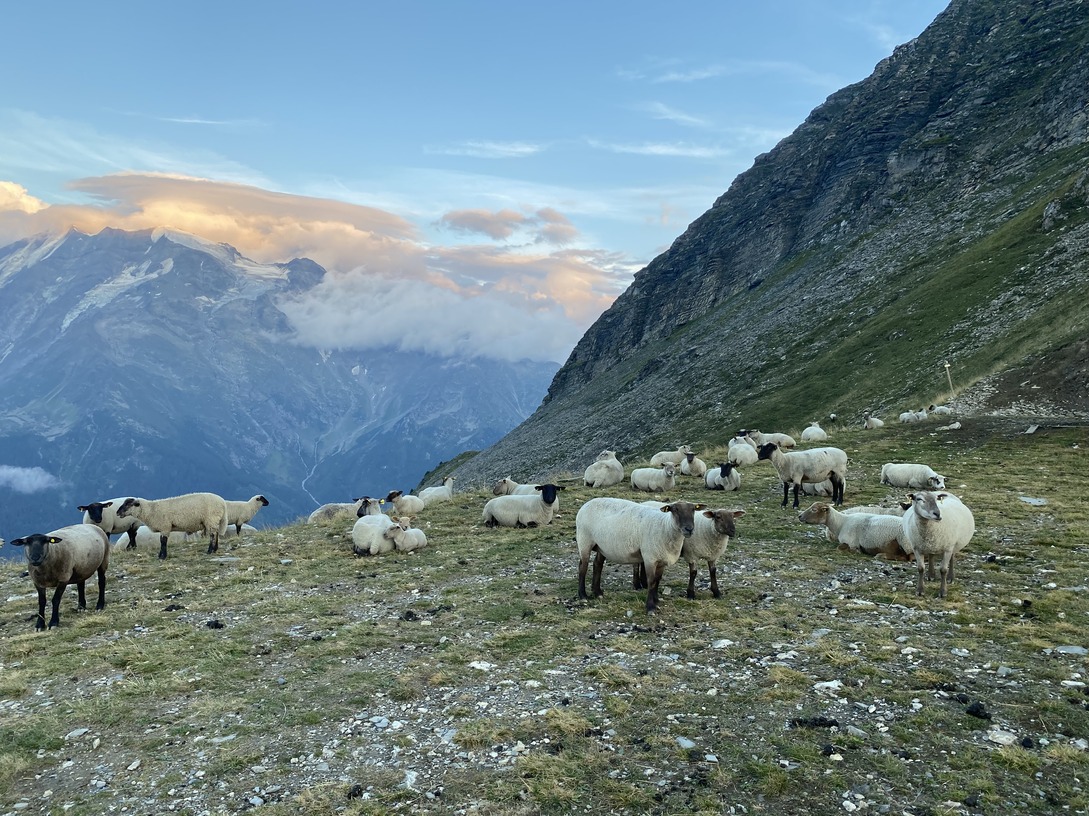
A flock of sheep high in the French Alps in August, 2026. (Peder Schaefer)
Cédric Laboret, president of the Savoie Mont-Blanc Chamber of Agriculture and a sheep farmer, sees the same divide at a political level. “I think the politicians are aware of the wolf question, but for them, it’s a bit abstract.” Or as another shepherd from the region said: “I’ll wait until the day the politicians go out to tend a flock in a tent at night and it rains all night long — maybe then they’ll understand the problem.”
Does killing wolves work?
Beneath the political wrangling there’s also the question of what measures actually reduce livestock attacks.
French conservation biologist Oksana Grente has studied wolves in the Alps since 2018. Her research found that targeted killings of wolves can reduce livestock predation, but the effect lasts only about 45 days and extends roughly 2 kilometers around the site of the killing.
That doesn’t mean shooting has no role, she said. “To have no attack, you will have to have no wolf, and this is not what we want,” Grente said. “That’s why we need strong non-lethal protection, and if the wolf density is too high, then you can reduce wolf density in certain areas.”
In Germany, protection measures have been an effective way to reduce livestock losses, according to Klenzendorf. “If you invest in livestock protection, damages do go down,” she said. “It is possible in alpine regions, near the North Sea, everywhere.”
Even shepherds acknowledge that fencing and dogs work, even if they’re frustrated by the hassle of having them. “We’ve noticed that among herders, they tend to target herds with few protective measures, or measures that aren’t as well-designed, rather than those that are fully protected,” Gallay said.
Even so, Gallay believes the wolf population in the French Alps has grown so quickly that protection alone is no longer sufficient, especially as wolves have become better at evading protective measures and are getting closer to human habitations. He said that it was necessary to “eradicate or drastically reduce the number of wolves.”
“The overpopulation we’re currently facing is making conditions on the ground unbearable,” said Laboret. “It’s basically war.”
That leaves governments with the double challenge of protecting livestock in areas where wolves are abundant while allowing the species to continue recovering in places where populations remain small.
Some shepherds and scientists therefore argue for a regional approach to wolf management, with different regional quotas depending on local populations rather than a single national system. More wolves could be culled in the Alps, for example, while smaller populations in northern France or the Pyrenees receive greater protection.
For scientists like Grente, however, focusing only on predation and wolf population size undermines the broader goal of creating a healthy European wolf population that can coexist with humans. The focus, she said, should be increasing geographic dispersal across France and Europe so that isolated wolf populations — such as on the Iberian Peninsula or in Scandinavia — can connect and broaden the genetic pool.
A minority bears the cost
There’s another complication. The majority of Europeans aren’t farmers. Only 3.9% of European workers were employed in agriculture in 2023, according to Commission data. But farmers bear the costs of the wolf’s return most directly, in financial, practical and emotional terms.
The wider public tends to view wolves positively. In France, 82% of people say that a wolf has a place in the country’s nature, while 76% say the species should remain protected, according to a French Institute of Public Opinion poll conducted for World Wildlife Fund France.
For pro-wolf activists like the Ferus volunteer, that disconnect is evidence that policy is being driven by a powerful rural agriculture lobby rather than broader public opinion or scientific evidence. French farmers have long been a highly organized political force, as repeated tractor protests in Paris and Brussels have demonstrated.
“I think the government has tried to channel the farmers’ anger toward wolves to avoid addressing the real challenges facing French agriculture,” the volunteer said. He argued that declining demand for mutton, rising imports and the Mercosur agreement have much more to do with the pressures facing French sheep farmers than wolves. Wolves kill just 0.065% of the EU’s sheep population each year, according to the Commission.
Back in Saint-Gervais-les-bains, the volunteer took a final look through the infrared binoculars. The sheep and dog lay fitfully across the mountainside. No shepherd appeared to repair the downed fencing or to gather the flock. It was time to go home.
Then came a bark from the ridge above. The outline of a Canis lupus emerged against the darkening sky. But the creature took another step, revealing its milk-white coat: it was the patous, doing its job. Somewhere, in the shadows, a wolf was likely out there, waiting to strike another day.
Sign up to The Parliament’s weekly newsletter
Every Friday our editorial team goes behind the headlines to offer insight and analysis on the key stories driving the EU agenda. Subscribe for free here.