
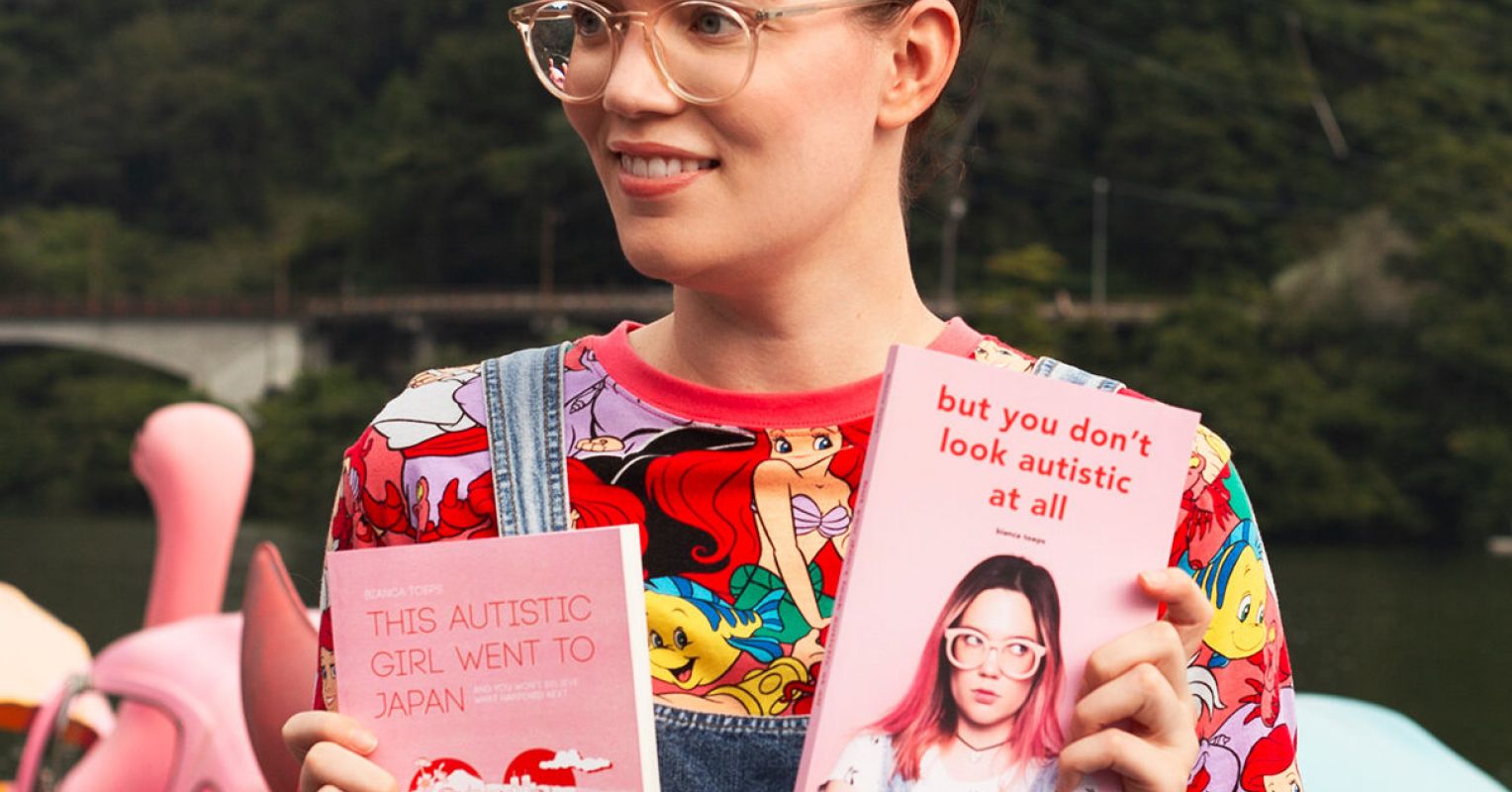
“Fighting yourself can never lead to real progress, because you are yourself. You’re simply applying opposing forces to the same person. The result isn’t forward movement, it’s just exhaustion.”
Bianca Toeps explained it using physics. For me, it captures something important about what happens when someone spends years trying to overcome who they are instead of understanding themselves.
Bianca is the author of But You Don’t Look Autistic at All and This Autistic Girl Went to Japan, both translated into multiple languages. She was diagnosed with autism at 26, after years of burnout, an eating disorder, and the persistent feeling that she was letting everyone down. She is currently based in Japan, and she agreed to speak with me for this post following her recent essay on the debate over abolishing psychiatric diagnostic labels.
The Definition of “Car”
The debate over psychiatric diagnostic labels has been gaining attention. Jim van Os, a prominent Dutch psychiatrist, published a piece in Nature arguing against DSM-style diagnostic categories in favour of needs-based care. The proposal sounds reasonable. Bianca’s response focuses on something the broader debate can overlook: what happens to people who rely on diagnostic language to understand themselves.
“The problem is that removing the diagnostic label doesn’t remove the symptoms,” she tells me. “It’s not as if people will suddenly stop stigmatising my behaviour, or as if I’ll suddenly stop struggling with communication and sensory issues.”
She uses an analogy that is difficult to argue with. Imagine having to describe a car without using the word car: “A metal transportation vehicle that runs on fossil fuels and has four tyres.” Technically accurate, not particularly useful.
“Receiving an autism diagnosis gives people that kind of word,” she says. “It can be incredibly helpful when researching, reading books, or finding other people like you. It also helps prevent you from having to explain the same things over and over again.”
Without the label, she adds, people respond to descriptions of her sensory needs with “Oh, everybody has that, right? It can’t be that bad.” The word autism signals that it is more than that.
Before She Had a Diagnosis
Before the diagnosis, Bianca had a different theory about herself: She simply wasn’t trying hard enough. This is a common story among autistic women diagnosed late. She describes that period without self-pity, focusing instead on what she believed about herself at the time: “I felt like a disappointment. When I was a child, people told me I was gifted. And now I felt like I was letting everyone down. I started to hate myself. I developed an eating disorder and experienced multiple burnouts.”
After her diagnosis, she tried medication: a low-dose antipsychotic prescribed off-label for autistic people. It calmed her. It also made her less funny, and she enjoyed things less. “When I stopped taking it,” she says, “I made a decision: This is who I am. I’m not going to medicate myself just to be more palatable to other people.”
After that, she made a series of practical changes to how she organized her life. She plans an empty day after every day with heavy social demands. She travels outside peak hours. She books first class when she knows a train journey will be overwhelming. When going to a party, she stays one or two hours and always ensures she can leave independently.
“The biggest change was learning from my own experiences,” she says. She started logging events in her planner after they happened, not just before. “Before that, I would often be surprised that I was completely exhausted after certain events. Once I started seeing the patterns, I learned to anticipate them.”
The Visible Outsider
Bianca has been following the label debate from Japan, where the social environment around autism is different. “Many parts of society are structured around clear rules and routines, making them relatively easy to navigate once you know the script,” she says. “Trains are usually quiet and reliable. It’s also quite normal to have hobbies or interests that you’re deeply invested in.”
But the expectations around reading social cues are intense, and the stigma around seeking help remains significant. She mentions hikikomori, the phenomenon of extreme social withdrawal, often rooted in untreated depression, anxiety, or autism, sustained by family shame rather than addressed.
For Bianca personally, being a foreigner offers an unexpected buffer. When she makes a social mistake, people attribute it to cultural difference rather than neurodivergence. She finds that oddly comforting.
“I’d much rather be a visible outsider here than an invisible outsider in the Netherlands, where people expect me to understand every social cue and unwritten rule.”
On Growing Into a Diagnosis
One criticism of diagnostic labels is that they can become a reason for people to stop pushing themselves. Bianca has thought about this carefully. “Time and time again, at book signings and speaking events, people have come up to me and told me that their diagnosis changed their lives for the better,” she says. “It gave them the courage, or perhaps the permission, to make changes and take better care of themselves.”
She describes what this looks like in practice: a shed built in the garden to unwind, a new job that actually fits, explaining to friends that a one-on-one visit is more manageable than a group gathering. “Often, when you unapologetically take care of yourself, people accept it without any issue.”
For Bianca, the experience was almost the opposite. Understanding herself was what made growth possible.
Back to physics. “Fighting yourself can never lead to real progress.” The result is exhaustion. “I’m happy if I can live my life without constant alarm bells going off in my mind, or without constant self-monitoring. That, to me, is peace.”