
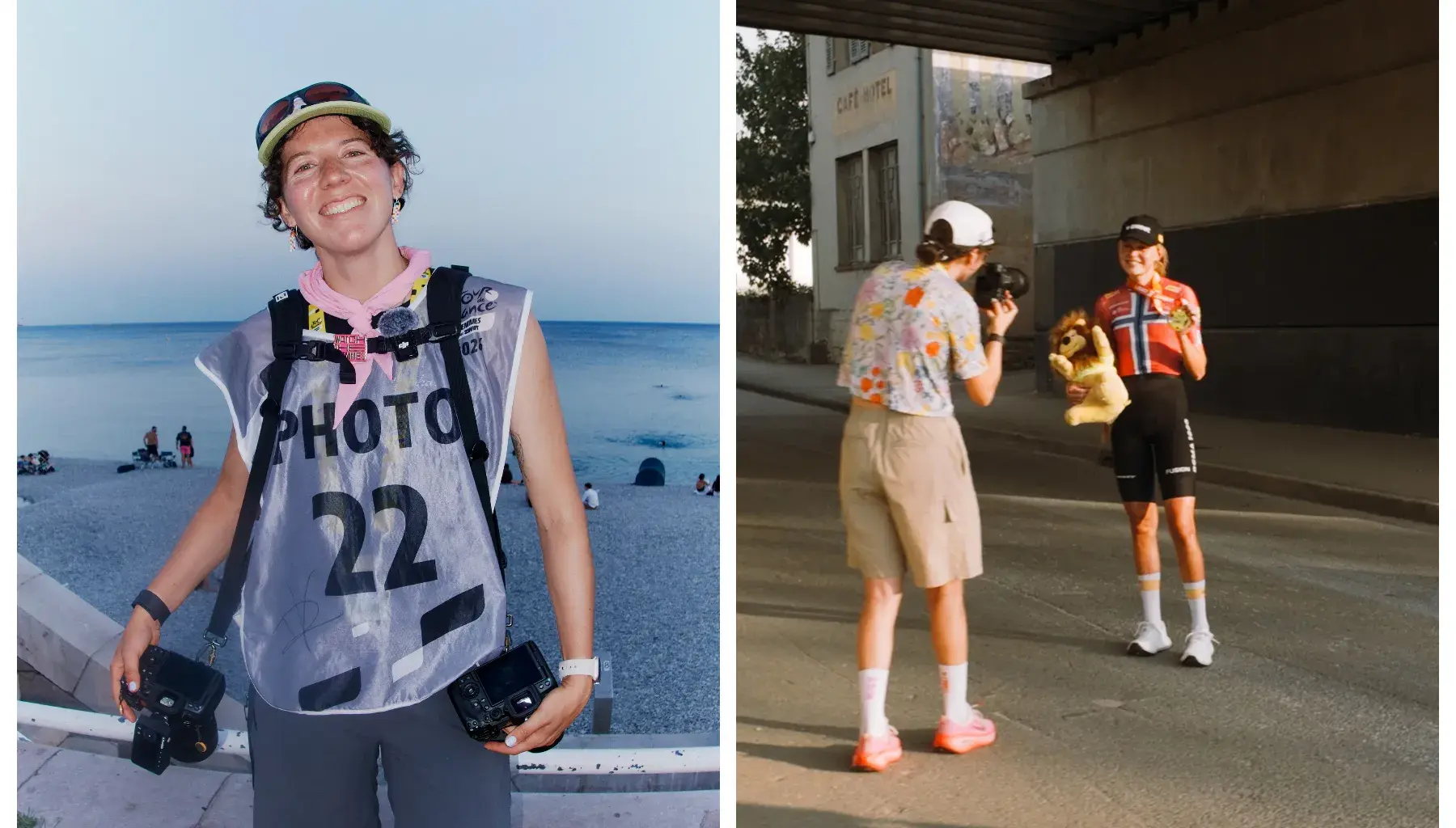
This was Dominique Powers’ fifth year shooting the Tour de France Femmes. The LA-based photographer has become a household name since her first year at the Tour in 2022, when she was only there for three stages to shoot for Giro. After regretfully watching the fourth stage on a plane, she promised herself she would always be there for the whole race.
It has since firmly become what she calls a ‘monument’ in her calendar, and she has self-published two photo books, All The Way Up and Encore, which feature her work from the 2023 and 2024 races.
‘It was especially amazing this year, the fans were awesome and the cities were a bit more central, which added to the buzz,’ Powers tells Cyclist. ‘The route was more accessible this year and you could really feel that in the energy on the ground at the race.
‘There were so many people that were planning bikepacking trips to get to the start or get to the finish, ride along the course or go to Ventoux. Many people rode up from Girona and from Spain in general and the route meant people wanted to visit the places and support the riders.’
 Dominique Powers
Powers says the race’s evolution is noticeable too: ‘The race is growing, it’s gaining more traction and becoming mainstream and you could feel it.
‘I saw more media around it, especially outlets that wouldn’t necessarily be talking about it that were posting guides, what to watch, where to watch, and what we’re excited about.
‘There was more of a lead up to the race too, not just in terms of riders it feels like the race has got a foot into being this broader cultural phenomenon, which is really fun.’
Infectious energy
The broader cultural phenomenon and energy of the Tour de France Femmes is something Powers is keen to showcase.
For the nine days of the race, her Instagram was awash with content that told stories from all different perspectives, including the riders, the podiums, the fans, and even some dogs too.
 Dominique Powers
‘It has more buy-in for fans who are not racing fans but who want to buy into the energy,’ she says. ‘It’s why the World Cup had so much energy around it as people who don’t really care about soccer any other time of the year get involved.
‘It feels good to be a part of the moment and that’s what this race has become like.
‘Even if people aren’t watching cycling the rest of the year, they’re tuning in because of the racing and because there’s so much fun content coming out of it, which makes it so three-dimensional.’
Content machine
This year Powers was working with Zwift, the title sponsor of the race, and had three concurrent projects on the go throughout the nine days.
‘The race photography and the stage winner portraits were one bucket, the Alison Jackson project was another bucket, and then the daily reels were another bucket,’ she says.
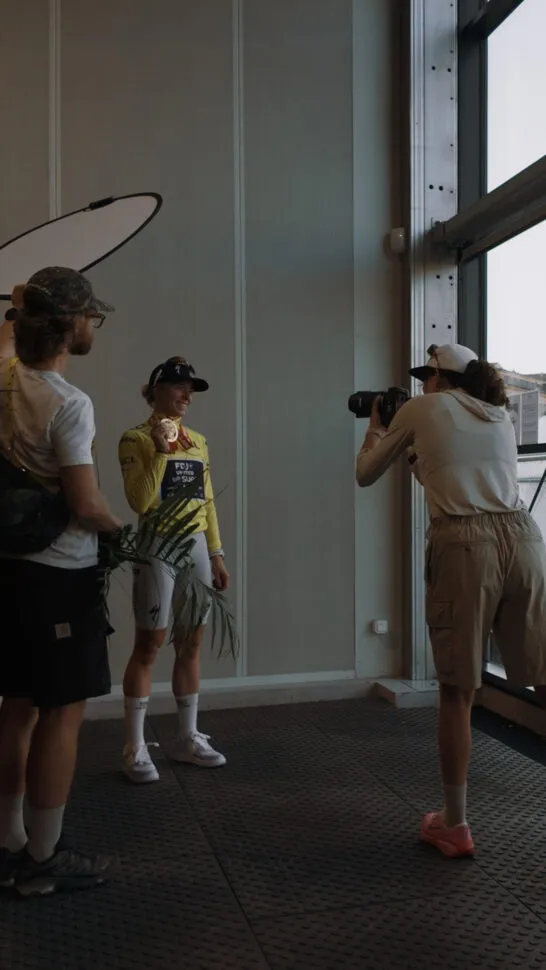
To pull off all that in a short space of time, her team included her assistant Tim, her partner Ken who drove the van, and Marcella, an editor based in New York.
 Dominique Powers
Her desire to create so much and showcase different perspectives of the race and the riders came from her experience the year before: ‘Going into the race last year in 2025, I was like, “How do we take advantage of being here? We have the access, so how can we amplify that for the people that aren’t here? How do we make it more accessible and interesting and engaging for folks? How do we put out not just photos but show the experience of the race from different perspectives?”
‘Everything that we did last year, we levelled up this year across the board.
‘If we only have people’s attention for these nine days, how do you take advantage of that to the best of your abilities?’
Humanity of racing
For Powers, it’s not just about sharing the story of the race, but about showing the riders as people and exploring their individual personalities.
Her Alison Jackson project was a daily photo series that she described as ‘an interpretation of the arc of a rider’s preparation and execution at the race, and serves to explore how fashion is intertwined with sport’.
After working with Jackson previously, Powers proposed a storyline centred on exploring the rider’s experience at the Tour with one post every day.
Through meeting up at St Michel-Preference Home-Auber93 team camps, hotels and then twice during the race, Powers created a series of photographs that capture the personality of fan-favourite Jackson on and off the bike.
The images are playful, joyful and vibrant, encapsulating what Jackson is well-known for.
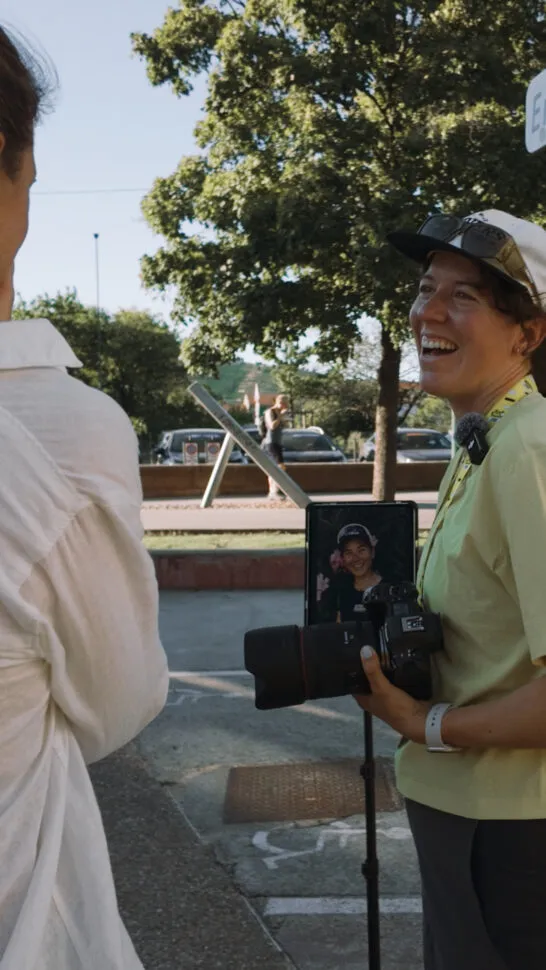
Powers is passionate about capturing the riders in ways that showcase their personality and give them the opportunity to express themselves.
 Dominique Powers
To that end, her stage winner portraits are a stark contrast to traditional stage photography.
‘It was about creating the opportunity for more of their personality to come out, especially with the stage winner portraits having it be something where they’re not in their helmet and where you can see their faces and their expression,’ she says. ‘It was so fun with Lorena [Wiebes] getting two back-to-back days with her where she leaned into it and we had this editorial moment on a street corner with the sunset light coming in.
‘In the US and Canada, there’s so much more representation of athletes in different ways that aren’t purely around the sport.’
Her ability to get the riders to relax is paramount to her own success and is something she has worked on over time: ‘It being my fifth year and having shown up every year and put so much into the race and having that be recognised was part of what made this year so much better for me.
‘I felt more at ease than I had in all of the years before and felt so much more comfortable.
‘I’ve also built a small rapport with these athletes, and they know the intention and attention that I bring and give to them and that it’s one of respect and authenticity. I want to portray them to the best that I can and show off their best side.’
Taking up space
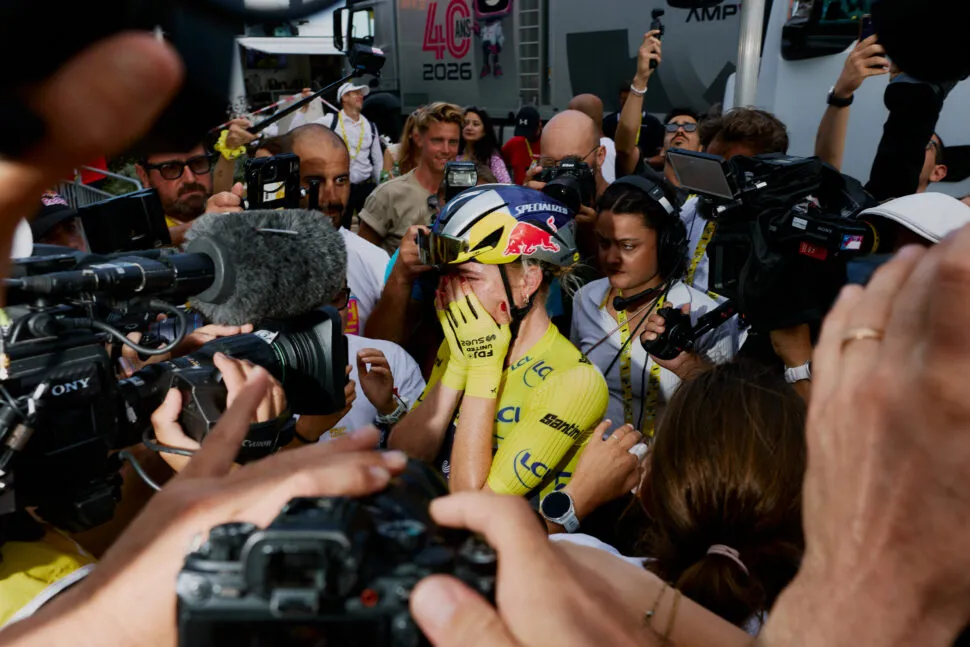
Despite the Tour de France Femmes leading the way in a huge growth period for women’s cycling – and women’s sports in general – Powers says she still felt a lack of women in the media attending the race: ‘Around 15-20% of photographers are women and it’s ultimately a real shame that women aren’t telling women’s stories at this time in history.
 Dominique Powers
‘I would say last year was probably peak for women photographers. There were a handful of women that had been media last year that weren’t there this year, which was sad.
‘But it’s also inevitable that there are these guys who have been shooting for whatever magazine for decades, aged 35-55, and this is their career in cycling photography.
‘They go to all the races and this is their full-time job. They’ve been doing this for so long and are going to continue doing this, and they have the networks, connections and the reputation.’
 Dominique Powers
Powers says this landscape fuels her to show up to races and to showcase what women photographers can do.
‘That is something that’s been so important to me to go there, take up space, put out work that I believe in, make the most of it, and show that there are women out there who are also qualified, that want to be there and are doing the work’, she says. ‘This year there was a lot of great work coming out, but a lot of those teams and brands were hiring guys.’
The right recognition
A big talking point of this year’s Tour de France Femmes was the fact that just three of the nine stages were televised live from start to finish.
‘We could use more coverage because you can’t believe in something that you can’t watch, you can’t engage with something that you can’t participate in,’ Powers says. ‘It’s the societal respect in getting the same coverage, having cyclists talked about for their achievements and not who they’re dating, it’s the bare minimum.’
‘It’s also not about taking a chance on it, at this point we have very much established that it is its own incredible sport with incredible coverage.
‘It needs more space to shine.’
What does the future look like?
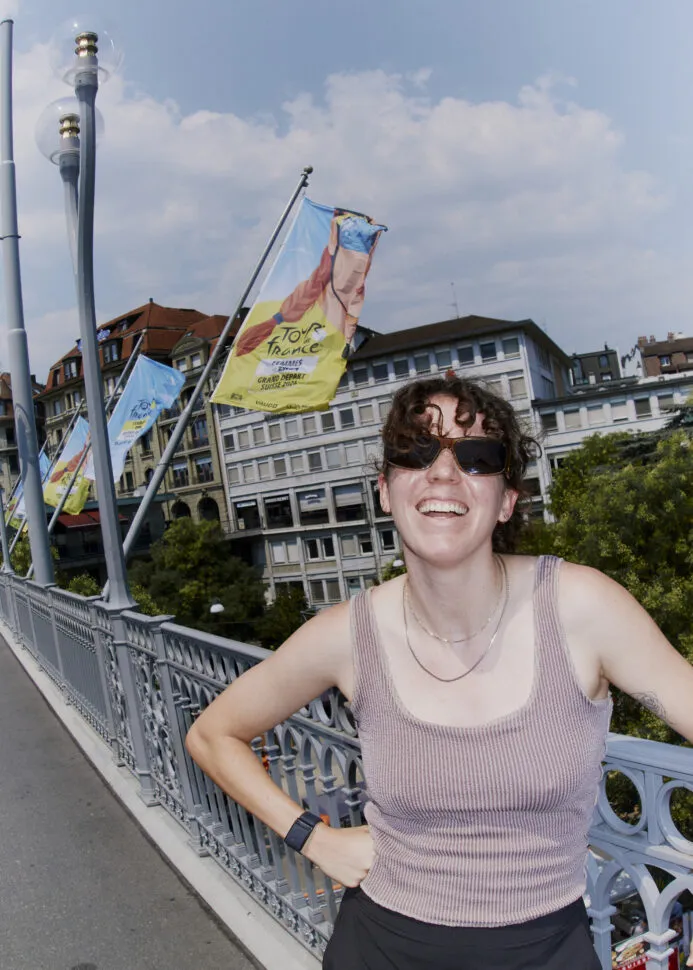 Dominique Powers
Where does Powers see her own role in all this as the race grows?
‘It’s a great privilege for sure. I never take the access and the relationships I’ve been able to build for granted,’ she says.
‘I have worked so hard to put myself in this place, be in the rooms where the conversations are happening and use that opportunity to keep pushing things forward and not just feel special that I’m there.
‘I think that because it is so personal, I think there would be pressure if I didn’t believe in myself and the work that I do.
‘If there is ever any pressure, it’s me to myself in how I can make the best work possible.’
You can see more of Dominique’s work on her Instagram or via her website.