
IN his masterwork The Democratic Intellect, George Elder Davie celebrates the distinctive blend of the secular and sacred which marked Scottish Society as different from England following the Union in 1707.
Most commentators highlight the difference as Presbyterian versus Episcopalian but Davie also stresses the importance of Scots education and Scots law in creating very different world pictures north and south of the Border.
It may be argued, moreover, that under post-Union conditions, it was the secular component rather than the sacred which was chiefly responsible for the continuing foreignness of the Scottish ethos.
READ MORE: Andy Burnham’s PR bung for Sainsbury’s hides a big, fat nothing
After all, the egalitarianism of the Presbyterians always had a certain appeal over the Border, although to be sure it was un-English in an official sense.
On the other hand, the ratiocinative approach of Parliament House, looking as it did to Roman and continental law, was out of line with the inherited English practice – and still more alien and uncongenial was an educational system which, combining the democracy of the Kirk elders with the intellectualism of the advocates, made expertise in metaphysics the condition of the open door of social advancement.
Thus the barrier between north and south was proverbially located in the contrast between rationality and rule of thumb, between principle and precedent, and the English with their tolerant good humour could refer to the complex sister-nation as “metaphysical Scotland”.
It is no coincidence then that by the 18th century, when the Scottish Enlightenment began to take off, Scotland was probably at the forefront of Europe in educating its people and enjoyed the reputation of being the continent’s most literate society.
The importance of this is that these men were not writing for a tiny elite, their work touched a sizeable reading public, who accessed them through the spread of lending libraries. Their books were also debated and tested in the forge of a brilliant, tight-knit intellectual coterie.
The High Street of Edinburgh in the 1760s, for example housed among others Allan Ramsay, Lord Kames, David Hume, William Robertson, William Ferguson and John Home, while in the clubs and howffs these men met cronies who though not on the same intellectual level, still liked a good flyting and discussion, especially when the claret was flowing.
Looking back on these gatherings in Auld Reekie, James Boswell wrote: “Each glass of wine produced a flash of wit, like gunpowder thrown into the fire – puff, puff!”
Drink apart, there was certainly a strong Presbyterian element in the Scottish Enlightenment, and while Hume was sceptical of religion, he was the exception; Robertson, Ferguson, Thomas Reid, Francis Hutcheson and the major Scottish Enlightenment figure in America, John Witherspoon, were all clergymen. Many see the democratic structure of the Kirk itself being reflected in the democratic intellectualism of the society.
The Democratic Intellect advocates the continuation of this distinctive Scottish tradition and details the various attempts by the British authorities to undermine it and bring it into line with England. There, it was regarded as dangerously democratic in that it allowed access to higher education for a larger number of citizens.
It was also democratically and genuinely intellectual because it believed in giving people a generalist, broad-based education with philosophy at its core, rather than the narrower range of specialist courses available at English universities.
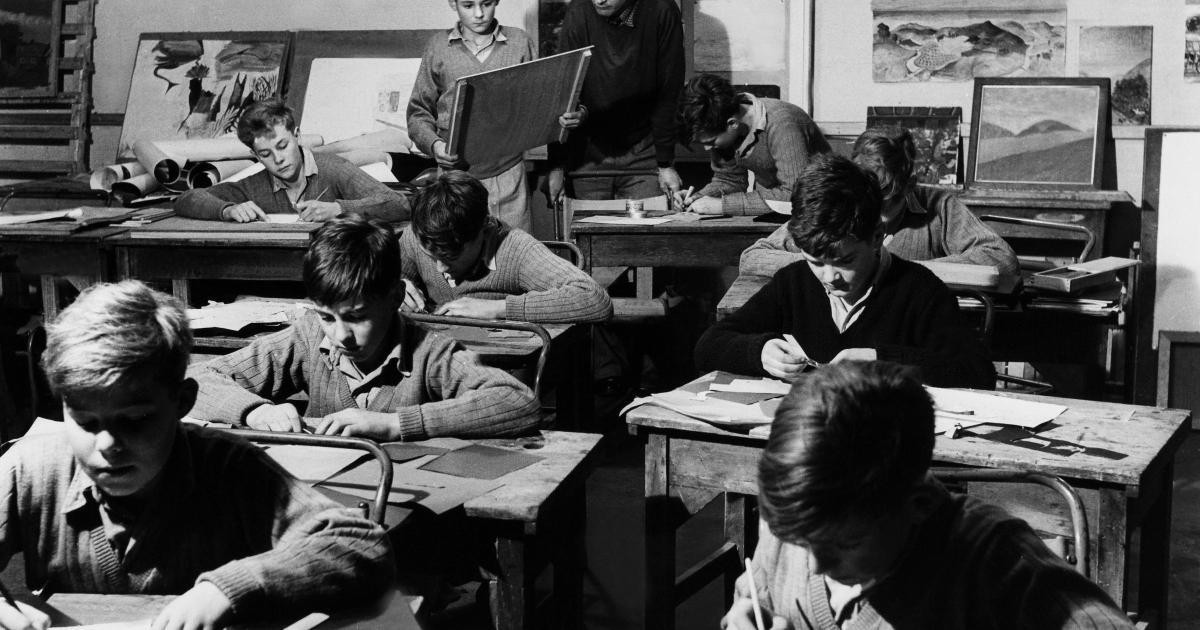
The Scottish Higher examinations where children study a broad range of five or six subjects, as opposed to the English A Levels where students specialise in three, are a contemporary echo of a difference in approach going back to the time of the Enlightenment.
Two of the greatest achievements of the Scottish Enlightenment reflect the myriad-minded nature of the society –the Encyclopedia Britannica, whose first volume was published in Edinburgh in 1768, and the Edinburgh Review, founded in 1802.
The latter was a Whig organ, whose founder Francis Jeffrey was a strong supporter of the Union. Another of its major figures was Henry Brougham, who would later become an MP and lord chancellor of England.
These men were at the centre of British life in their time, and were in no way Scottish nationalists but they knew the traditions that had nurtured them and their people, and saw no reason for those traditions being submerged under an all-consuming and voracious Anglocentrism.
IN 1826, the Scottish philosophical tradition of education found itself on trial before a Royal Commission, one of three assaults it would face during the 19th century. This is what Jeffrey had to say in defence of the Scottish system:
“I endorse on the whole the justice of the reproach that has been levelled against our general national instruction – that our knowledge, though more general, is more superficial than with our neighbours.
“This is quite true and our system leads to it but I think it is a great good on the whole, because it enables relatively large numbers of people to get … that knowledge which tends to liberalise and make intelligent the mass of our population.”
Later in the century when Henry Brougham wrote his memoirs, looking back on a dinner given in his honour in 1825, where Lord Cockburn referred to the importance of education in making the man, Brougham concurred and went further.
“I seized the opportunity to declare my decided approbation of the Scotch system of education, as contrasted with the English… – a system which cultivated and cherished higher objects than mere learning, which inculcated a nobler ambition than the mere acquisition of prosody and dead languages.
“My English friends will cry aloud against this doctrine which they designate as rank heresy. Nevertheless, such was my opinion in 1825, and such it is still after a lapse of 40 years.”
The reference to dead languages in Brougham’s memoir is an attack on the emphasis placed on ancient Greek in the English syllabus …. with knowledge of Greek having a prominent place in the entrance examinations for the British civil service in India for example.
To get into good positions there, the Scots had to specialise more in subjects like Greek in order to compete with the English, but they still felt that their own system of education was the most rounded.
Their universities were also far more democratic in their intake – more than half of the students at Glasgow were the sons of “industry and commerce” while Cambridge had less than 8% from the same background.
The wide social mix, the breadth of intellectual knowledge and the brilliance of the leading minds, all contributed to this amazing period we now recognise as the Scottish Enlightenment. It was not abstract and theoretical but rooted in the practical everyday world.
When Adam Smith was a professor at Glasgow University from 1751-64, for example, he was friends with the principal tobacco merchants, so his economic theory was drawn from real experience.
A view of Glasgow University (Image: Paulina B on Unsplash)
The same merchants, along with Smith, helped Robert Foulis establish the first School for the Art of Design in Britain. Foulis was the classic working-class lad o pairts who had sat in on Hutcheson’s lectures and became thirled to books, learning and self-improvement.
The son of a maltman, and destined to become an apprentice barber, he graduated into selling then printing books, then devoting his time to the school of design.
Fortunately, in our own lifetime, Scotland has continued to produce brilliant intellectuals who are rooted in real communities in the real world, but who strive for the universal, resisting any attempts to hem them in.
The father of the 20th century renaissance in Scottish literature, Hugh MacDiarmid, described the tradition he belonged to perfectly in his description of the polymath Patrick Geddes.
Geddes’s constant effort was to help people to think for themselves and to think round the whole circle, not in scraps and bits. He knew that watertight compartments are useful only to a sinking ship, and traversed all the boundaries of separate subjects.
The uniquely Scottish combination of enlightened philosophy and Romantic writing also swept across 19th-century Europe, though often it was the Romantic image that endured longest. In France, though, the intellectual tradition had as major an effect as the Romantic legacy.
George Davie quotes from the French philosopher Charles de Rémusat, who links Scottish Common Sense philosophy to religious democracy, and praises the combination of instruction and entertainment which characterises the work of Walter Scott.
There is a touch of the Romantic in what he writes but I like it because rather than dwell on the great figures of the Scottish Enlightenment, he makes a powerful statement about the democratic intellectualism of the society which produced it:
“The country is wild and mountainous, and yet somehow penetrated by a certain civilisation; its rude cottages shelter a breed of men deeply influenced by the culture of sentiments and ideas, …Whatever be your nation, your social position, your educational background – if you speak to a Scottish peasant you speak to your equal.”
In the intellectual Revue des Deux Mondes of April 1856, he also wrote:
“Scotland is a little forgotten, but there was a time not so long ago when reason, imagination, the love of truth, of poetry and of nature came toward this country from there, and into our minds and our way of life.”
The philosopher Victor Cousin was also a great disciple of Scottish philosophy and in his library in the Sorbonne there is a bust of Dugald Stewart which still holds pride of place there. Cousin became a Councillor of State and Minister of Public Instruction and when he turned his attention to the revision of the Baccalauréat examination he made sure that philosophy was at its core.
It was this powerful influence exerted by la philosophie écossaise on French thought which led the philosopher Théodore Simon Jouffroy, who was responsible for the translations of both Thomas Reid and Dugald Stewart into French, to refer to Scotland as “cette illustre patrie de la civilisation” – this illustrious homeland of civilisation.
Behind this philosophy, behind the Scottish Enlightenment and behind the Scottish Vernacular Revival, of which Burns was the pinnacle of achievement, lay a precocious belief in the primacy of education for the masses which had its roots in the Protestant Reformation of the mid-16th century, a good century and a half before the Union with England became reality.
There had already been an Education Act in 1495 during the reign of James IV but this was purely aimed at the aristocracy to set up schools and encourage their own sons to go to university.
But in the First Book of Discipline of 1560, John Knox and his fellow Reformers advocated that primary education should be compulsory for all, probably the first time such a systematic approach to national education had been proposed in Europe.
Eighty years later, the Scottish Parliament passed the first statute and in 1696 the Act for the Settling of Schools attempted to consolidate the advances made and firmly establish a national system of education open to all children who could benefit from it.
Visitors to the country from less enlightened neighbours were taken aback by the dramatic difference in the level of sophistication reached by the working class north of the Border. An Englishman, Gilbert Burnet, touring the West of Scotland in the 1660s wrote:
“We were indeed amazed to see a poor commonalty so capable to argue on points of government, and to the bounds to be set on the power of princes …. Upon all of these topics they had texts of scripture at hand; and were ready with their answers to anything that was said to them…This measure of knowledge was spread even amongst the meanest of them, their cottagers and servants.”
By then public libraries were beginning to be set up to cater for the public thirst for knowledge. You can still visit Innerpeffray library and school near Crieff, which were established by David Drummond, the third Lord Maddertie in 1680 for ‘the improvement and education of the population particularly the young students.’ If Innerpeffray was Scotland’s first public library, later at Leadhills in 1728, Britain’s first circulating library was founded by the poet Alan Ramsay. By the end of the 18th century and beginning of the 19th century, many working-class reading clubs were established to share books and the cost of newspapers.
In Dunfermline, for example, the great collection of books endowed by Andrew Carnegie in 1883 was begun by a group of linen weavers who founded the Tradesmen’s Library in 1808.
Andrew Carnegie enjoying the sunshine in the Glen. (Image: Lee Montgomery, from Cairneyhill.)
The result of such activity was that when the first public libraries bill was debated at Westminster in 1850, Scottish MPs insisted Scotland be excluded from the provisions of the Act, as by then almost every burgh in the country had a major library established.
Pride in the egalitarianism of the society extended across the social spectrum, for it was common for children from very different social backgrounds to be educated together.
George Gordon, Lord Byron, for example, although educated at Harrow and socially a scion of the British elite, recalled with pride the fact that as a child in Aberdeenshire, his first tutor had been the “son of my shoemaker, but a scholar, as is the Scotch tradition”. In other words, he inherited a high regard for this democratic intellectual strength in Scottish society, and it contributed towards a mindset very different from that of his peers in the English aristocracy.
By Byron’s day, the Scots had pursued vigorously the ideal of literacy for the masses for more than two-and-a-half centuries because of the desire of the Reformers to empower people to read the word of God and communicate with their maker directly without an intermediary from the Kirk.
In contrast, as late as the 19th century the English were still debating whether it would be wise to give their working classes an education, as it could make them rebel against their lowly station in life! This is the MP David Giddy’s contribution to a debate in Parliament in 1807:
“However specious the theory the project might be of giving education to the labouring classes of the poor, it would be prejudicial to their morals and happiness; it would teach them to despise their lot in life, instead of making them good servants in agriculture and other laborious employments. Instead of teaching them subordination, it would render them fractious and refractory as was evident in the manufacturing counties, it would enable them to read seditious pamphlets, vicious books and publications against Christianity; it would render them insolent to their superiors; and in a few years the legislature would find it necessary to direct the strong arm of power against them.
Byron would have despised such an attitude.
While the intellectual capacities of the Scots were noted by visitors to the country throughout the period, Scots visitors to England remarked on the contrasts they confronted there. The Cromarty stonemason and working-class intellectual, Hugh Miller, for example, toured England in 1845 and wrote an account of his journey in First Impressions of England and its People.
Miller was a great admirer of the”‘sister kingdom”, praising its great authors, its beautiful women, and the ability of its people to enjoy themselves without resorting to the excesses of alcohol indulged in by the Scots.
But, among the ordinary country folk, he found a species he had never encountered in his native land, confidently affirming “… That their minds lie much more profoundly asleep than those of the common people of Scotland.
“We have no class north of the Tweed that corresponds with the class of ruddy, round-faced, vacant English, so abundant in the rural districts.”
In contrast, he describes the equivalent type in Scotland as a “more inquisitive, more curious being, than the common Englishman; he asks more questions, and accumulates much larger hoards of fact”.
Many Roman Catholic countries continued to see education for the workers as a radical and dangerous thing well into the 20th century, but even in Protestant England it would only be towards the end of the 19th century that literacy figures finally reached the levels attained in Scotland.
I think it is essential to keep stressing this contrast, because the majority of people today, Scots and English, are so thirled to an Anglocentric view of the world which presumes that England has always been a fount of civilisation, conferring cultural blessings on her rude northern neighbour!
This was patently not the case, and needs to be constantly countered with vigour.