
Published: 29 August 2026
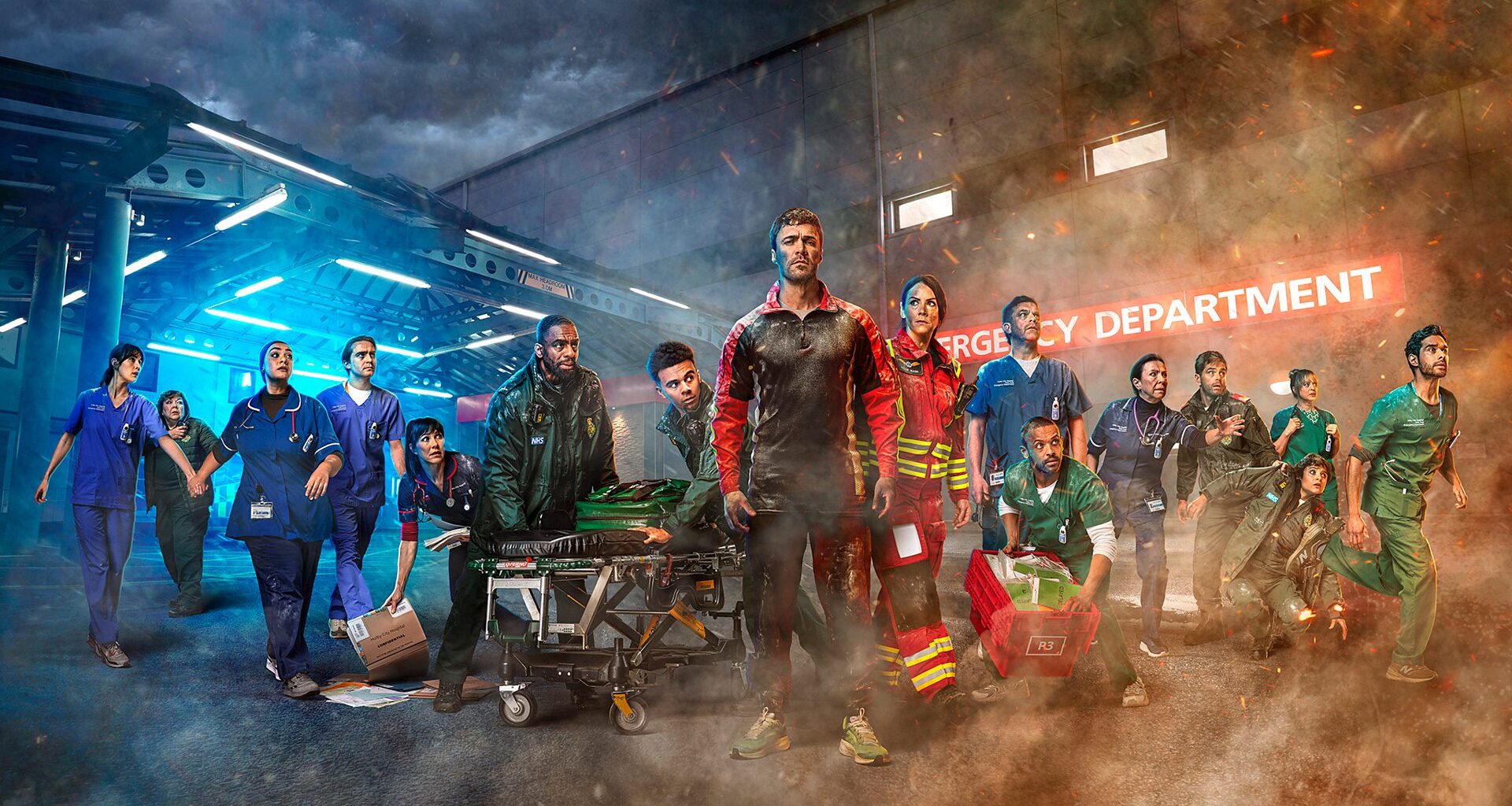
Produced by BBC Studios Drama Productions, Casualty is the world’s longest-running medical drama. For four decades, it has delivered powerful storytelling, unforgettable characters and ambitious television moments that have resonated with audiences across generations.
The gripping, anniversary event centres on a high-stakes major incident that throws Holby into chaos. Lives hang in the balance, and the ED team are pushed to their limits in a tense and emotionally charged story that brings together some of the show’s most beloved characters. As the fallout continues, a major rescue operation unfolds, forcing impossible life-or-death decisions and testing the courage, resilience and leadership of those at the heart of the hospital. As Dylan (William Beck) battles personal tragedy while leading his team through their darkest hour, Stevie (Elinor Lawless) and Flynn (Olly Rix) find themselves fighting for survival in a race against time.
The anniversary episodes celebrate 40 years of Casualty while signalling an exciting new chapter, demonstrating the ambition, storytelling and emotional impact at the heart of the series.
Casualty@premiercomms.com
Interviews
Olly Rix (Flynn Byron)
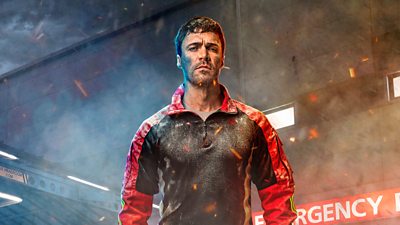
(Image: BBC Studios/Alistair Heap/Matt Burlem)
Flynn’s instinct is to help people, but some of his choices have devastating consequences. What did you find most interesting about that moral dilemma?
It’s a fair assessment. Flynn just can’t submit to rules and bureaucracy that disadvantage people. He’s always on the side of the weaker party, whether it’s his patients or his staff, he’s always ready to fight for someone else and it is as admirable as it is problematic. There’s an innocence or simplicity to it and it causes problems within the world he has to operate in: particularly as the clinical lead, where he’s asked to be a politician as well as a consultant. As an actor you always find the virtue in your role but with Flynn, I actually found it very readily. I have quite a lot of admiration for him as well as finding him exasperating at times.
Flynn and Stevie are pushed to their absolute limits together. How does the ordeal change their relationship?
Flynn and Stevie’s relationship is special, and one of the joys of playing it has been watching the characters realise that long after everyone else. Other characters, and even the audience, saw it long before Flynn or Stevie. There’s an ease between them that means sometimes they take one another for granted, but then they’re thrust into the situation of this 40th episodes, where there’s a chance they might lose one half of this equation, and it penetrates right to the core of them.
What has it been like being part of such a landmark chapter in the show’s history?
An honour, really. You’re always grateful to be wanted by a production, and the production is always the star. I think in an episode like this, you feel that even more keenly as a member of the cast. You’re part of a continuum of many wonderful actors and producers that have gone before you and laid down four decades of brilliant television, some of whom feature or are referenced in the episode, and you’re carrying the baton into an ambitious future stage of this journey. I felt the weight of that, but also the pride of being picked for the game.
Flynn turns 40 during Casualty’s 40th anniversary story. Was that something you enjoyed playing with?
I did actually, as I turned 40 that same year and could relate to some aspects of what Flynn is wrestling with. The need to forge an identity in the world sort of begins to meet some aspects of life that you can’t control. You perhaps start to make peace with who you are rather than who you thought you would be. It’s a time when people start to worry about slowing down but also gain perspective. It’s also a time when I think you’re actually at your absolute best, despite the dread of a number, and Flynn’s narrative here is an undeniable nod to that – when it’s needed, he functions at his absolute best despite his fears. I liked that.
There are moments where Flynn is heroic and moments where he questions his own decisions. Is that complexity what makes him an interesting character to play?
Absolutely. Heroism isn’t linear or easy, and I think a sense of “it must be done” serves as an underpinning quality or instruction. A sense that, regardless of personal discomfort or cost, something bigger has to be served. It’s a quality that we explore with many characters in the show, and something that the show passes comment on quite frequently. The need to achieve an objective, even at great personal expense and risk, is very starkly presented as part of Flynn’s journey in this episode. Flynn is riddled with doubt about whether or not he can achieve it, yet he does it anyway. And then the baton is passed and other heroes step in to finish the story.
What has the show given you personally that you’re most grateful for?
There’s a glaringly obvious answer here. I met my fiancé on the show, when it was the last thing in the world I could have expected. I will always hold this show dearly in my memory and with deep gratitude for what it’s given me.
Why do you think audiences continue to see themselves reflected in Holby ED?
I think because the entire spectrum of experience is on display in a hospital. Birth to death, cradle to grave, one encounters the whole run. So it’s fertile ground for finding resonance with your own life or for simply cheering the wins of others or mourning their losses. It’s all on display here and I think that’s probably quite cathartic for audiences.
The anniversary episodes celebrate extraordinary moments, but Casualty has always been about ordinary people facing extraordinary circumstances. Why do you think that idea still resonates so strongly today?
Because we’re all ordinary. Because none of us can do it alone or in isolation. Because we’re all deeply flawed and often make poor or unaware decisions. Yet, despite that, the best parts of us still keep moving and striving. A lot of the stories we tell are about precisely that ability and I always find it quite moving. Perhaps at 40 I got more sentimental, or perhaps I gained better insight into why we tell stories and our need for doing so.
Elinor Lawless (Stevie Nash)
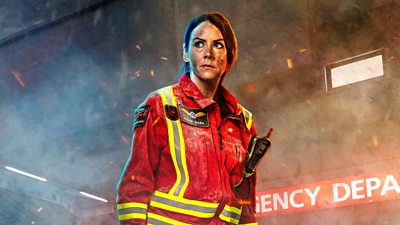
(Image: BBC Studios/Alistair Heap/Matt Burlem)
Stevie and Flynn find themselves trapped underwater in an ambulance. What was your first reaction when you discovered what Stevie would have to endure?
Because Steve Hughes was directing it, and Michelle Lipton and Toby Walton had written the scripts, I instantly knew there was going to be a huge sense of claustrophobia in the episodes. Steve’s film knowledge is unbelievable, and his references for the anniversary were films like Jaws and The Abyss. I knew it was going to be a bit of a heartstopper.
How physically and emotionally demanding was filming the quarry and underwater sequences when the ambulance submerges?
It was incredibly demanding. But as an actor, there’s a huge excitement around that because you know it’s going to be hard work. You want it to be hard work, because then you’re creating something that’s worth it.
I’m not somebody who naturally takes to water. If I’m thrown into water or into the deep end of a pool, my instinct is to breathe in. So, I had to retrain my whole body to be in a survival mode. The team at Pinewood were absolutely phenomenal. When the producers came and said this is what we’re going to have to do, my instinct is never “no, I can’t”, my instinct is “then I must”. By the time we got onto set and started filming, I felt really comfortable and relaxed, which, for me, is a miracle.
When filming the sequence where the water is rising and reaches a critical point, you imagine yourself in that situation. You’re faced with something you can’t fight, so it wasn’t hard to go there mentally. I think those situations are something every audience member can grab onto and identify with.
At the heart of the story is Stevie placing her life in Flynn’s hands. What interested you about exploring that level of trust between the characters?
For Stevie, the idea of handing her survival over to anybody other than herself is very difficult. She has to hand herself over to Flynn because she injures herself and the odds go down for her very quickly.
All the things that Stevie has previously been through, she always thinks, “I can do this, I can do that.” But this episode is all about her letting go and handing herself over to whatever will be, the fates. It’s the first time ever that Stevie says she’s scared, because she has to hand herself over to circumstances that she would normally kick against.
Stevie is usually incredibly capable and self-reliant. What happens when she’s forced to surrender control?
It’s a part of Stevie that I love playing because I am not as stubborn as her. I will accept help from others, and I will ask for help. It puts her in a very childlike place, and in a way, it’s quite easy to go there as an actress because it’s something that’s very relatable.
The friendship between Stevie and Dylan has become one of the show’s defining relationships. What do these episodes reveal about their bond?
That it’s unbreakable. What I love about it is that some people need it to be a friendship, some people need it to be a relationship, but Stevie and Dylan recognise that there’s a meeting of minds. These characters are two sides of one coin. What it demonstrates is that they have a respect for one another. They’re also both quite stubborn, they take their job incredibly seriously and they really care about what they do. That bond between them is one of the threads that runs through those episodes.
What has the show given you personally that you’re most grateful for?
It gave me a great job, and I have learned so much. I came into the show incredibly green. I’d only ever really done theatre. When I first arrived, there was such a lovely camaraderie among the cast and crew, and it gave me a sense of place and a sense of belonging. People sharing the same space, all working towards the same thing.
Art and entertainment at its best comes from that common language of people really caring about creating something. That never stops being a joy. A challenge, but a joy.
Why do you think audiences continue to see themselves reflected in Holby ED?
Because the characters are human and fallible. Audiences don’t just want to watch stories about superheroes, they want to watch stories about superheroes that are flawed. They want to see people who are messy, imperfect and complicated. I think the reason audiences continue to connect with it is because, watching these characters, they’re reminded that it’s ok to be human, and that the aim is not to be super-human.
William Beck (Dylan Keogh)
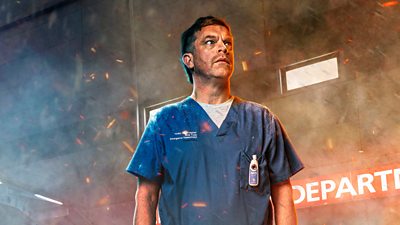
(Image: BBC Studios/Alistair Heap/Matt Burlem)
Casualty has tackled major incidents before, but these episodes feel particularly ambitious. What was your reaction when you first read the scripts?
I’ve been on the show a long time and I have indeed seen a few major incidents, but these episodes had Dylan at the centre of it in a way that he hasn’t been before. What’s really powerful about this is the tension and the pressure that this sort of incident can cause. You have to be more creative about how you take audiences on a ride that’s entertaining as well as traumatic. The trauma is relatively easy to deliver, but the entertainment and the drama are down to something in between.
Dylan is the person everyone turns to during a crisis, but here we see him pushed to breaking point. What interested you most about exploring that vulnerability?
Seeing how people respond under pressure can take you by surprise. The opportunity to give people something that feels authentic and recognisable but also surprises them – that’s gold dust in TV.
With Dylan, there’s a real opportunity to explore what happens when the person everyone relies on is pushed to his limits. I know it’s been said that Dylan doesn’t like the responsibility of leading the department, but I think he does. It’s a lovely opportunity, and a real privilege, to lead the audience through this story – particularly for the 40th anniversary. It really is pinch-yourself stuff.
One of the emotional anchors of the episodes is Dylan’s relationship with Stevie. Why has their friendship resonated so strongly with viewers?
Partly because Elinor [Lawless] is great, and Stevie is just such a brilliant character. If you put a character like Stevie in a room and let her do her thing, sparks are going to fly. Dylan and Stevie are entertaining because they don’t try too hard with each other. They don’t come into contact very frequently, but when they do, there’s always something interesting going on between them.
Dylan has become one of Casualty’s most enduring characters. Are there elements of yourself that have found their way into him over the years?
Part of the way I approach playing Dylan is that if I feel myself putting too much of myself into him, that’s quite a red flag. You want to avoid it where possible. But if you base the choices you make in a scene on the authenticity of the character, then there’s absolutely no reason to say that they can’t be a certain way. So, I try and make sure that any changes in Dylan are consistent with the character.
Why do you think audiences continue to see themselves reflected in Holby ED?
It’s a unique environment. The Emergency Department is somewhere that we all have experience of, most frequently when we really don’t want it. We’re thrown in with people who are entirely at random, which is such an amazing environment to make a drama.
People recognise it and have sympathy for those who work there and for the people being treated there. It’s also something that we know we’re lucky to have, and we continue to fight for. My parents both worked for the NHS and are avid supporters of it, but it didn’t make them, or me, blind to the huge difficulties that it faces. Everybody recognises that.
Neet Mohan (Rash Masum)
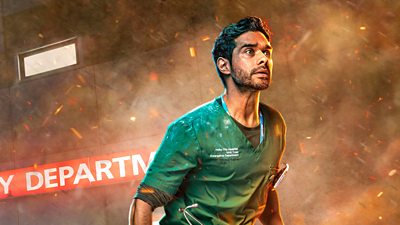
(Image: BBC Studios/Alistair Heap/Matt Burlem)
Rash’s first day as a consultant couldn’t be more dramatic. How does he cope when he’s suddenly forced into the deep end?
It’s probably the worst shift he could have imagined for his first day as a consultant. He has to quickly trust everything that he’s learned and try to put his lack of confidence to one side while he shifts into this new role. There’s no easing him into being a consultant now. He’s in it and this is where he’s got to sink or swim.
We’ve seen Rash grow enormously over the years. How satisfying is it to play him at this stage in his career?
It’s incredibly satisfying. I’ve played him through his very enthusiastic stage and through some real vulnerabilities, and it feels like a nice culmination to get to this point. All of what he’s gone through can really shape how this next stage goes in his career, and in the show.
The story asks whether Rash can step up when the hospital needs him most. What does leadership look like for Rash? What strengths does he bring to the consultant role that perhaps people underestimate?
For him, it’s not been about being the loudest person in the room, it’s always been about trying to make tough decisions but never losing compassion for both his patients and his colleagues. Sometimes it’s been his biggest flaw, caring about people too much, but it’s also his biggest strength.
Then there’s his humility. He’s always learning. Even though he is now a consultant, I don’t think he sees himself as better than anyone else, even those junior doctors who are still experiencing things and learning.
Do these episodes mark a turning point for Rash? If so, how?
It is a huge turning point, because he’s now finding the confidence to be the person that people look to, rather than being the person looking for someone. It’s quite exciting to put him in that situation with the different characters in the hospital. It’ll be a fun journey to discover this new side of him, which will be really fun to play.
Viewers have watched Rash grow from junior doctor to consultant. Looking back, what do you think the younger Rash would make of the man he’s become?
I think he probably would have been really excited that he finally made it as a consultant, and then been really surprised at how he got there. Having to have had the lows that he’s had to get here as well. But I’m sure he’d be very proud.
What has the show given you personally that you’re most grateful for?
I never thought I’d have the opportunity in my career to play a character for nine years. Characters often enter the show as a consultant, but you don’t see the journey they’ve gone on to get to that point in their careers. Whereas I joined as somebody straight out of university, an F1 doctor who was fresh-faced and enthusiastic.
Personally, it’s been amazing. It’s given me some friendships for life, and I’ve learned an incredible amount from the writers, producers, directors and the whole crew. I’m very grateful for that and I always will be.
Why do you think audiences continue to see themselves reflected in Holby ED?
A hospital is a unique place where people from all walks of life end up, and when you’re there, it doesn’t matter who you are or what your background is, you’re all treated equally. Seeing people on what could be the worst day of their lives, I think audiences can connect with that vulnerability, of seeing somebody in that state.
Melanie Hill (Siobhan McKenzie)
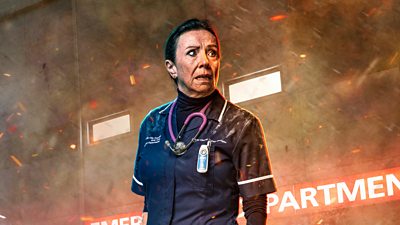
(Image: BBC Studios/Alistair Heap/Matt Burlem)
Siobhan is often the person keeping the Emergency Department functioning when chaos threatens to overwhelm it. What sort of pressure is she under during the anniversary episodes?
In the 40th anniversary episodes, they’ve upped the ante because there’s a huge explosion in Holby, and it’s the neighbouring hospital, St James, that’s blown up. It is a heightened situation for them all. She’s under high pressure, but one thing about Siobhan is that she’s been round the block a bit. She’s there to support the doctors and consultants. It’s Rash’s first day as a consultant, so she’s there to support all the staff.
These episodes show the hospital at breaking point. How does Siobhan balance caring for patients with looking after her team?
I think she’s reached a good balance now. She basically lives for work, because her private life is not very good. So, she’s kind of the lynchpin. She’s managing the palliative care, but she’s also aware that, as well as the injuries from the explosion, there are patients who have been treated at St James also coming in. So, it’s utter chaos.
Siobhan has always been fiercely protective of the people she works alongside. What does this story reveal about her as a leader?
She’s a good leader. Her work life is everything to her. She doesn’t panic easily, she has seen a few of these situations before and she’s good at coordinating everything.
During a major incident, difficult decisions have to be made quickly. What challenges does Siobhan face when trying to prioritise patients, resources and staff?
It’s the challenge of the number of patients that are coming through the door. The writing on these two episodes is so good. The guest artists so well-written and well-placed. There are so many beautiful stories that come in that might only have three scenes, but they’re placed so well that you care about these people. It’s life and death situations for people you might never have seen in Casualty, but they’re really touching stories.
It’s life and death for various members of the actual team too, so everyone’s hitting walls at various stages, and Siobhan’s there to support everyone in the process.
These episodes feature extraordinary events, but Siobhan’s story is rooted in the everyday realities of frontline healthcare. Why was that important to preserve?
Because the consultants save the lives, but it’s the nursing team that do the actual palliative care. They hand-hold, they encourage the patients and they monitor them. That comes across in this episode because it’s a really important part of saving lives in the NHS. There’s a system put in place when a massive emergency like this happens, and the nurses are there to support that framework and to monitor the patients in between everything else.
What has it been like being part of Casualty during such a landmark year for the programme?
It’s an honour and a privilege. I, like everyone else, had the attitude that we all know what Casualty is; we’ve seen it before, we used to watch it when we were younger. They don’t know what Casualty is like now because it’s a completely different show. It’s filmic, it’s epic. We’ve never attempted anything as big as this before.
There are also a few lovely surprises in the episodes that viewers will be excited to see. We’ve got a fantastic guest cast too. Pippa Haywood has joined as a surgeon, and Kent Riley has also come into it. I worked with Kent on Cilla, so it was nice to see him again.
Casualty is known for reflecting the challenges facing the NHS. Why do you think the show continues to resonate with audiences after 40 years?
It’s mainly because, as well as all the epic stunts and big set pieces in these 40th anniversary episodes, Casualty tells stories of normal people on the worst days of their lives. The patients that come through the door mirror the stories going on in the staff’s lives. They’re just normal people trying to help everyone. That’s what Casualty does really well. It tells stories about people that we all know, in abnormal situations.
Steve Hughes (Director)
Watch the trailer for the Casualty 40th anniversary double bill
The anniversary episodes have the scale and visual ambition of a feature film. What was your vision when you first came on board?
It was to make Casualty the movie. I really wanted to give the show the scale and ambition that it deserved. I did the 30th anniversary episodes, where we crashed a helicopter into the hospital, and I thought, “Surely, we can’t get any bigger than that.” We wanted everything to feel exciting and cinematic but never lose the focus of the human story. As much as this is an adventure story and a tragedy, it’s here to honour the amazing people of the NHS who save lives every day.
How did you approach creating a major incident that felt both cinematic and emotionally grounded?
I never sacrifice reality for spectacle. Things should always feel grounded, but especially Casualty, because it should feel like it’s happening for real. There’s a lot of time and effort spent on making things feel as authentic as we can.
The first episode, to me, felt like modern Casualty, because the show has changed a lot over its 40 years, and today it’s much more immediate and relatable. There’s a real electric pulse going through the whole thing. The second episode feels like a classic episode of Casualty, because you’ve got the big stunt and the big emotional set piece. It was like honouring the new contemporary version of Casualty as well as the classic version.
What were the biggest production challenges involved in bringing such a huge event to life?
The obvious one was dropping an ambulance off the side of a cliff. Making that feel real and of a grand scale was so important. The underwater tank is six metres deep, but the ambulance was 6.5 metres deep, so we knew we couldn’t fully submerge it. We came up with a plan to cut off the front of the ambulance and put that on the bottom of the water, but there’s no end to the tiny little things you could never prepare for. We always find a way of making it work.
People think directing is just a creative endeavour, but 60% of it is practical decisions and 40% is creative decisions. These episodes felt like a massive task, but I think we managed to get away with it.
How closely did you work with emergency service advisers to ensure authenticity?
We worked very closely with them. We try to get the scripts and the authenticity as close as we can. A lot of it comes down to advising us on little things on the floor – things that you could never anticipate. There are a thousand choices every hour when you’re shooting, and you try to catch as many of them as you can in the preparation. But, like I said, it always comes back to authenticity.
What responsibility comes with directing Casualty’s 40th anniversary episodes?
More than anything, it’s just an absolute privilege. I’ve been really lucky to have worked on some of the previous special episodes. After directing the 30th anniversary special, to be back and entrusted with the 40th has been amazing. I think they knew that I wouldn’t let them down, because I absolutely love working on Casualty.
The show has changed a lot over the time I’ve been here, but in the last five or six years, we’ve really tried to push the show into a sort of hyper-realism. These days, it feels more real, more urgent, more relatable. To be asked to do the 40th anniversary episodes was an honour and a thrill.
What does directing a programme with this kind of cultural footprint mean to you personally?
I’m thrilled, because from when I was a kid, Casualty was always the big Saturday night show. I’m a guy from Wigan with three GCSEs, I never thought I’d ever get to direct TV, and I’m directing a show that we’d watch with my family. So, it really means a lot. I was guided brilliantly by our amazing producer, Gwen Roberts, and [Executive Producer] Roxanne Harvey and [Series Producer] Liza Mellody, who are brilliant cheerleaders, always supporting me and giving me great feedback. I feel very supported on Casualty. We deliver because we all know what show we’re making. And this is the biggest, boldest two episodes of the show I’ve ever worked on.
Liza Mellody (Series Producer)
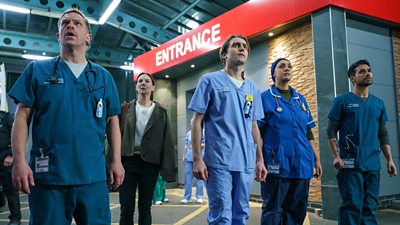
(Image: BBC Studios/Alistair Heap)
What do these episodes reveal about the wider Casualty family and the people who work within it?
We wanted to reflect the truth of the emergency department as it is, here and now in 2026. The doctors, the nurses and the paramedics are truly dedicated. It’s a hard job to do, our characters are human, they are flawed but they do the best they can with what they have. In traumatic and scary times, it’s easy to think the worst of people but there is always good in the world, sometimes you just have to look a little harder!
We are proud to be a Saturday night primetime show, so we want to engage and entertain our audience while reflecting the truth of the busy ED department as it is now.
What do you think Casualty says about Britain that no other television programme can?
This show has been going for 40 years, so of course, it’s been through major change. It has evolved and is modern. What it was in 1986 is not what it is now, but neither is the emergency department or the characters we find within it. We want to shine a light on what’s happening here and now and it’s challenging. The UK is the only country that has the NHS so that’s what sets us apart.
We are experiencing a cost-of-living crisis, the NHS is struggling and understaffed. We want to reflect that and show how people still care, but also how challenging it can be for staff and patients. If you go into an emergency department, you are usually going in a time of crisis. We want to tell entertaining, engaging but also truthful stories, and show how our frontline medics cope and respond.
Every week Casualty welcomes viewers into moments of crisis, hope and resilience. Why do you think those stories continue to resonate so strongly?
Because everybody in their lives, unfortunately, will encounter the emergency department, or know somebody that has. We are meeting people in their worst-case scenario, in their time of need, and our characters are able to diagnose, treat and reassure them. We are telling human stories through the lens of medicine, adrenaline, warmth, joy, pain and ultimately hope. It is a marvellous concoction for Saturday night viewing.
What do you think younger audiences discover when they watch Casualty today?
The Casualty that we have today is modern and relevant. It is exciting, it’s cinematic, and new. And it’s something the whole family can watch together. We have adrenaline-filled stunts and medicine. Our stories are relatable. They have heart and wit. There are stories for everybody. Casualty has changed and for the better.
What do you think Casualty has given Britain over the past 40 years? What responsibility comes with being part of a programme that has become a national institution?
In an ever-changing world, it’s nice to be able to put Casualty on a Saturday and know that you are going to get fifty minutes of unmissable television. There are so many people that have said, “I became a nurse or doctor because of Casualty,” or “I know how to do CPR because of Casualty,” or “I know what to do when someone’s choking” and “I went to the doctors to get checked out because of one of your storylines and I think it saved my life.” With that comes a responsibility to be authentic. We are a drama, but we have a huge medical team advising on the show, so what we portray is authentic with a twist of dramatic licence!
Bring on the next 40 years!
Follow For More