
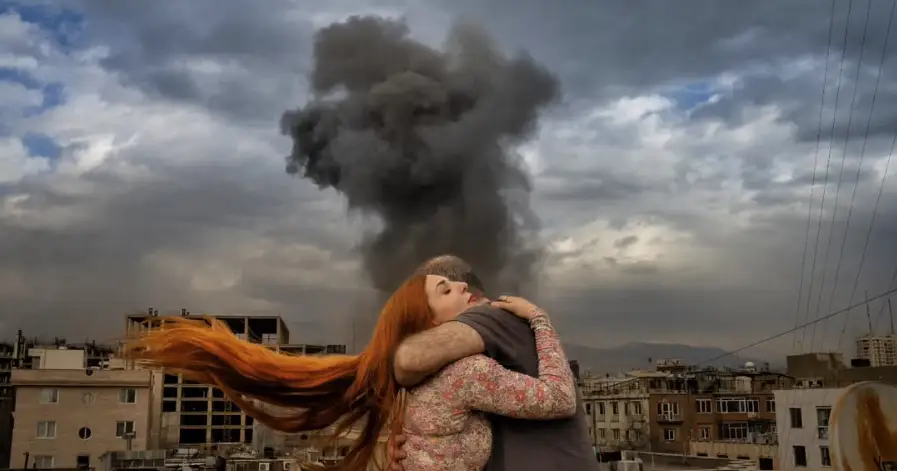
For some viewers, Soheil Beiraghi’s fourth feature puts a recognizable Iran on screen for the first time in years: women without mandatory hijab, men and women embracing, underground music, and a young singer who refuses to accept that her voice cannot be heard.
Others reached almost the opposite conclusion, arguing that the film trails the society it means to portray, or that its accumulation of drugs, alcohol, sex and broken relationships pulls focus from what Iranians are actually living through.
“I watched the film. The story is deeply moving, and it reflects what we are living through as a society,” one user wrote on Iran International’s Instagram page, praising its defiance of taboos while criticizing some of its dialogue and pacing.
Another called it simply “behind society,” arguing that Iranians now have “much, much more serious” concerns than the ones on screen.
The split has turned a film into an argument about something larger than cinema: the widening distance between what Iran’s censors forbid, what filmmakers can now show by ignoring them, and what audiences already consider ordinary life.
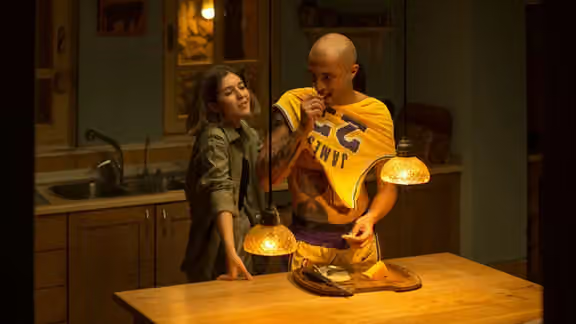 A scene from Bidad. Courtesy of the Karlovy Vary International Film Festival.
When the street becomes the stage
Bidad follows Seti, played by Sarvin Zabetian, an aspiring singer whose ambitions collide with the restrictions on women’s voices.
“You can’t hear my voice,” she protests to a music teacher early in the film, and is told that female singers may not be louder than the men accompanying them.
Seti refuses the compromise. She ends up singing in the street, where passers-by film her and circulate the clips, turning her into an emblem of a generation increasingly willing to take in public what official institutions withhold.
 Made without permission: how Iran’s underground cinema owned 2025
Making the film carried a price. Security agents raided the production office and seized equipment and recorded material, and Beiraghi and several cast and crew members faced prosecution.
The director received a prison sentence later converted into a fine; Zabetian and Leili Rashidi, who plays Seti’s mother, were also sentenced, while other defendants were acquitted.
The film went on to win the Special Jury Prize at the Karlovy Vary International Film Festival before its release online.
Have the taboos already changed?
For some Iranian viewers, the value of Bidad lies in showing what approved cinema has never managed to.
“Just the fact that they weren’t wearing scarves or headscarves at home was very good,” one Instagram commenter wrote, describing the film as all the more bitter for being drawn from life. Another called it the “reality of our lives as women” in Iran.
Others questioned whether those images still transgress anything. One wrote that the film addresses concerns belonging to an earlier phase of Iranian society and has failed to keep pace with what people now demand.
Mohammad Abdi, a writer and film critic, places Bidad within Iran’s underground cinema but argues that Beiraghi has gone further than his peers by abandoning the compromises censorship imposes.
“The important point is that, when it comes to the government, the film stops compromising and speaks very directly about a generation that is tired and is taking its demands to the street,” Abdi told Iran International.
He rejected suggestions by some commenters that the film reflects a reformist outlook, pointing to Seti’s journey from negotiating within the rules to carrying her demand into the open.
“The film is actually about moving beyond reformism,” Abdi said. “She goes through all these tests until she finally concludes that reformism no longer has meaning and that she has to stand against the regime in the street.”
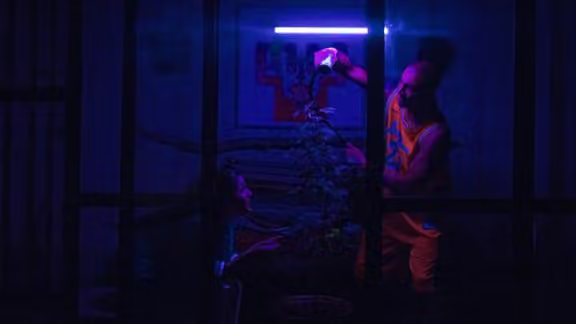 A scene from Bidad. Courtesy of the Karlovy Vary International Film Festival.
A harsher line of criticism concerns how the film draws those who break the rules. One commenter objected to the prominence of alcohol, marijuana, sex and dysfunctional relationships, warning that such choices risk tying musicians and dissenters to social disorder in viewers’ minds.
The Hollywood Reporter read the same world differently, describing a film populated by “rebels and outcasts” and arguing that Seti is far from alone in it: the picture follows one singer, but its wider significance lies in placing her among a growing number of young Iranians pushing back against limits on personal expression.
A related complaint appeared on X, where one user praised the film for its recognizable picture of Iranian life but wrote that it tries to carry too many injustices at once. Sexual harassment, a subplot in which Seti’s mother is coerced into sex with an interrogator to secure her detained daughter’s release, and Seti getting her period in custody were all unnecessary, the commenter argued.
That debate captures the unusual bind Bidad finds itself in: escaping censorship let it cross lines that approved cinema cannot, but crossing them no longer looks radical to audiences whose own lives changed faster than the rules did.
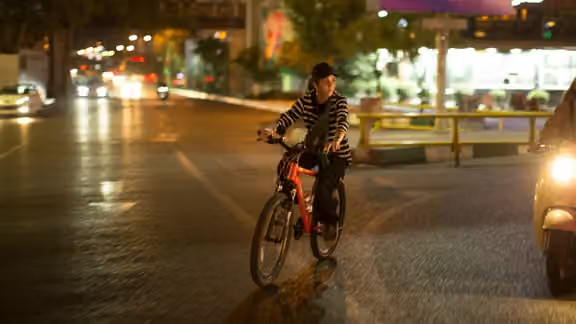 A scene from Bidad. Courtesy of the Karlovy Vary International Film Festival.
Two generations meet
The same divide runs inside the film, through Seti’s relationship with a nameless older man played by Amir Jadidi, who asks to be called only “Bebin,” or “Look.”
Tattooed, frequently high and seemingly emptied of his old ideals, he stands against Seti’s determination to force her way into public life, Abdi said.
Their intimate but unconventional relationship becomes an encounter between two generations: one carrying the weight of disillusionment, the other unwilling to accommodate restrictions.
 Iran releases songstress after brief arrest over concert without hijab
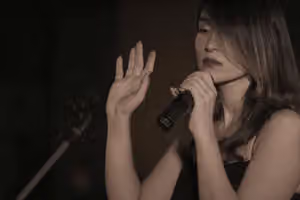
The film’s singing voice ties the fiction to the present. Its vocal tracks feature Parastoo Ahmadi, who has faced prosecution for performing without mandatory hijab.
In June, a court in Qom sentenced Ahmadi and eight musicians and crew members to 74 lashes each, a two-year ban on artistic work and a two-year travel ban over her 2024 Caravanserai Concert.
Bidad was made outside official channels because the Iran it shows cannot exist within the rules of approved cinema. Its reception online has exposed a second gap: some viewers celebrate the sight of those rules being broken, while others ask why the screen is still catching up with a society that broke them first.