
Credit: Far Out / Alamy
Mon 31 August 2026 0:00, UK
If there are a few things we can always be certain of, it’s death, taxes and musicians having opinions on other musicians.
From Paul McCartney casually crushing the Gallagher brothers’ dreams by saying “they mean nothing to me” to Nick Cave nuking the chillies by admitting, “I’m forever near a stereo saying, ‘What the fuck is this garbage?’ And the answer is always the Red Hot Chili Peppers,” it must be pretty brutal to have a musical north star turn around and slate you.
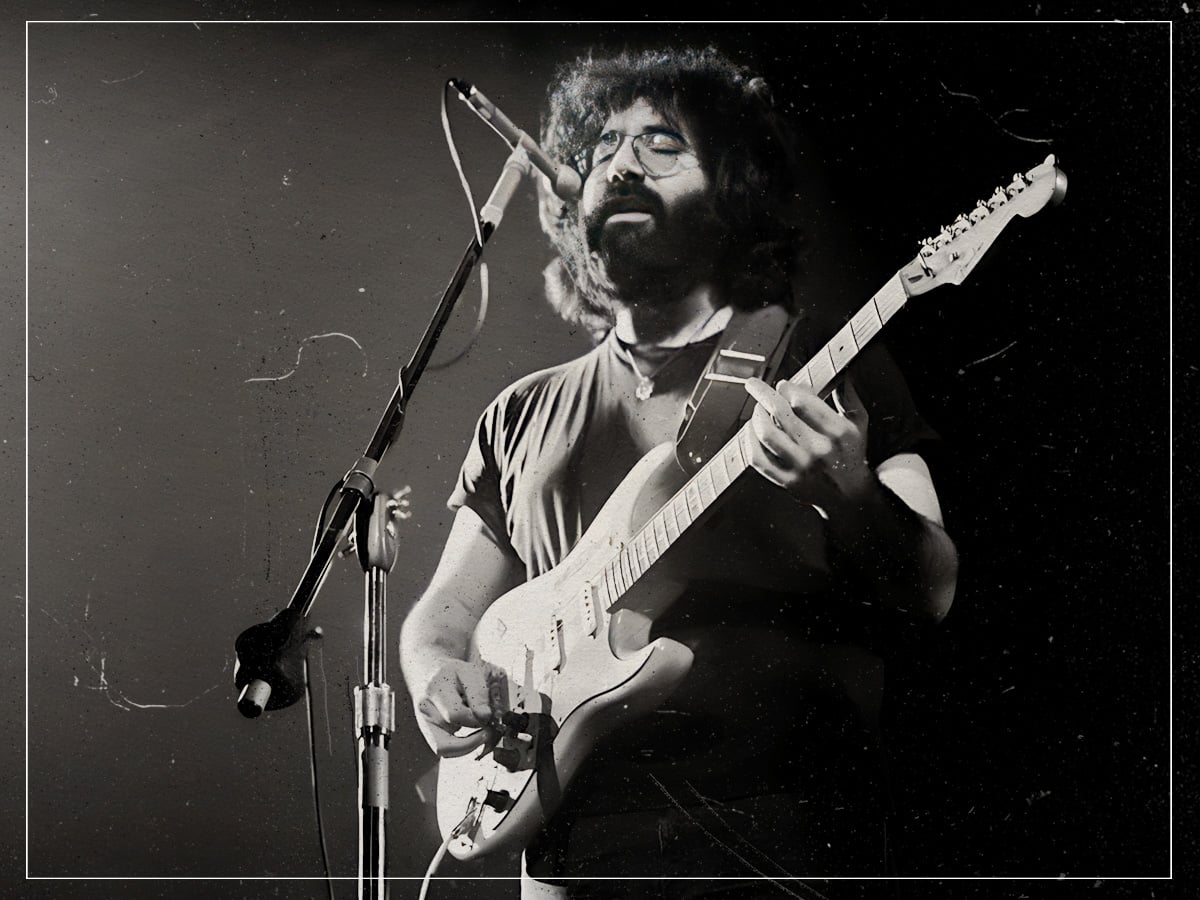
Sometimes these verdicts are petty, sometimes they’re performative, and occasionally they’re genuinely constructive, and the latter is probably where a comment made by The Grateful Dead’s Jerry Garcia about The Who in 1978 lands.
The Who and The Grateful Dead were formed around the same era, in 1964 and 1965, respectively, but they grew into completely different beasts. On paper, the two bands had rather little in common – The Who emerged from the British mod scene, turning teenage frustration into deafening power chords, while the Grateful Dead grew out of San Francisco’s psychedelic counterculture, gradually developing a live philosophy built around improvisation and musical exploration.
Yet both had become formidable live acts by the 1970s, and in 1976 they found themselves sharing the bill for two enormous shows at Oakland Coliseum Stadium.
The Who were already a rock institution by this point, and their stage show was the stuff of legend – with Pete Townshend’s windmilling guitar, Roger Daltrey’s microphone‑swinging theatrics, and Keith Moon seemingly doing his best to destroy the drum kit (and seemingly himself) every night. They had also released The Who By Numbers the previous year, a record considerably more introspective than the grandiosity of their earlier work, and despite ostensibly touring in support of it, the new material was largely sidelined.
 Credit: Far Out / Alamy
Instead, the band leaned heavily on the songs that had already become part of their mythology, including an eight‑song block from Tommy, whose popularity had been given another boost by Ken Russell’s recent film adaptation. The decision made a certain amount of sense: The Who By Numbers was full of deeply personal, fragile songs, some of which were acoustic‑leaning and hardly natural candidates for the enormous, rowdy, record-breaking crowds the band were playing to – crowds that had come to expect explosive staples like ‘Baba O’Riley’, ‘Won’t Get Fooled Again’ and ‘My Generation’.
But that was precisely the problem Garcia saw when he reflected on those Oakland shows two years later: “They’re great, I have a lot of respect. I admire what they do,” he said. “However, I spoke with Pete Townshend before their set. He was telling me that they’ve been playing the same show for four years. I mean, the same show, and they were sort of depressed about it.”
For Garcia (and perhaps Townshend too), that kind of repetition was a worrying sign that the band had stopped moving forward. “To have exactly the same numbers in exactly the same order for four years in a row is not exactly a sign of progress,” he continued, “because the guys themselves are capable of more than that. They’re capable of better things.”
There were practical reasons for The Who’s inertia beyond the crowd expecting the hits too – behind the scenes, internal tensions and Moon’s increasingly erratic behaviour were also making life more difficult, and a tightly rehearsed routine was, in some ways, the safest way to keep the whole enormous machine moving.
The reviews of the time captured this tension: one critic described The Who’s 1975 performance as the most exhilarating and dramatic concert she had seen, while another took issue with their lack of new material, arguing that they were becoming trapped playing ‘ageing music for the ageing young’.
The Grateful Dead had spent much of the same decade doing almost the exact opposite. Their setlists changed, songs could stretch wildly beyond their studio versions, and a performance could take an unexpected turn simply because Garcia, Bob Weir, Phil Lesh or Bill Kreutzmann felt like following a musical thread somewhere else – it was a mythology built on unpredictability.
That didn’t mean the Dead were always better, or even that their approach was always successful. Their commitment to improvisation could produce transcendent performances, but it could also produce sprawling, messy, or downright baffling ones; The Who’s tightly constructed show, meanwhile, could be spectacular precisely because they had been honed to such a degree.
Here was a band famous for rebellion, destruction, and refusing to play by the rules, being told by one of rock’s great improvisers that they weren’t rebelling enough – proof you’ll never please everyone.
