
“Our enterprise today marks the beginning not only of the New Year, but a new era, an era in which our nation will take its place amongst the other nations of the world” – Dr Douglas Hyde 1 January 1926 at the launch of 2RN.
This year, RTÉ is marking 100 years of public broadcasting in Ireland, with a year-long series of special broadcasts, projects and performances.
As part of the RTÉ100 anniversary, RTÉ News will be looking back at some of the stories, the people and the way news gathering has changed over the years, which has contributed to coverage across the last century.
On New Year’s Day 1926, the future Irish president, Dr Douglas Hyde, officially launched 2RN, with the Irish state’s first public radio transmission.
On that historic night, Dr Hyde said in his opening remarks that “our enterprise today marks the beginning not only of the New Year, but a new era, an era in which our nation will take its place amongst the other nations of the world.”
Dr Rosemary Day, Head of Department of Media at Mary Immaculate College at the University of Limerick described it as a “a stirring speech, full of hope and ambition.”
Broadcasting from a studio and office at 36 Little Denmark Street in Dublin, the establishment of this new radio service would gave a vital new platform for this fledgling State to start telling its own stories.
The information on those early radio schedules show that in the early days, the radio service schedule was mainly focused on music and entertainment content with a scarcity of talk programmes and the news service started slowly evolving.
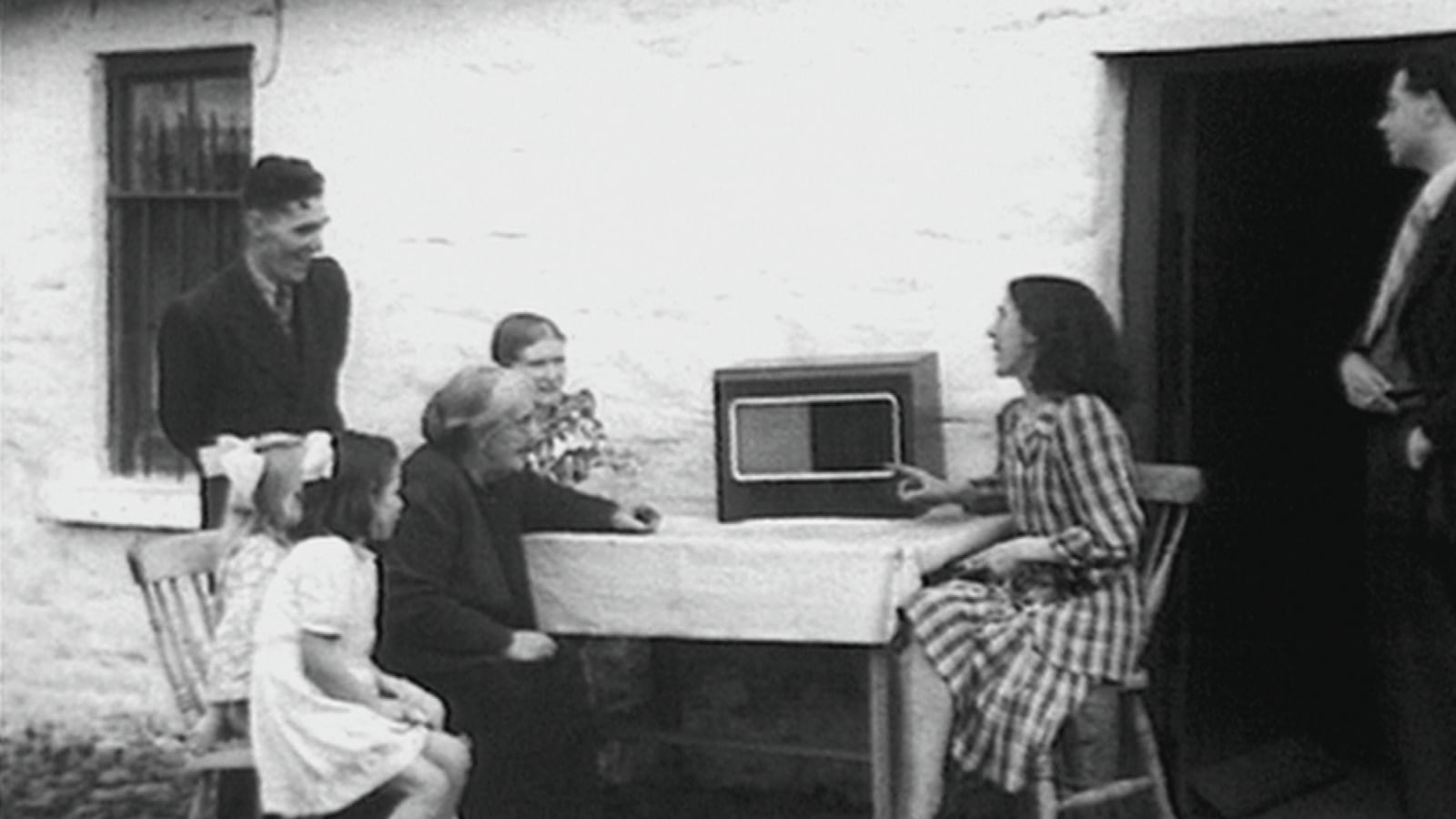
Dr Stephanie Rains, from the Department of Media Studies at Maynooth University said the impact of the national radio service was significant because “it was the first time that media could come directly into peoples homes and while there was a lot of excitement about that, there was a lot of anxiety as well.”
Dr Rains outlined the concerns, noting that “in the wake of World War I, in particular, there were concerns about propaganda, and a lot of countries, including Britain with the BBC, were anxious about the sheer power of radio.”
2RN began with a limited on-air service running in the evening.
Across the early years of the service in the 1920s, there were short news bulletins on the station.
News services were expensive and the Irish station, in common with radio services internationally, was developing ideas of “what a radio news service could look like, Dr Haines added.
There was pressure from the newspaper lobby to minimise news content too on the service as the print industry sought to limit the impact of this new unknown service on its profitable dominance on news content in Ireland.
In those early years, budgets were tight at 2RN too, so the schedule was also filled with music programming.
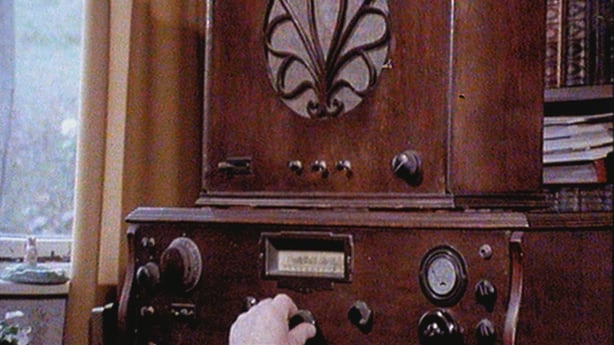
As the service began to grow, and with more and more households acquiring radio sets, by the 1930s, 2RN began to attract more advertising and sponsorship money.
As advertising revenue grew, the resources put into news services were expanded.
Coverage began to expand and the RTÉ archives contains fascinating pearls from its collection that have been digitised in recent years.
Watch: The slow evolution of news broadcasting
We need your consent to load this rte-player contentWe use rte-player to manage extra content that can set cookies on your device and collect data about your activity. Please review their details and accept them to load the content.Manage Preferences
While there are excellent examples of those early broadcasting days in archives, in common with broadcasters across the world, there was no significant commitment to maintaining material, particularly the early news bulletins, so there are gaps in the archive collections.
Some of the highlights on the RTÉ Archive site include 2RN coverage of the World Eucharistic congress in 1932 which employed the new high powered 60kw transmitter installed at Athlone.
The congress coverage was also relayed by the BBC and several nations in continental Europe.
By this time over 30,000 licences had been issued across the State.
Another early example of a recording on the archives site relates to the Constitution Day parade on O’Connell Street in December 1937.
It is one of the early examples in archives of news coverage, with the 1937 commentary to mark the new Constitution. The commentator described the scene before the procession made its way along O’Connell street, assuring listeners that he had found a “very comfortable spot on top of the General post office,” from which he could see Nelsons pillar “towering over him.”
As the 1930s drew a close, the shadow of World War II was having an impact on Irish radio broadcasting.
The country’s neutrality meant that all editorial content during that time had to be very carefully compiled to maintain the integrity of that policy.
Dr said that at the time, that “although obviously the BBC News in Britain was heavily propagandised about the war, they at least could broadcast lots of war news, whereas RTÉ often felt they couldn’t, so Irish radio listeners often had to get their war news from the BBC if they could pick up the signal, and RTE focused more on domestic news.”
Even the weather updates had to be carefully considered by editorial teams as any suggestions or tips containing potentially useful forecasting information could be interpreted as having an impact on political decisions.
As the country moved in to 1950s, the news service grew too.
Dr Rains noted that “you start to get more bulletins during the day, and you get bulletins that are just aimed at Dublin, called the City News, and then bulletins called things like the Provincial Roundup to cover rural news and outside of Dublin.”
‘City Newsreel’, a weekly news feature, which began in 1954, is one example of early news programme broadcasting. Both ‘City Reel’ and ‘Provincial Reel’ were available to audiences in the 1950s and one of the earliest examples in the archives was recorded in 1957.
One of the stories on one of those precious early City newsreels episodes gives an insight into the topical news stories of the day.
While radio was blossoming in the 1950s, a new era for news was waiting in the wings with the pending roll out of television.
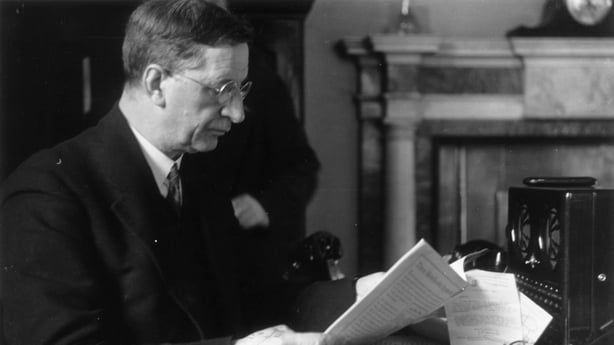
Éamon de Valera launched Raidió Teilifís Éireann in 1961
More developments too with a change of name for the service as under Section 31 of the Broadcasting Authority Act 1960, the station was officially re-organised as Radio Éireann, a statutory body under the new Broadcasting Authority of Ireland.
The ground work was laid for the advent of television, and another significant moment in Irish broadcasting history was launched on 31 December 1961 – Raidió Teilifís Éireann – by President Éamon de Valera.
His speech made clear the mixture of excitement, fear and trepidation that this new platform was causing as the president noted that “never was there in the hands of men an instrument so powerful to influence the thoughts and actions of the multitude.”
Thirty-five years of a thriving radio service built the audience for RTÉ television. Those early days of 2RN led to the growth of a national radio that now draws a total weekly listenership across all its stations of almost 2 million adults.