
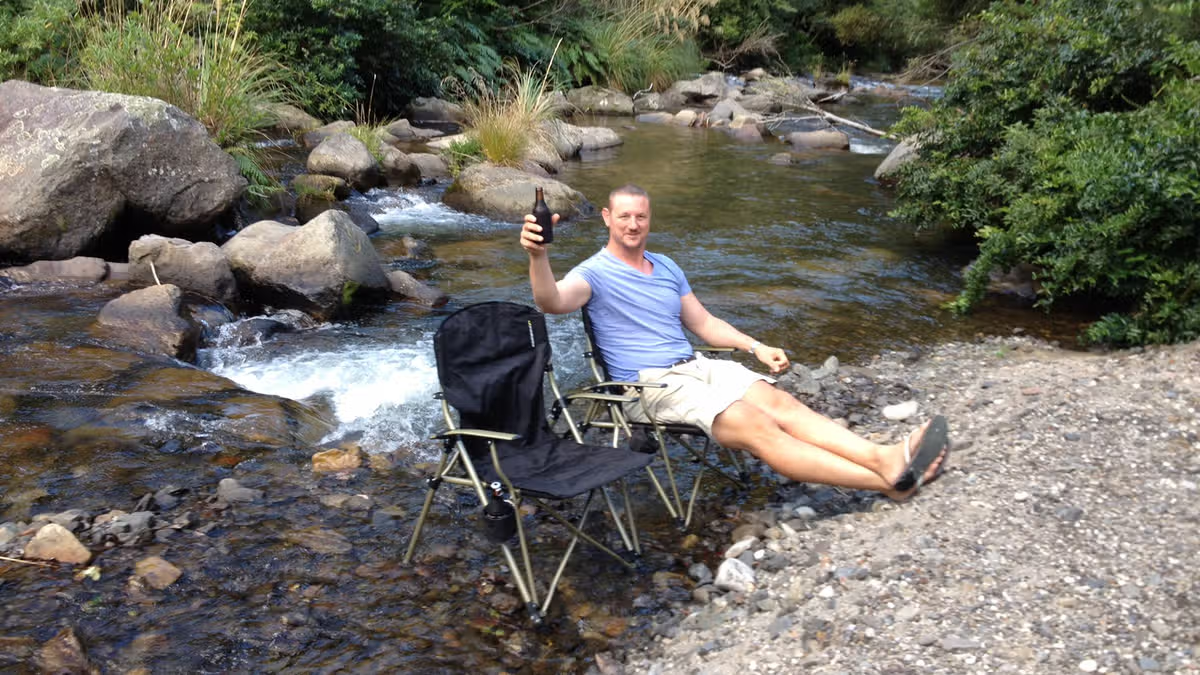
He was part of the Wales team which won the Grand Slam in 2005 and made the Lions tour, but he has taken a very different path since retiring from the game
13:55, 31 Aug 2026Updated 13:55, 31 Aug 2026
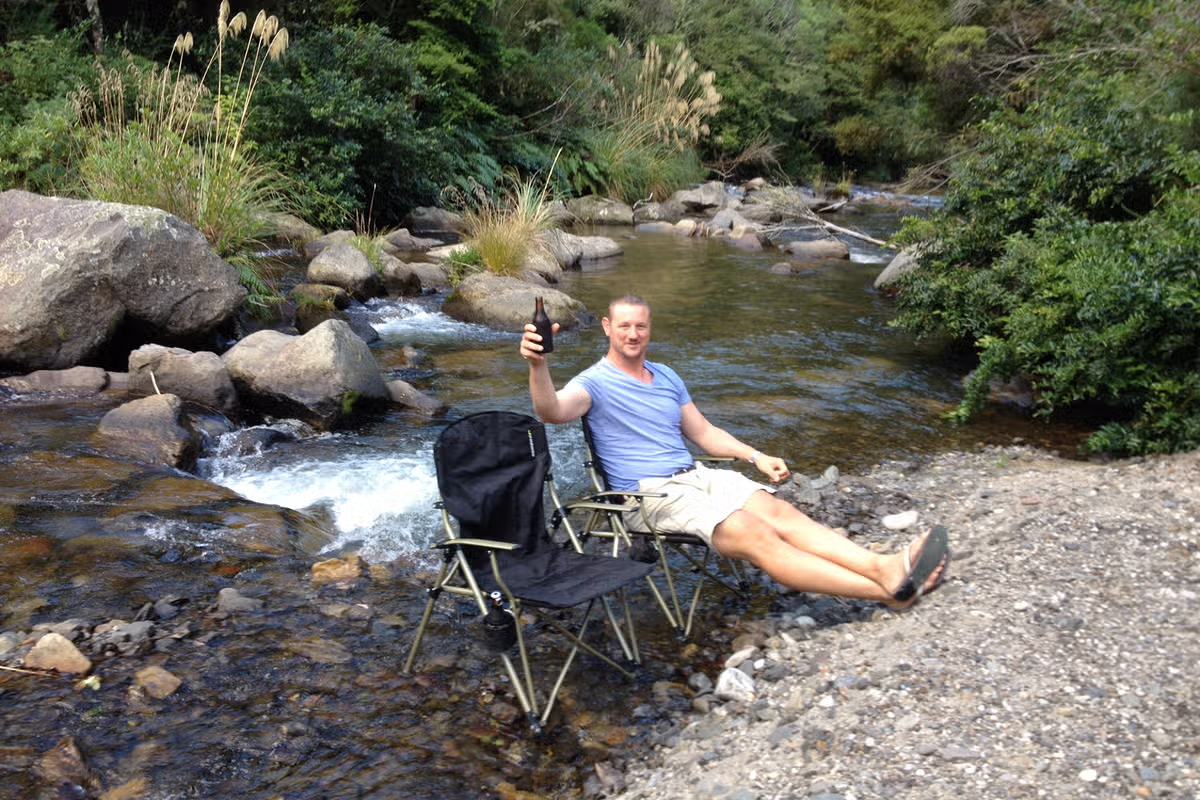
Brent Cockbain enjoying the good life Down Under
Ahead of their Grand Slam decider against Ireland back in 2019, the Wales rugby team received a plethora of well-wishes, including one from Airlie Beach in Queensland, Australia.
The sender was none other than Brent Cockbain, who had experienced the same situation 14 years prior.
In 2005, Cockbain was part of the victorious Wales team that defeated Ireland to secure their first Slam in 27 years, having qualified for his adopted country on residency grounds.
The message from the former lock was somewhat unexpected after he had slipped off the radar many years before.
Cockbain had actually been living back in his native Australia for nearly a decade, after leaving Wales in 2007 and the UK in 2010.
So what had he been doing since then?
When WalesOnline eventually tracked him down at his home in Queensland in 2019, it turned out to be quite an interesting tale.
“After leaving Wales, I had three years up at Sale and I then went back to Australia in June 2010,” shared the former Pontypridd and Ospreys lock.
“I was 35 and I had been playing rugby since I was 15.
“Rugby is great, but after 20 years it’s like any other job really. It was long enough.
“I was enjoying it, but it was time for a change. I just wanted to do something different.”
And that’s certainly what he has done.
“I picked fruit on a mate’s farm in north Queensland for six months,” he reveals.
“Then I bought a boat, a 31ft catamaran, and sailed up and down the coast for a couple of years.
“I caught up with old mates, met a lot of friends and I met my wife.
“Then, one evening, I was at a party with my wife back at a friend’s house in Innisfail, where I grew up.
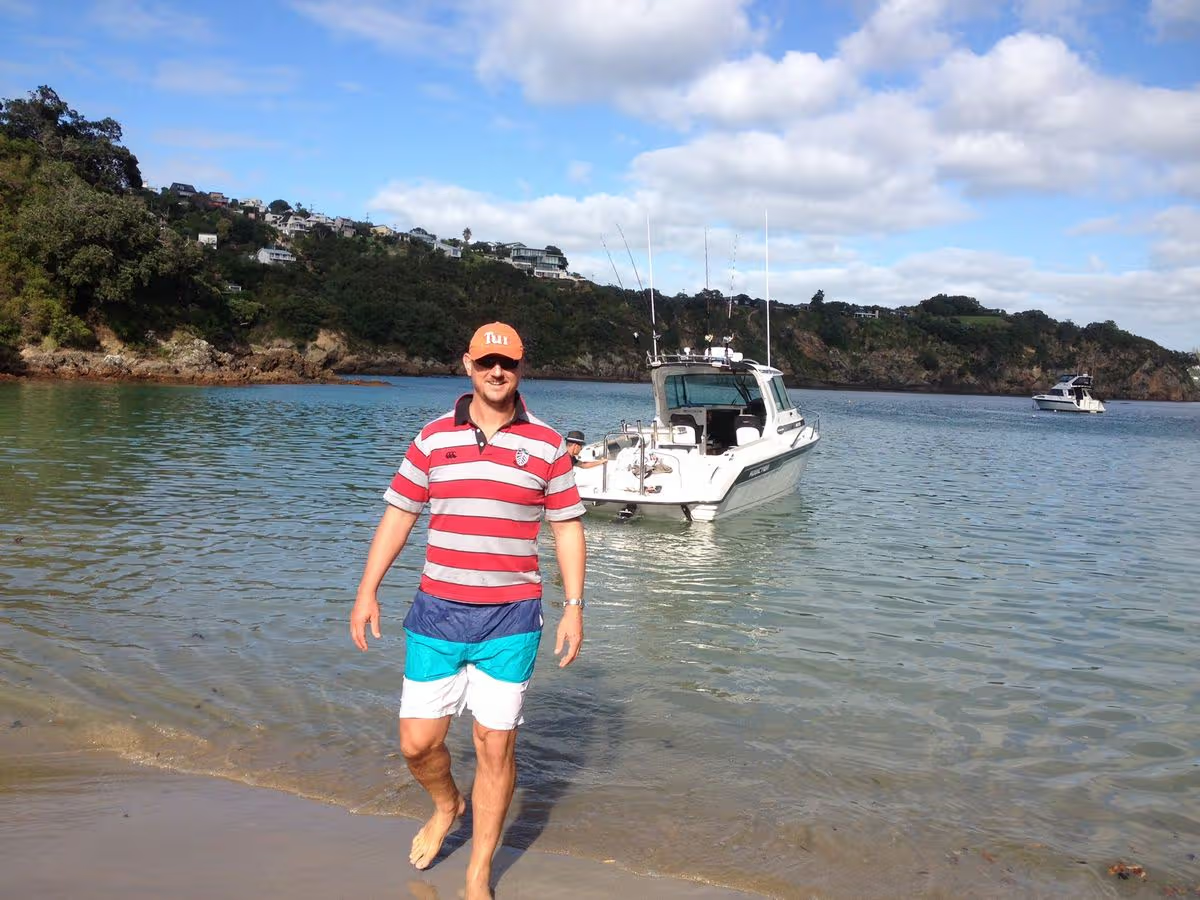
Brent Cockbain in Australia
“One of the lads there said ‘I think you two would be well suited for jobs in the coal mines, why don’t I put your names down?’.”
So, Cockbain became that modern day rarity, a Welsh rugby international working at a coal mine!
“My wife and I drive these big trucks, excavators, all that sort of stuff,” he explained.
“To put it in perspective, the fuel tanks on the biggest ones are about 6,500 litres. I’m 6ft 8ins and I don’t come up to the centre of the tyre! So that gives you an idea.
“It’s an opencast coal mine, about 300 metres deep and 27 kilometres long, and what we do is excavate the top soil. They are big machines and we move a lot of dirt.
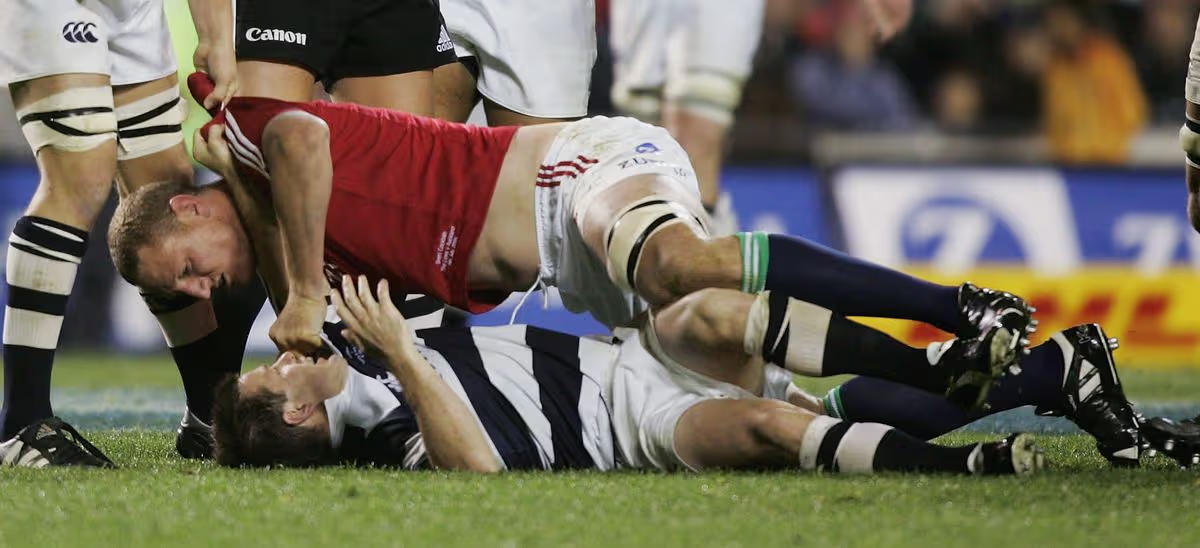
Brent Cockbain in action for the Lions(Image: 2005 Getty Images)
“We work five days on and five days off. The mine is 300 kms away from where we live, so we drive there once every five days and stay in a camp.
“Then at the end of five days, we come back to paradise and do what we want to do.”
Paradise for Cockbain became Airlie Beach, which is where he made his home. “It’s called the gateway to the Whitsunday Islands,” he explained.
Cockbain, though, experienced extremely difficult periods in his life in Wales.
Tragic death of baby son
While living in Wales, in September 2004, his one year old son Toby tragically passed away following a fight against a brain tumour.
“I felt I dealt with it really well at the time,” he recalled.
“We set up a foundation in Toby’s memory and managed to raise a lot of money for the hospital for sick kids.
“We had great support from the public and hopefully did some good doing that.
“I think, at the time, it helped me through that period.
“But it’s such a hard thing. I don’t know even how to describe how hard it is. It’s just awful.
“On reflection, looking back at it with time, I think I wasn’t very well when I left Wales, the way I finished things up.
“I had all those bad memories. I was separating from my wife and obviously that was very difficult.”
Cockbain also encountered the conclusion of his 24-cap Wales career in 2007.
“It just left a bit of a bad taste in my mouth,” he said.
“Gareth Jenkins, who was coach at the time, couldn’t even ring me to say I wasn’t in the World Cup squad. It was bloody dreadful.
“I just wasn’t very well and I don’t think anyone within the two management groups at the Ospreys or Wales said ‘you don’t seem to be behaving normally, what’s going on?’.
“They just kind of left me to my own devices, which was a bit sad really looking back on it now.
“I didn’t have any family support, which was difficult.
“How can you say if it was a mental health issue or just having a hard time?”.
“But it was very tough.”
Nevertheless, despite the challenging periods he endured, Cockbain continued to reflect on his seven-year stint in Wales with tremendous affection.
The incredible journey
The journey commenced in 2000 due to the determination of then Pontypridd coach Richie Collins.
Cockbain’s combative displays for Ponty earned him a call-up to the Wales squad in 2003, after completing his three-year residency requirement.
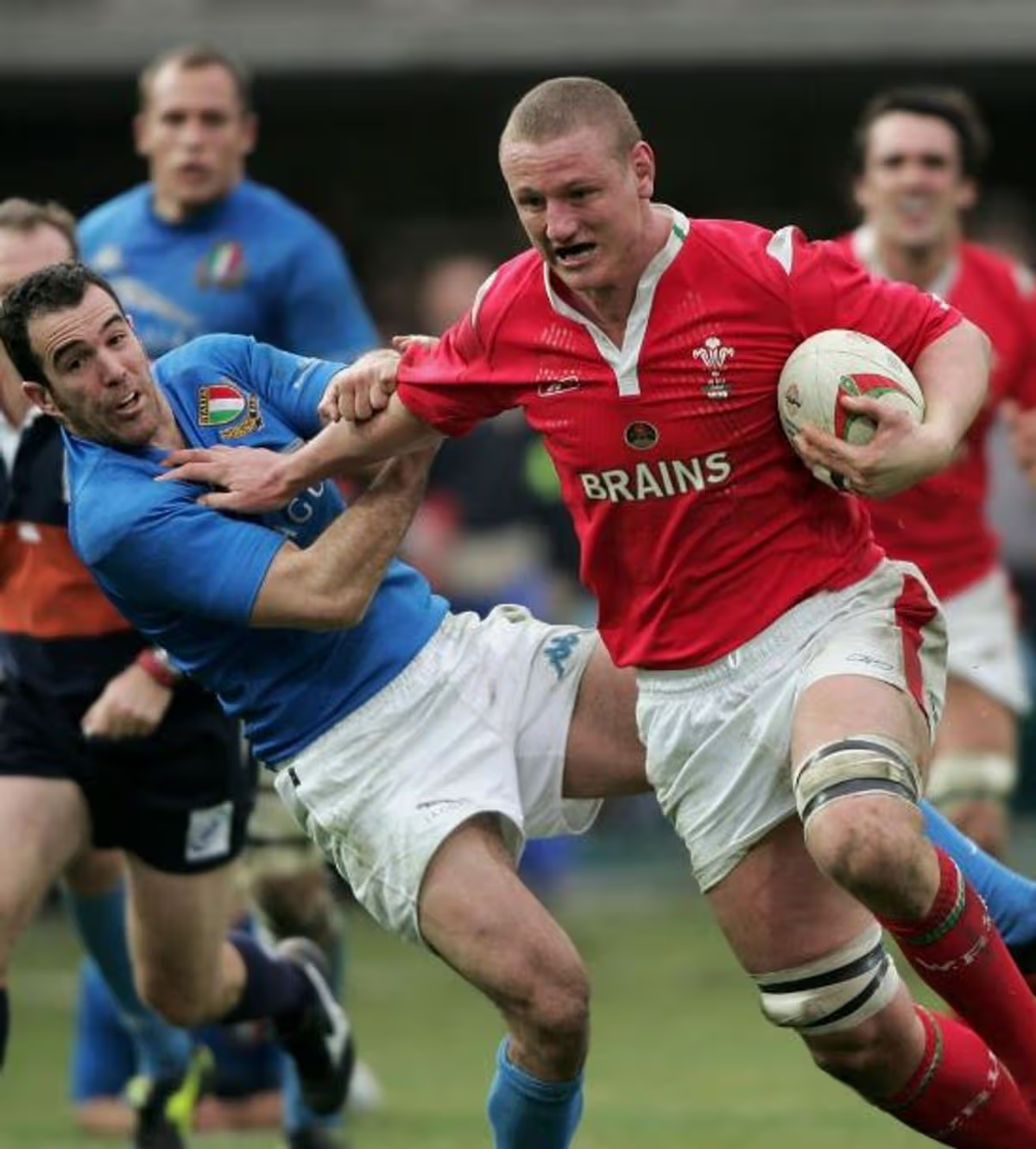
Brent Cockbain brushes aside a challenge to score the fourth try for Wales during the RBS Six Nations game between Italy and Wales at the Stadium Flaminio on February 12, 2005 in Rome, Italy
“Playing for Wales just kind of happened,” he said.
“My expectations were zero. When Steve Hansen called me to tell me I was in the World Cup squad I couldn’t believe it.
“It was a great honour playing for Wales. You want to play the best rugby you can wherever you are.
“There’s a lot of talk about players qualifying on residency, but everyone has done it.
“Australia and New Zealand have had south seas islanders, England have got a lot of people from outside who have come into their team.
“I think it adds to Wales’ team if you’ve got people with different perspectives and different outlooks coming in.
“It lifts the team. The team is better for it really and the individuals are better for it too.
“I was proud to play for Wales. When you pull that jersey on and understand the history of it and how much it means to people.
“People in the street you live in will talk to you about it. You can’t escape it in Wales. It’s an amazing and wonderful thing.
“In Australia, nobody knows who I am or what I’ve done rugby-wise where I live.
“It’s a rugby league area. It’s quite a shock when someone does recognise you, because it just doesn’t happen over here.”
Cockbain quickly became a vital component of the Welsh forward pack and would feature in every match during the unforgettable 2005 Grand Slam triumph.
“It had been 27 years since we’d won it, so it was very special,” he recalls.
“Scoring a try against Italy was a highlight for me and then the Ireland game to seal it.
“I remember knocking Ronan O’Gara over off a lineout in the first half. That was a good feeling to get a good hit on him.
“He got annoyed because I was still holding on to him on the ground and he tried to kick and punch me. It was fine, I was doing my job.
“That was kind of my style, just to get stuck in.”
The Lions call-up
After the Slam, he was called up as a replacement for the 2005 Lions tour of New Zealand.
“It was a funny one,” he reminisces.
“I was actually on my father’s boat out fishing when we got a call on the radio to say I’d been selected because Danny Grewcock had been sent home for biting.
“I flew to Sydney, then caught a connecting flight through to Wellington.
“I just had enough time to drop my bags in the hotel lobby, walk across to the marina, hop on a helicopter and fly up to Manawatu.
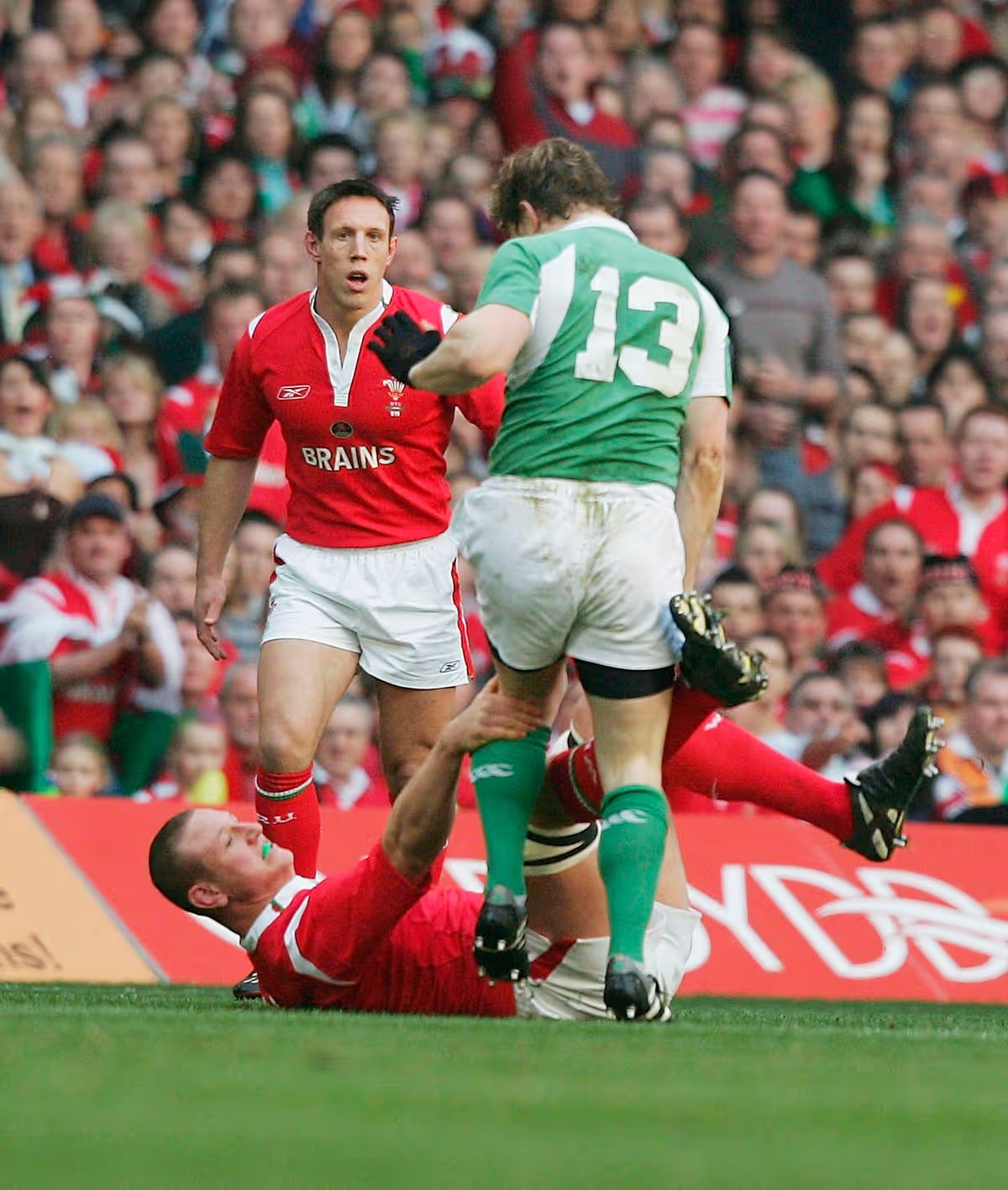
Brent Cockbain and Brian O’Driscoll during Wales’ win over Ireland in 2005
“The Kiwi pilot did a lap around the pitch and said ‘this is where you are playing today’.
“We landed at the airport, they took me to the hotel and I met Sir Clive (Woodward).
“It was a case of here’s a heap of kit, here’s the lineout calls, now on the bus.
“All these players whose heads I had been trying to rip off for years were now in my team.
“Suddenly you are in the same room as them with a common goal. It was quite a strange thing.
“So that was the Lions for me. No pre-tour training, pamphlets or that sort of nonsense. It was just come on down.”