
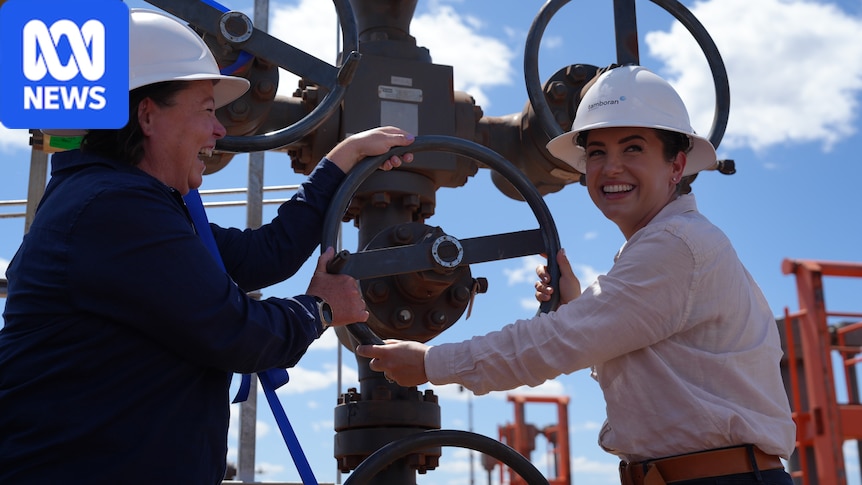
Gas fracked from the Beetaloo Basin will this week begin feeding into the grid to power Northern Territory homes and businesses — a milestone that has been met with both celebration and concern.
Eight years after the NT’s moratorium on fracking was lifted, the tap was officially turned on at the remote and expansive onshore gas development hundreds of kilometres south of Darwin today.
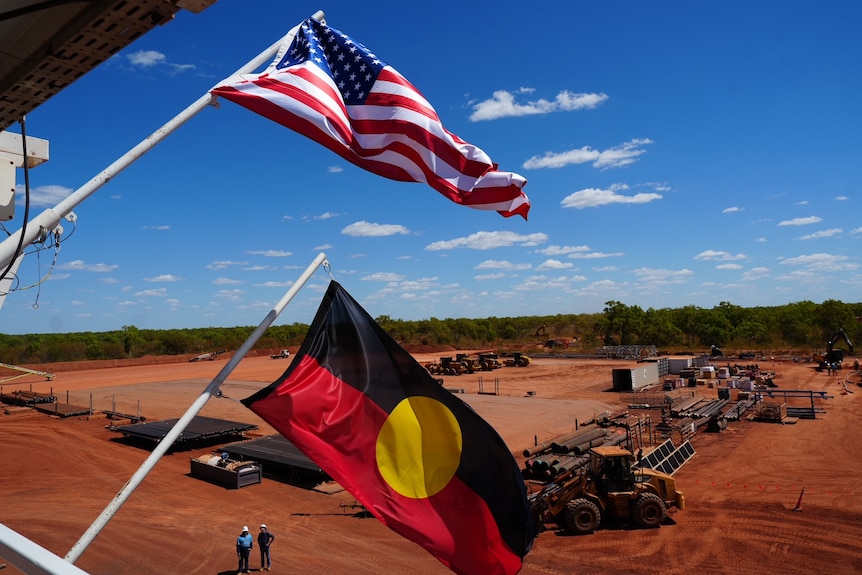
Flags were flying at the Beetaloo Basin today. (ABC News: Dane Hirst)
NT Chief Minister Lia Finocchiaro said the turning of the tap was “a pivotal moment in the Territory’s history”.
“In the Northern Territory, we are not connected to the national electricity market,” she said at the ceremony.
“We have the Beetaloo Basin powering the Territory from today, providing more gas than this country will ever know what to do with.”
Ms Finocchiaro said the project would create “jobs and opportunities” with a decade of potential production from the gas field.
Gas, gold mining key in plan to reversing NT’s $11b debt
Government officials, gas company heads, native title holders and the Northern Land Council (NLC) were in attendance for the moment.
NLC chair Matthew Ryan said in a statement before the ceremony the NLC believed the new agreement would lead to jobs and benefits for native title holders in the Barkly region, the remote town of Elliott and surrounding communities and outstations.
“Today is an example of what can be achieved when native title holders have a seat at the table with industry,” Mr Ryan said.
“Working with traditional owners is key for economic growth for the whole Territory.”
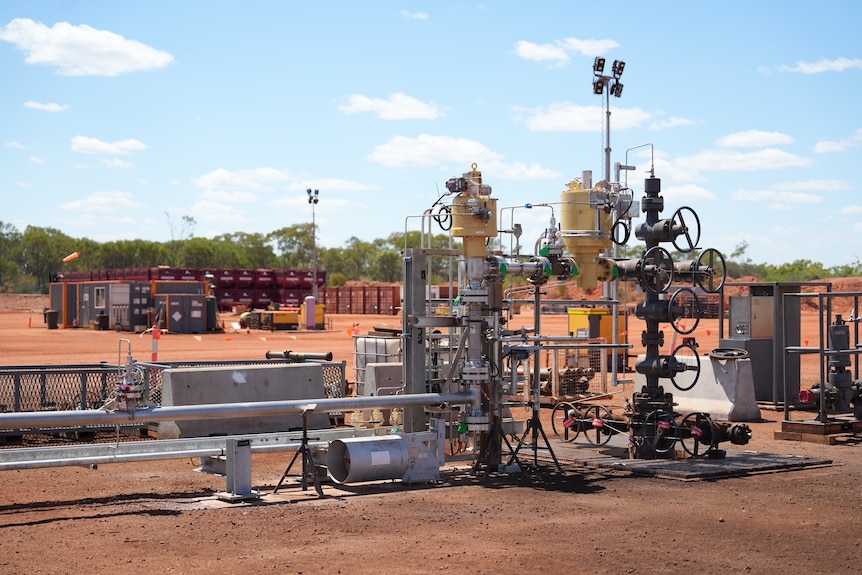
The CLP government turned the tap on gas in the Beetaloo Basin today. (ABC News: Dane Hirst)
At today’s ceremony, gas company Tamboran Resources’ chief executive Todd Abbott said it was “an honour to work alongside our native title holders” and that the project would have “immediate benefits” for many Territorians.
“There will be benefit to the Territory starting right away with first production, royalties, taxes, and then royalties also to the native title holders. So it’s immediate benefits for the Territory,” he said.
“The accomplishment today is getting gas to Darwin.”
Mr Abbott said the Beetaloo was “the largest non-associated gas field in the world outside of the Middle East or Russia”, making it a “globally significant resource”.
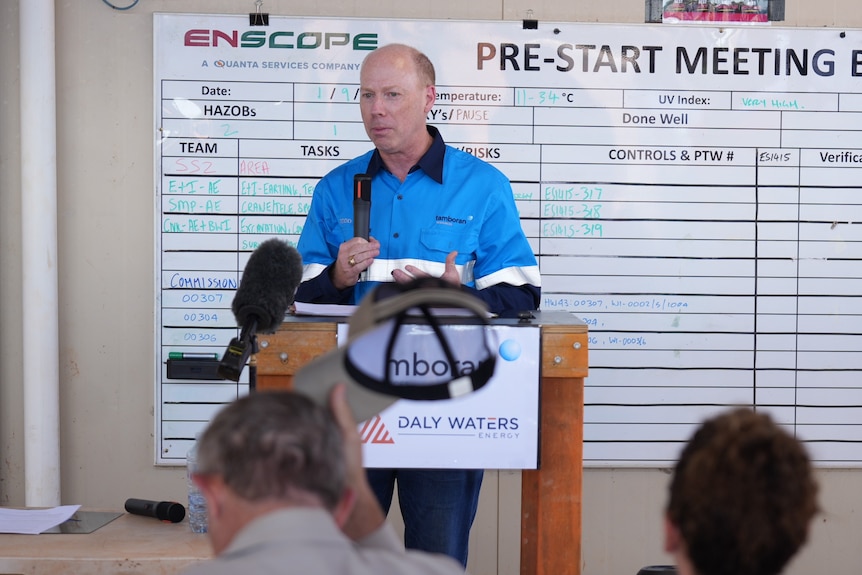
Todd Abbott of Tamboran Resources speaking before the crowd at the Beetaloo Basin. (ABC News: Dane Hirst)
The Country Liberal Party (CLP) government has long claimed the Beetaloo Basin would be a key economic driver for the NT, and said “more than 40 terajoules a day will flow straight into the Territory grid” from today.
“Development of the basin is forecast to generate more than $17 billion in economic value over the next two decades and support more than 13,000 jobs by 2040,” the CLP said in a statement.
The NT government confirmed the first gas from the Beetaloo Basin marked the end of having to take emergency gas piped from Japanese gas giant Inpex and from east coast gas supplies, following damage to the NT’s Blacktip field following Cyclone Fina.
The current gas being piped from Tamboran’s facilities into NT homes is appraisal gas — early test gas that is usually flared off, but is instead being fed into the NT grid.
A ‘climate bomb’
Today’s turning of the tap attracted criticism from environmental groups, including Greens leader Senator Larissa Waters, who labelled the Beetaloo a “climate bomb”.
“This is a terrible day for the climate,” she said.
“The Beetaloo is a climate bomb that will speed up dangerous climate change, putting us all at risk.”
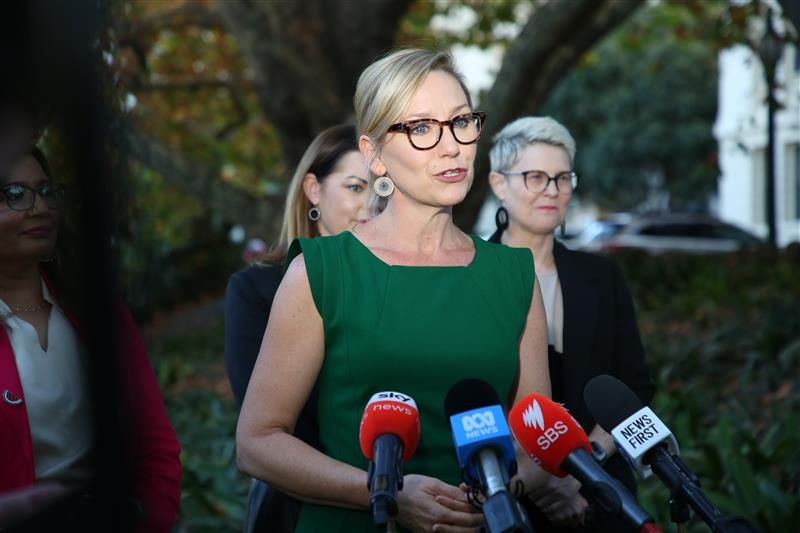
Larissa Waters says gas from the Beetaloo will speed up climate change. (ABC News: Jesse Thompson)
Climate Council chief executive Amanda McKenzie said “gas from the Beetaloo could unleash climate pollution more than three times Australia’s annual domestic pollution over the next two decades”.
At today’s ceremony federal Resources Minister Madeleine King responded to climate critics, saying: “No federal government has done more in relation to combating climate change than the Albanese Labor government.”
She said they remained committed to net zero by 2050 and to the national future gas strategy.
“We have to make the two work together for our future prosperity as Australians, right around the country — there’s no exceptions to this — but also for our regional partners and their prosperity,” Ms King said.
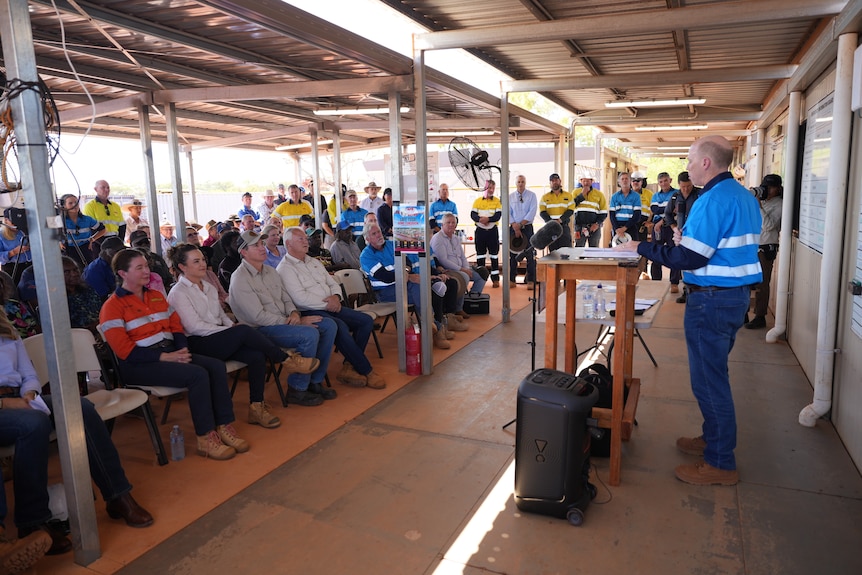
CLP politicians along with gas company representatives and native title holders attended the ceremony today. (ABC News: Dane Hirst)
There has also been some disagreement about exactly how much revenue and employment the Beetaloo will generate.
Independent economist Saul Eslake described the milestone as “significant” but said it would not offer a silver-bullet solution for the NT.
“I think there’s a bit of hype in saying it will change the Northern Territory economy forever, but it is a very significant development,” he told ABC Radio Darwin yesterday.
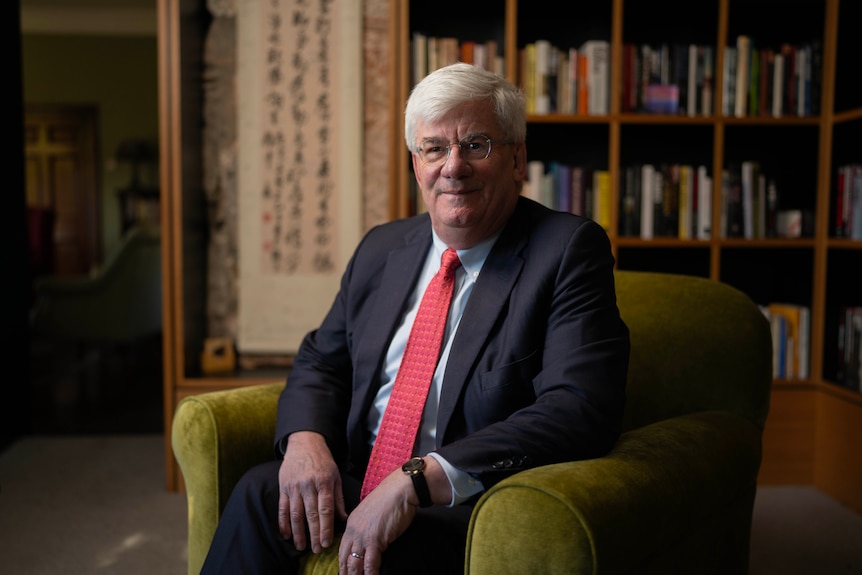
Saul Eslake says there is a variety of estimates regarding how much revenue Beetaloo will generate. (ABC News: Maren Preuss)
Mr Eslake said annual estimates on the amount of royalties the project would generate varied from $36 million to “in excess of $220 million a year”.
Market Forces policy analyst Morgan Pickett said the “economics of Beetaloo don’t stack up”.
“Banks like Macquarie, ANZ and Westpac are exposed to severe risks by backing fracking that could be Australia’s biggest ever gas development when science confirms we must rapidly scale back fossil fuels,” he said.
Over the weekend, concerned Territorians gathered in Darwin’s northern suburbs for an anti-fracking rally organised by the Environment Centre Northern Territory (ECNT).
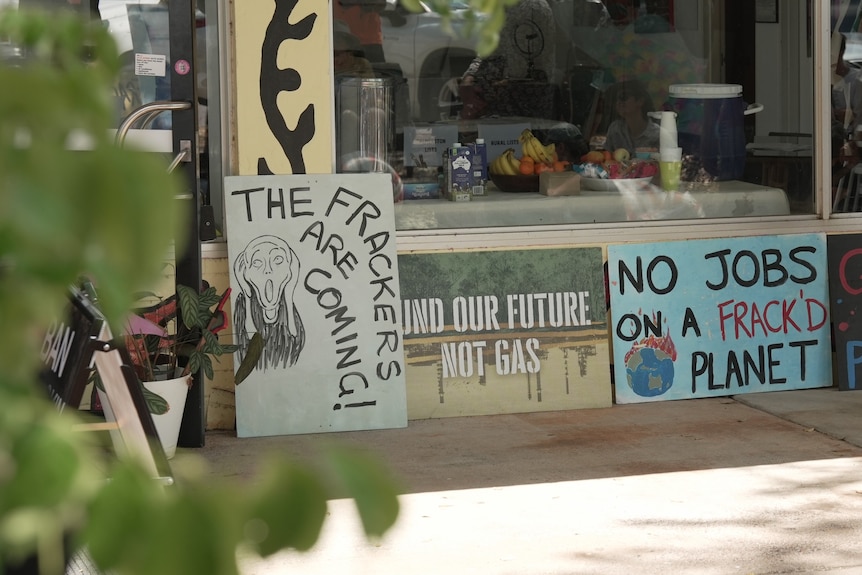
The anti-fracking protest took place in Nightcliff. (ABC News: Oliver Chaseling)
“This is a PR stunt from an industry with bleak economic prospects and no social license to operate in the Territory,” ECNT acting co-chief executive Bree Ahrens said.
“We are calling for a ban on fracking and AI data centres before it’s too late,” Ms Ahrens said.
While the NT government has rolled out pro-Beetaloo Basin flags across Darwin, Ms Ahrens said new anti-fracking signage was going up simultaneously.
“More than 500 Darwin residents have already signed up to put a new ‘Ban Fracking’ sign on their home or business,” she said.
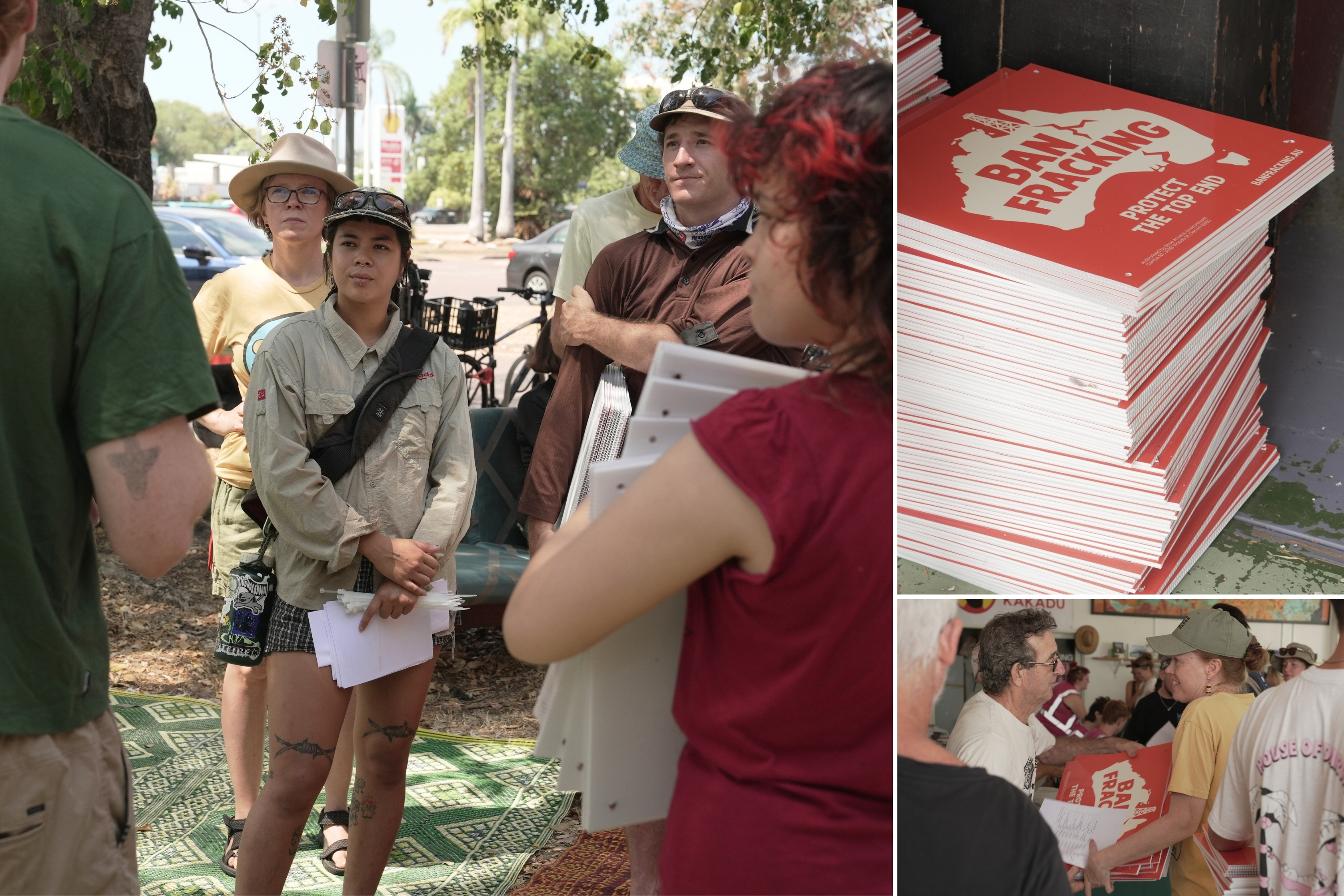
Environment Centre NT says more than 500 Darwin residents have signed up for the Ban Fracking placards. (ABC News: Oliver Chaseling)
Gas-powered AI data centres on the agenda
The NT government recently announced its plan to make the Territory the “data centre capital of the globe”, powered by gas fracked from the Beetaloo.
Federal Energy Minister Chris Bowen recently rejected claims Queensland and the Northern Territory had secured a carve-out from new rules requiring data centres to use 100 per cent renewables.
States and territories will be able to seek approval to use alternatives like coal or gas, but Mr Bowen said the Commonwealth would have the final say and the threshold would be “very high”.
Ms Finocchiaro said the NT would “not accept a heavy-handed approach from the federal government” when it came to powering data centres.
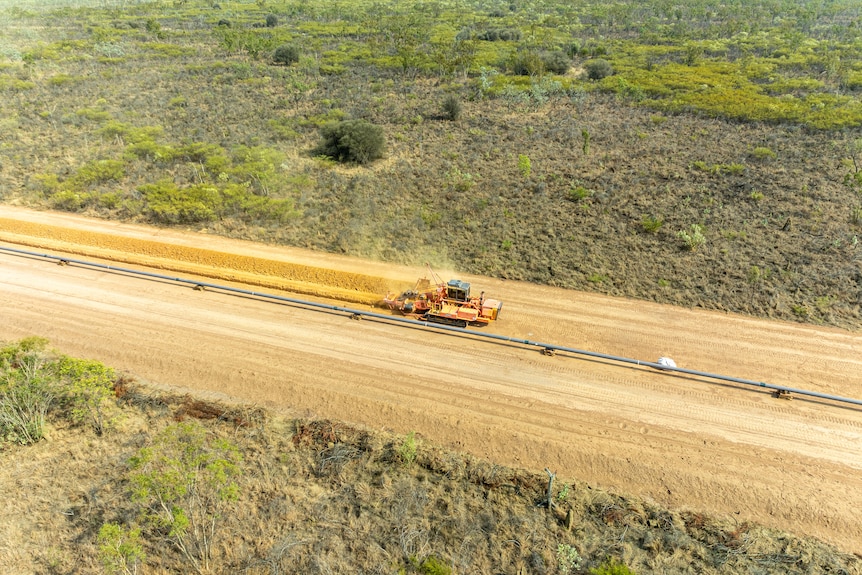
The Sturt Plateau Pipeline connects Tamboran Resources’ gas development in the Beetaloo Basin to the Amadeus Gas Pipeline. (Supplied: APA Group)
“Coming back from national cabinet where I met with my state and territory counterparts and the prime minister, there was very clear recognition by all that the Northern Territory, and indeed Queensland, have very different energy situations to the rest of the nation,” she said.
Ms King said it was “important for our future prosperity” that technology for data centres was enabled but that communities needed to be considered as well.
“What is important about data centres is that they don’t use energy and water to the detriment of local consumers — and that is the goal of the federal government,” she said.
“We will work with the Territory, as we work with all state governments, to make sure that data centres are enabled, but not at the cost of local consumers and local water uses and that’s important.”
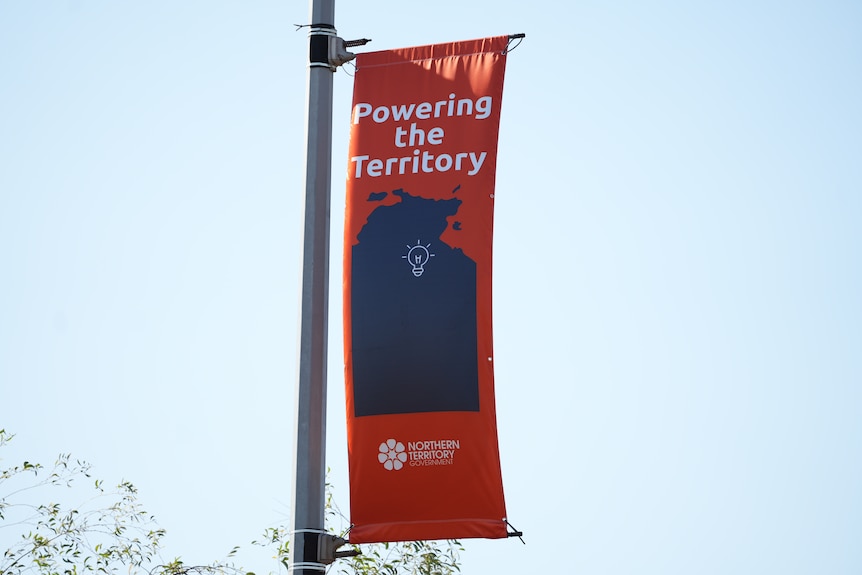
Orange flags promoting mining in the Beetaloo have recently popped up around Darwin. (ABC News: Dane Hirst)
Labor member for Daly, Dheran Young, held a community meeting last night at Berry Springs, on Darwin’s outskirts, to discuss a $40 billion data centre proposed for nearby Wedell.
The meeting drew around 100 people, and Mr Young said many rural residents were concerned about how a hyperscale data centre would impact their lifestyle.
“Many people in the rural area live in the rural area for a reason, and that’s for that rural lifestyle, being in that peace and quiet,” he said.
“They’re quite concerned by a massive industrial-scale industry coming to the area and they just don’t want that in the rural area, and that’s why people turned out in their numbers last night.”