
The new British prime minister promises a more interventionist and decentralized state, but there are forces at play that could prevent a fundamental reset.
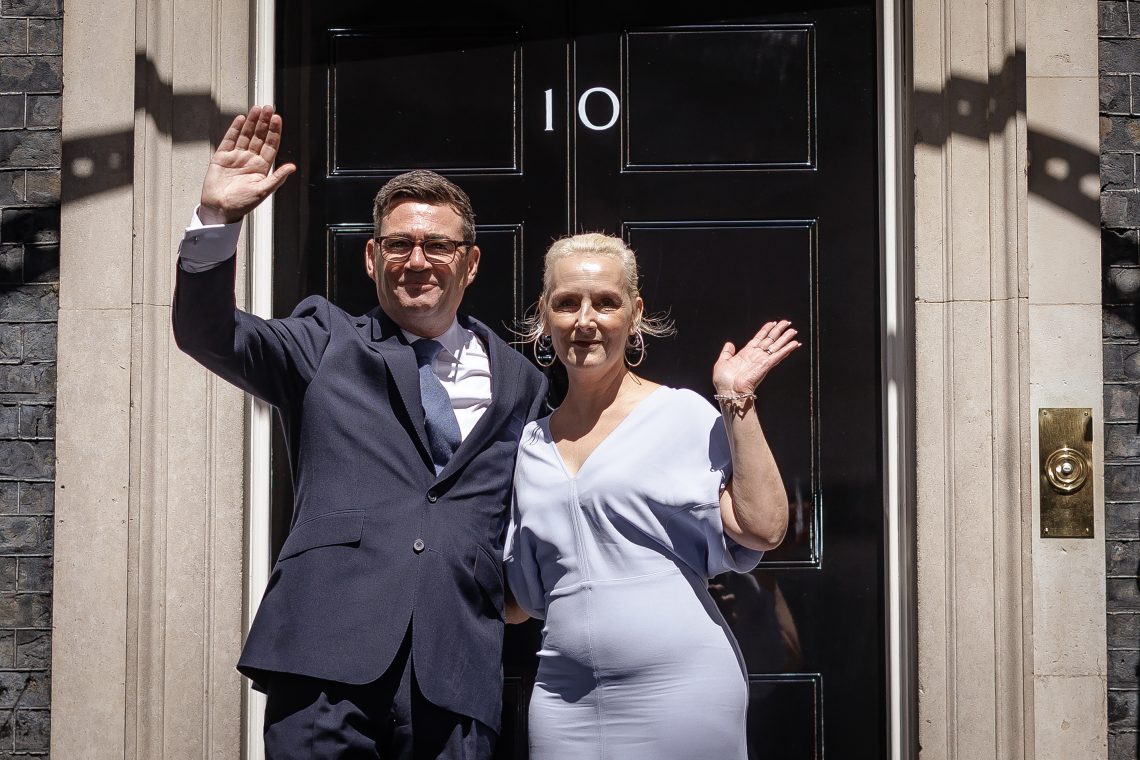
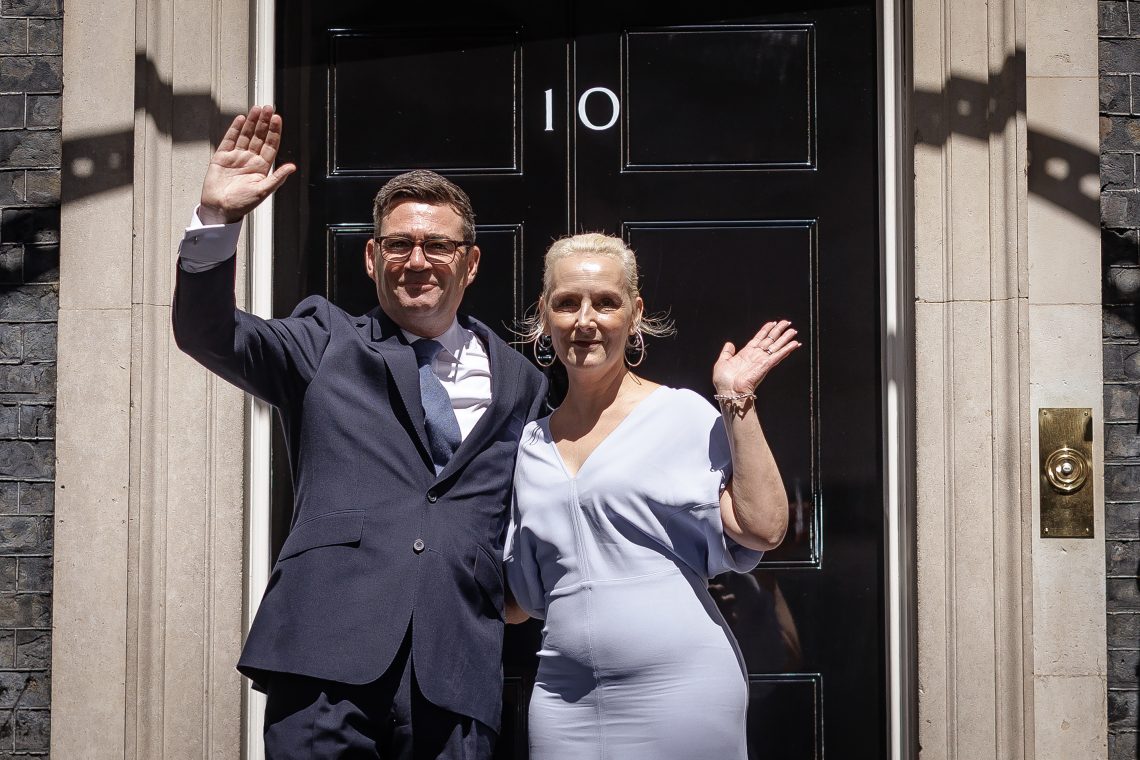 New Prime Minister and Leader of the Labour Party Andy Burnham and his wife Marie-France van Heel pose on the steps of 10 Downing Street on July 20, 2026 in London, England. The member of parliament for Makerfield is the UK’s 59th prime minister, succeeding Sir Keir Starmer, who resigned as leader of the Labour Party and prime minister in July. © Getty Images
×In a nutshell
Andy Burnham advocates a stronger state and greater regional devolution
A Blue Labour turn would combine interventionism with tighter immigration
Institutional resistance makes limited change the most likely outcome
For comprehensive insights, tune into our AI-powered podcast here
The United Kingdom now has its seventh prime minister since 2010. Andy Burnham, the former mayor of Greater Manchester, took office on July 20 after replacing Keir Starmer. The rapid turnover reflects structural problems in British politics and a series of predicaments that neither voters nor the political class have yet fully recognized, much less addressed.
For the next few months, the media will be consumed by speculation over who will get which government position, the new prime minister’s short-term impact on the polls and the relative performance of the various political parties. But the question really worth asking is this: What chance is there that this will mark a genuine turning point in British politics and public policy? Will we look back on 2026 in a few years and see it as a date as significant as 1979 or 1997, with Mr. Burnham’s premiership marking as consequential a reset as the accessions of Margaret Thatcher and Tony Blair? What would indicate that such a shift had occurred?
Normally “more of the same” is the default setting. Major resets are infrequent. However, when they do occur, they are usually triggered by crises, or long-standing problems reaching a point when they can no longer be ignored. Those conditions certainly apply in the UK today. Sometimes, the political system is too sclerotic to respond – think of France in the 1780s. What turns a crisis into a transformation is the combination of a key figure and a movement of people driven by the belief that there is an opportunity to change the agenda.
Signs of change
There are signs that this might be about to happen. Mr. Burnham has the advantage of having been out of the Westminster hothouse for nearly a decade, and he sees the UK and its problems from a different perspective. And indeed, he and his aides and advisors have developed an approach (the so-called “productive state”) that would mark a clear shift in economic policy were it put into effect.
This approach is set out in the recently published report “The Productive State: A framework for Manchesterism.” He has said several times that the UK has “been on the wrong track” for 40 years, implying that the wrong turn began with Thatcherism in the 1980s and also encompasses the Blair and Brown governments after 1997. On the other hand, there is no evidence that he rejects New Labour’s transformation of government or intends to rethink its approach to social policy. What would show that his words are translating into action and a genuine shift?
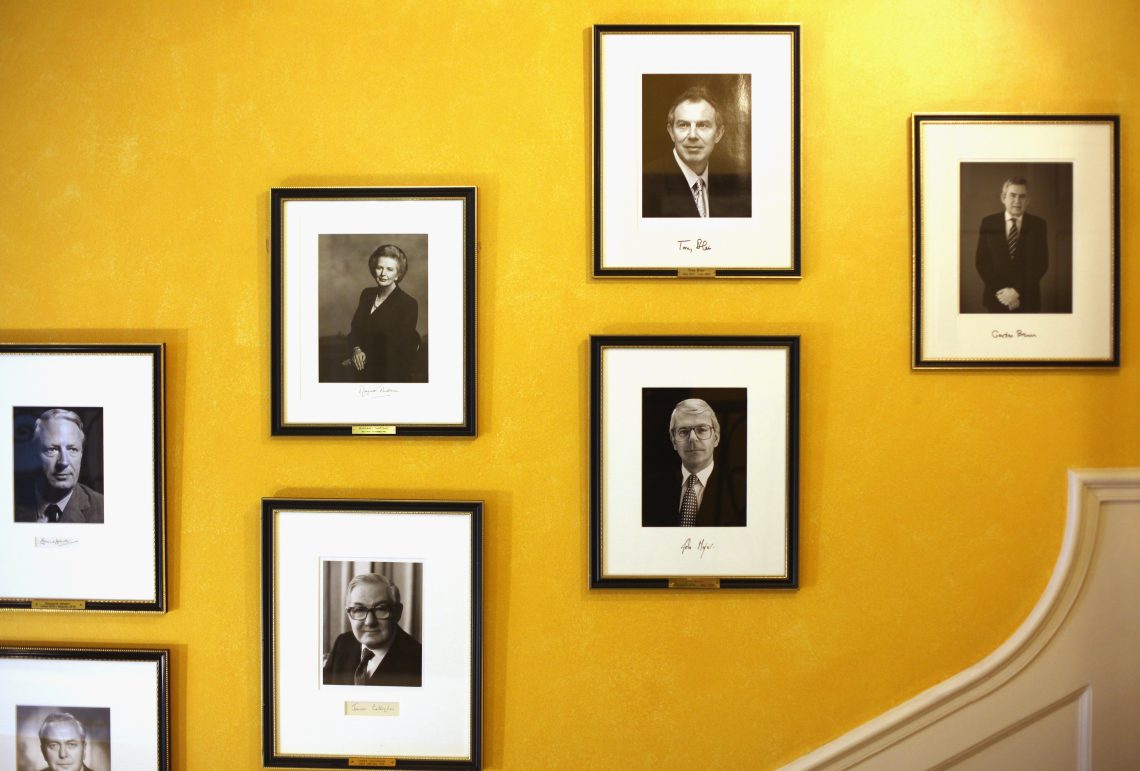 The governments of Margaret Thatcher and Tony Blair reshaped British politics. Andy Burnham will now attempt a similar reset. © Getty Images
The first and most obvious sign would be the abandonment of the free-market managerialism that has dominated since the late 1980s, and its replacement with a more interventionist political economy in which the government plays an active role. “The Productive State” offers a clear sense of what this could entail: public ownership or control of utilities and services such as transport; the aggressive use of state procurement to support domestic “champions”; an end to outsourcing and the return of contracted services to government; a major public housing program; the abolition of “right to buy,” by which many former council homes are resold to private landlords; and controls on prices such as rents and energy bills. Together, these measures would represent a significant expansion of state action, though not necessarily of public spending or taxation.
The second sign, which is already manifesting, would be a reorganization of the structure of the British state, mainly through the devolution of central government powers to local city regions. The third would be a radical reconstruction of the welfare system, in a departure from the model that has dominated since the 1970s, namely supplementing low wages by means-tested cash transfers. The National Health Service would continue to provide healthcare under its existing model, while a new “National Care Service” would be created to provide support for elderly and disabled people who need help with daily living.

A fourth indication would be the continuation of the shift, begun under Home Secretary Shabana Mahmood, toward tighter immigration and asylum policies and an explicit revival of “left patriotism.” This would represent a break not only with the neoliberal economic settlement, but also with the social and legal framework introduced under Prime Minister Tony Blair and largely retained by Conservative governments after 2010. To be effective, such a shift would require moving away from a rules-based legal system centered on universal rights and toward one that gives greater weight to citizenship and national sovereignty.
Taken together, all those measures would amount to a clear break with the course of British politics since 1979. It would mean a shift to what is described as “Blue Labour” politics, combining a much more leftist and interventionist economic policy and a different kind of welfare system, with social conservatism, traditionalism and a reassertion of traditional patriotism. Such a program would likely be popular and broadly reflect the preferences of the median UK voter: left-leaning on economics, supportive of a contributory welfare system and right-leaning on culture and national identity.
Potential roadblocks
However, there are obstacles in the way. It is not clear that the politicians in charge have a coherent vision for the whole range of areas outlined. The reforms are interdependent, making it difficult to implement any one of them without pursuing the others. Moreover, it is not clear that the logic of the emergent program has been thought through. Radical decentralization does not generally happen with uniformity of results, but Mr. Burnham and others do not seem to appreciate this. The economic project cannot be delivered without sweeping reform of the central state (particularly the Treasury) and requires both welfare reform to head off a fiscal crisis, and a change to the post-1997 legal regime. Politically, several aspects of such a program would provoke intense opposition on the political left, including within the Labour Party.
More by Steve Davies
These mitigating factors could result in a different kind of radical shift: a move to the left on economics combined with a reinforcement of the social liberalism and procedural legalism established after 1997, while leaving the current welfare system unchanged. This would still constitute a coherent program, but one likely to prove less popular and carry a greater risk of economic and fiscal crisis. Rising welfare expenditure and the costs of net-zero policies would increasingly collide with Britain’s sluggish economic growth.
×
Scenarios
Most likely: Status quo persists, fiscal crisis by 2028
The new prime minister introduces certain changes, but resistance from vested interests and established institutions prevents a radical change, producing only a modest shift in priorities. Given the political system’s proven ability to thwart or absorb attempts at fundamental reform, and the absence of evidence that this time will be different, continuity remains the most likely outcome.
In this scenario, there would be a softening of the migration policy currently being pushed by Ms. Mahmood but not a return to the effective open borders position of former Prime Minister Boris Johnson. The area most likely to change would be regional government, with some additional powers given to regional mayors but no real relaxation of the grip of the Treasury.
In this scenario, the UK’s competitiveness would continue to decline because of the persistence of policies that raise the cost of energy.
The main problem in this scenario is the fiscal squeeze expected toward the end of the decade. Under current plans, departmental spending begins to decline as a share of gross domestic product after 2027-2028, while the fiscal rules require the current budget to be in surplus and public-sector net financial liabilities to fall by 2029-2030. If the government also avoids broad tax increases, apart from a possible alignment of capital gains tax with income tax, maintaining the status quo could produce a tax and spending crisis and prompt an election a year early. The likelihood of this scenario is 70 percent.
Less likely: Blue Labour break with the post-1979 settlement
The new administration breaks with the neoliberal Thatcher/Blair consensus and goes down a “Blue Labour” route. A central feature of this scenario would be doubling down on the stricter migration controls currently proposed. The total tax take would remain where it is but there would be major reforms, above all the introduction of a land value tax and possibly a merging of several taxes (income tax, national insurance, inheritance tax and capital gains tax) into a single universal income tax.
There would be significant changes to the internal governance of the UK, with city-based regional governments getting much more independence.
Mr. Burnham and his allies may not have fully thought through what they need to do to realize these policies. This course of action would require abandoning net-zero goals to protect the competitiveness of UK industry and would also require welfare reform. The probability of this scenario is currently 20 percent.
Least likely: Left turn without structural reform
Whether out of conviction or, more plausibly, a lack of coherent alternatives, the administration moves to the left on economic and tax policy while reaffirming net-zero commitments and adopting a more permissive, rights-based approach to immigration and national identity. This would entail abandoning Ms. Mahmood’s proposed immigration restrictions, pursuing energy policies that further raise costs and weaken competitiveness, and reforming the tax system to increase overall revenue rather than remaining revenue-neutral, as in the second scenario. Paradoxically, it would also involve less structural reform of government, as concerns that greater regional autonomy would produce unequal outcomes – a “postcode lottery” – limit devolution.
Although this scenario may initially appear plausible, it remains the least likely for two reasons. First, it runs counter to the logic and explicit arguments of Mr. Burnham and his supporters. Second, it would probably carry a rapid political cost, weakening the government while strengthening both the Conservatives and Reform UK. The administration is therefore more likely to resist pressure to follow this course. The probability of this scenario is about 10 percent.
Contact us today for tailored geopolitical insights and industry-specific advisory services.

Sign up for our newsletter
Receive insights from our experts every week in your inbox.