
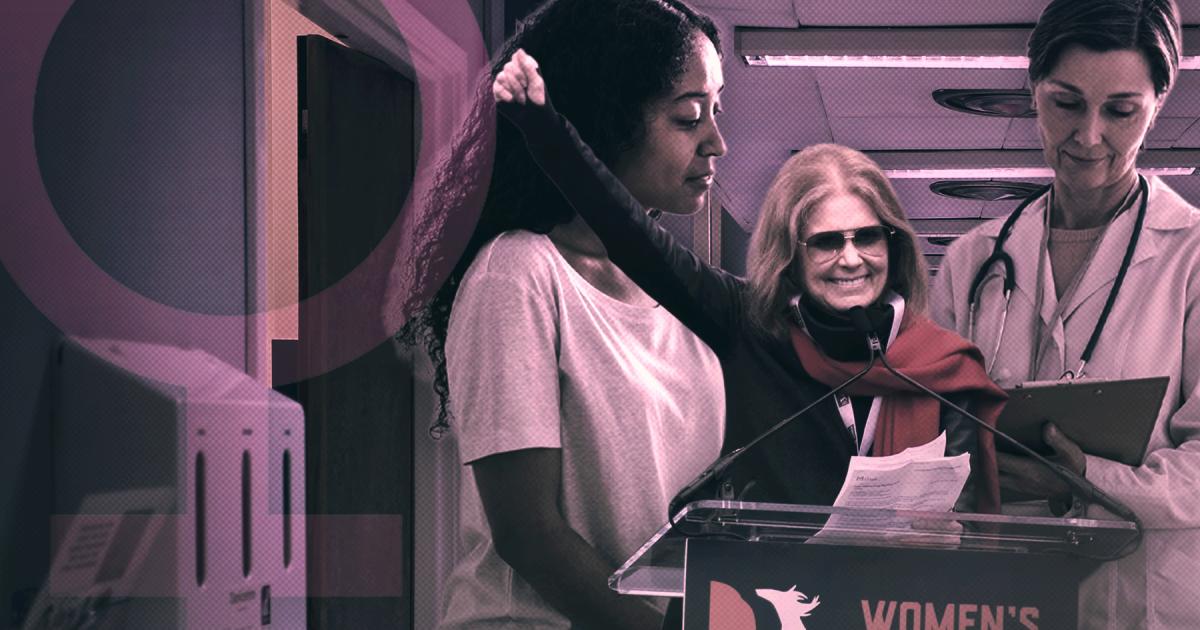
Imagine the world cared about vaginas.
Imagine, just for a minute, what difference that might make. Because if women’s health really is a national priority in Scotland, figures uncovered by The Herald are very difficult to explain.
Since September 2024, just 51 GPs have recorded completing a national Menstrual Health e-learning module, which includes training on endometriosis.
Scotland has 4,688 qualified GPs, excluding trainees. So those 51 completions are equivalent to barely one per cent of the workforce.
One per cent.
This is a country with a national Women’s Health Plan and where ministers have repeatedly promised to tackle inequality, improve diagnosis and ensure women are listened to.
And yet one of the national training resources designed to help deliver those ambitions has been completed by 51 GPs.
Worse still, the Scottish Government has now rejected calls from the Nicola’s Law campaign for mandatory and standardised women’s health training, saying such a requirement for all GPs and healthcare professionals would not be “practical or achievable”.
So apparently women’s health is important enough for a strategy, but not important enough to ensure the people delivering healthcare undertake specific national training on it.
There is something grimly fitting about writing those words on the day the death of Gloria Steinem, one of the most influential feminist campaigners of the last century, was announced.
Gloria Steinem, feminist campaigner, dies aged 92 (Image: Hulton Archive/Getty Images)
Almost half a century ago, Steinem wrote her essay If Men Could Menstruate.
It was satire, but its premise was devastatingly simple: what would happen if men had periods and women did not?
“Clearly,” she wrote, menstruation would become “an enviable, boast-worthy, masculine event.”
In her imagined world, governments would fund research into period pain. Menstrual products would be free. Doctors would study cramps intensively. Menopause would be celebrated.
Her point was if men experienced it, would we tolerate ignorance about it?
Nearly 50 years later, the question has aged far better than it should have.
READ MORE FROM UNSPUN:
But women’s health is about far more than vaginas. Hormones such as oestrogen influence health across the body, including bone health, while menstrual, reproductive and menopausal health are deeply connected to wider physical and mental wellbeing.
The deeper problem is that medicine has too often treated male physiology as the default, rather than fully accounting for how sex, hormones and different stages of women’s lives can shape health in distinct ways.
A study of medical textbooks used around the world found 58 per cent contained no reference to menopause at all. Another 12 per cent devoted less than a paragraph to it.
Periods and the menopause are not niche subjects. Endometriosis is not some obscure medical curiosity. PMDD, pelvic pain, heavy bleeding and the relationship between hormones and mental health are not peripheral topics simply because they disproportionately affect women.
Scotland now has plans, pathways, websites and online modules but has that really helped?
I will say it again. Only 51 GPs in Scotland have completed that menstrual health course.
June Smillie, who leads the Nicola’s Law campaign, called the figure “genuinely shocking”.
“This really highlights the gap between the ambitions we have for women’s health in Scotland and what is actually happening on the ground,” she said.
The campaign was created in memory of Nicola Thyne, a 36-year-old mother of two whose family says she endured years of severe endometriosis pain and had symptoms dismissed as “bad periods” before she took her own life.
Nicola’s Law wants standardised, mandatory training so women do not have to endure what Nicola did.
The Government argues that professional development is the responsibility of clinicians, employers, PSD Scotland, universities, Royal Colleges and regulators.
That may explain how the system is structured.
It does not answer whether it works.
Responsibility spread between everyone has a nasty habit of becoming responsibility owned by no one.
PSD Scotland itself holds no policy stating whether its menstrual health module is mandatory, recommended or voluntary. Practitioners are expected to identify their own learning needs.
And now we know one result of that approach.
Fifty-one GPs.
This is not about pretending a single online module could solve decades of neglect in women’s medicine. It is about whether political promises survive contact with reality.
What ultimately matters is what happens when a woman sits opposite a healthcare professional and says something is wrong.
Does she meet someone equipped to recognise what may be happening with her body? Is her pain taken seriously? Are the connections between hormones, physical symptoms and mental health understood? Or does she begin the familiar journey of returning again and again, looking for someone to join the dots?
If ministers believe voluntary provision is enough, then 51 completions demands an explanation.
If they regard that as satisfactory, they should say so.
If they do not, they need to explain what exactly will change.
Because women’s health cannot simultaneously be a national priority and everybody else’s responsibility.
Steinem imagined a world in which periods would matter if men had them.
Nearly half a century later, perhaps the most depressing thing is this message still resonates.
Women have spent long enough being the optional chapter.