
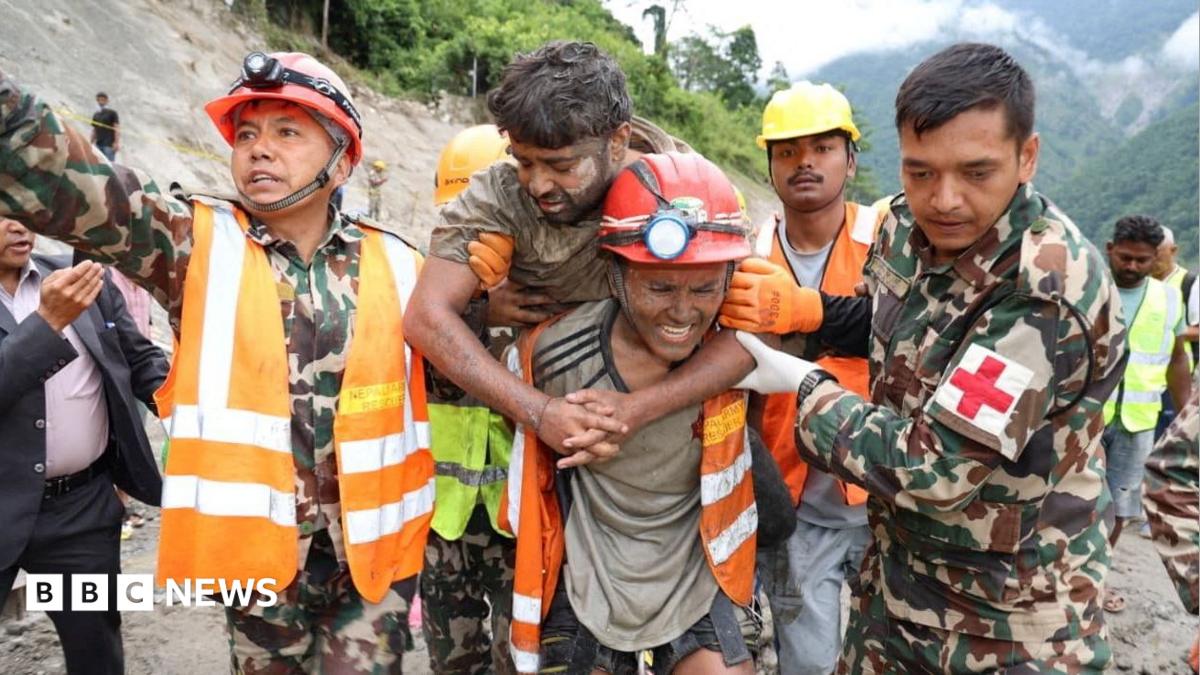
‘It’s like layer upon layer of miracles’: Rescue adviser tells BBC how survivors were reachedpublished at 08:29 BST
08:29 BST
 Tessa Wong
Asia Digital Reporter, in Singapore
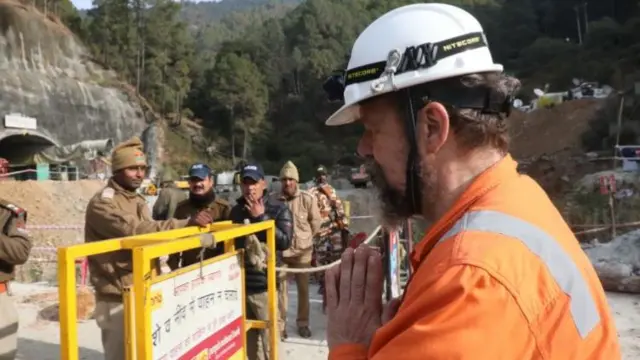 Image source, EPA-EFE/REX/ShutterstockImage caption,
Arnold Dix, pictured in 2023, has been advising the Nepalese government on rescue operations
I’ve just spoken to Arnold Dix, the president of the International Tunnelling and Underground Space Association, who has been advising the Nepalese government on how to conduct the rescue.
“I’ve never known a rescue operation where you had to look for an entrance of a tunnel that was previously up the hill, that was now underground,” he tells me.
“You can imagine the enormity of the avalanche, it completely buried the entrance.”
Using satellite data, rescuers were able to identify a spot to dig and eventually found the entrance – the next challenge was to locate survivors.
“We didn’t know where they were, we had to make our best guess using technology,” Dix says.
Rescuers worked through a tunnel blocked entirely with mud and massive rocks – some bigger than cars – and had to resort to using explosives, “which we normally never do because of the risk of blowing people up”.
“Then we found these two men. It’s like layer upon layer of
layer of miracles.”