
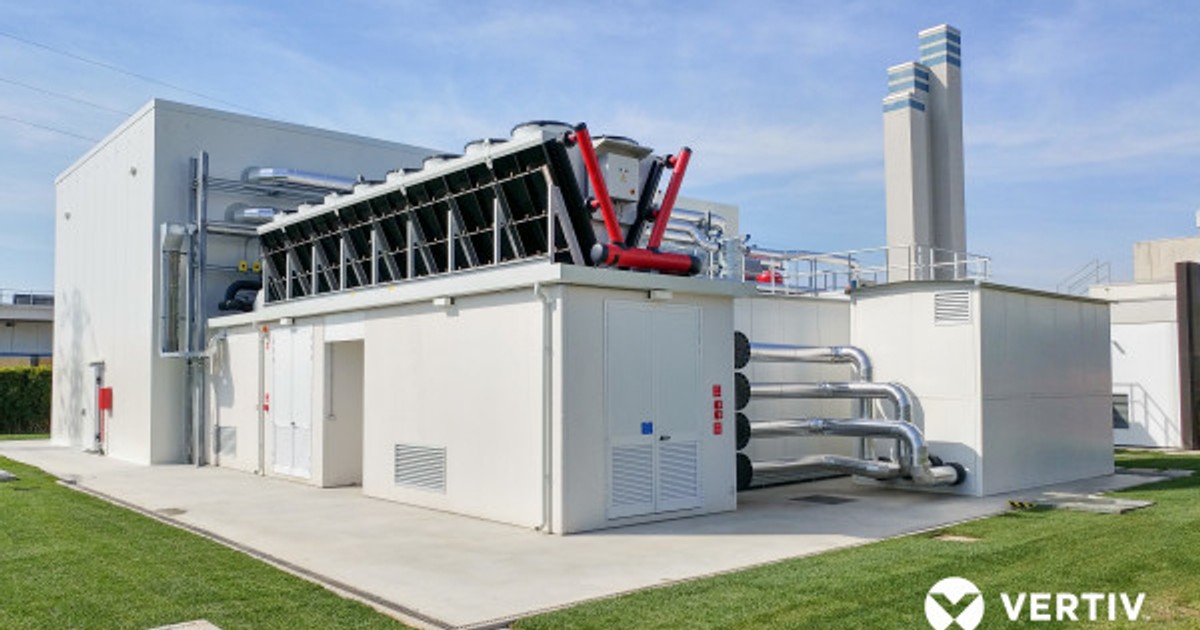
The US-listed company announced on September 2 that it would acquire North Carolina-based UtilityInnovation Group, or UIG.
Vertiv will pay approximately $1.45 billion in cash when the transaction closes. It could pay a further $1.15 billion if UIG meets specified earnings targets over the following 12 and 24 months.
The $2.6 billion figure is therefore the maximum potential consideration, not the amount guaranteed to be paid.
The transaction is expected to close during the fourth quarter of 2026, subject to regulatory approvals.
UIG develops microgrid controls, specialist switchgear and systems that coordinate electricity from public grids, on-site generators and energy storage.
Its technology can allow data centres to begin operating in locations where the electricity network cannot immediately provide all the power they require.
That capability has become increasingly valuable as the global AI boom raises demand for computing facilities and places greater pressure on electricity grids.
The connection to Airtel Africa
Vertiv already has a direct role in Africa’s data-centre expansion.
In October 2025, it was selected as a principal infrastructure supplier to Nxtra, Airtel Africa’s wholly owned data-centre subsidiary, for a new facility in Nigeria.
The Nigerian centre is designed to provide 42MW of capacity after all four phases are completed. It is expected to become fully operational by 2028.
Vertiv will supply cooling equipment, uninterruptible power systems and batteries. It will also commission the equipment and provide five years of maintenance through its Nigerian service operation.
The facility is the first stage of a three-year Nxtra expansion across African markets. Vertiv said it was also working with the Airtel Africa subsidiary on prospective projects elsewhere, including a Nairobi facility that could eventually exceed the Nigerian centre in scale.
UIG’s systems could be relevant to those projects because many African data centres must combine unreliable public electricity with generators, batteries and other independent sources.

Neither Vertiv nor Airtel Africa has said the acquired microgrid technology will be installed in Nigeria, Kenya or any other Nxtra facility, however.
The transaction should not be reported as a confirmed change to Airtel Africa’s construction programme.
Power is becoming the AI industry’s bottleneck
AI data centres use clusters of high-performance computer chips that require substantial electricity and cooling. Even a brief interruption can disrupt cloud services, digital payments, communications and business platforms.
Electricity has consequently become one of the first considerations when companies select sites for new facilities.
Vertiv said the acquisition would extend its operations beyond the equipment installed inside a data centre to the infrastructure connecting the facility to the grid and independent power sources.
At the initial $1.45 billion purchase price, Vertiv is valuing UIG at approximately 13 times its projected adjusted earnings for 2027. Vertiv expects the acquisition to increase its adjusted earnings per share during the first full year after completion.
The power challenge is particularly significant in Africa.
Approximately 600 million Africans lack access to electricity, while businesses in several major economies rely heavily on private generators and other backup systems. Data centres must secure continuous supply even when the surrounding electricity network is constrained.
Nigeria wants more data stored locally
Airtel Africa’s investment also supports Nigeria’s effort to keep more data and technology spending inside the country.
More than 85% of Nigerian workloads operate on public-cloud platforms, according to the country’s technology regulator. Only 22% of the country’s 1,000 most-accessed websites are hosted locally.
Domestic data centres can reduce the distance information travels, improve response times and allow more businesses to pay for services in naira. They can also protect some local services from disruptions affecting international undersea cables.
Nigeria and Kenya are competing with South Africa, which remains the continent’s largest data-centre market. US-listed Equinix has announced a $438 million South African expansion intended to add approximately 160MW of capacity.