
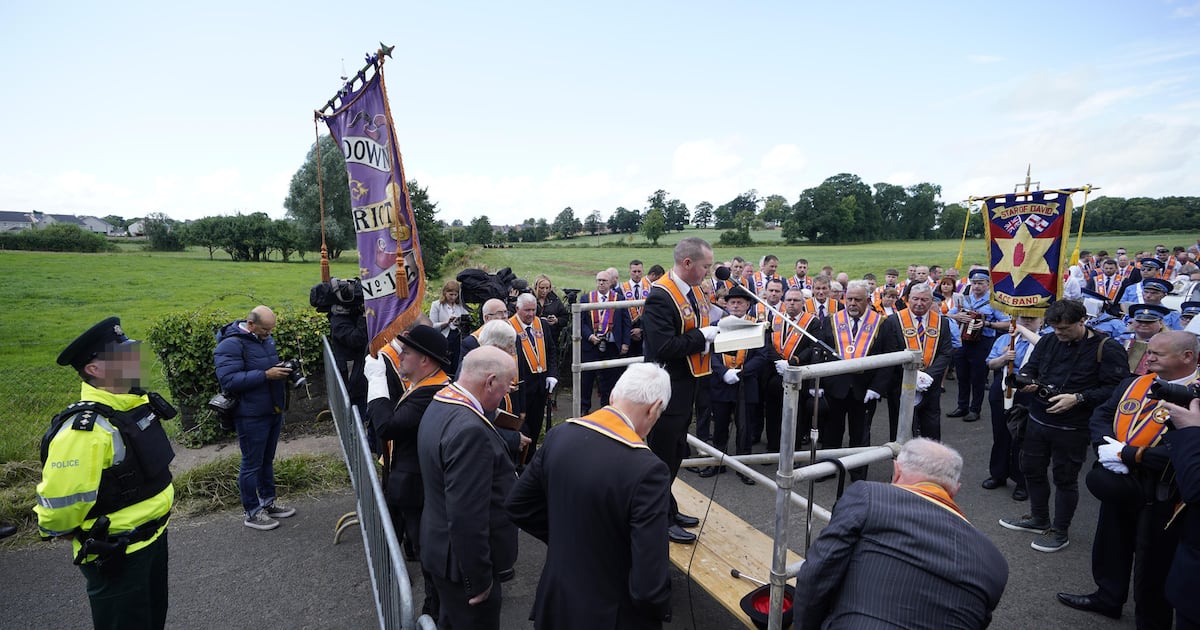
The Orange Order has been told to accept that the Drumcree parade dispute has been “settled in the eyes” of Garvaghy Road residents.
Breandán Mac Cionnaith, of the Garvaghy Road Residents’ Coalition, was speaking after the Parades Commission said it “has agreed to facilitate a process of mediation” in relation to the parading dispute.
The under-fire body said that “all interested parties have now been invited to participate”.
The violent Drumcree stand-off, which began in 1995, ended with the UVF murder of three Catholic children in 1998.
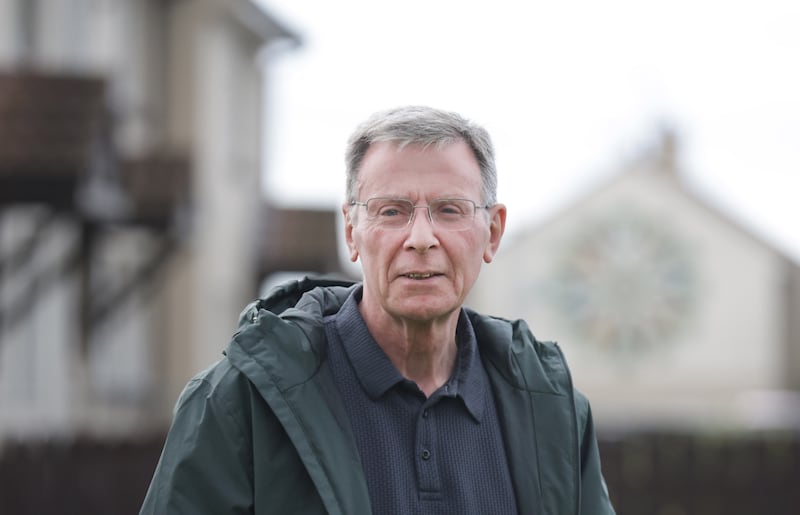 Breandán Mac Cionnaith, of the Garvaghy Road Residents’ Coalition.
PICTURE: COLM LENAGHAN
Breandán Mac Cionnaith, of the Garvaghy Road Residents’ Coalition.
PICTURE: COLM LENAGHAN
The Quinn brothers are among 21 people, mostly Catholics, killed by loyalists and the British army at the height of parading tensions between 1996 and 1999.
The victims of the violence included women, several children and police officers.
Last week a determination linked to this year’s Garvaghy Road parade was quashed at the High Court in Belfast after a legal challenge.
During proceedings the parading body conceded a procedural error in how it dealt with an annual application by the Orange Order for permission to walk along the nationalist Garvaghy Road.
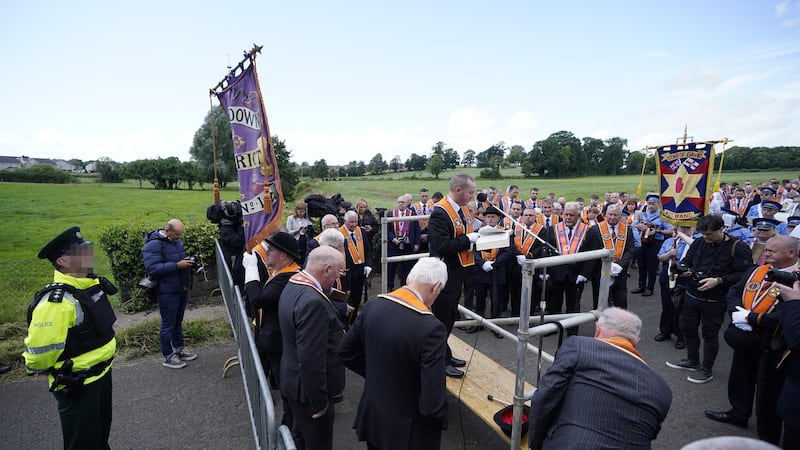
On Thursday the Orange Order revealed plans to notify the Parades Commission of its intention to bring 60 members down the Garvaghy Road on September 27.
Earlier this week Mr Mac Cionnaith revealed that the Orange Order previously rejected a proposal to allow them through the area accompanied by 32 local children wearing GAA colours.
On Friday Mr Mac Cionnaith said the dispute has been settled for almost three decades.
“Those who insist on the presence of an annual Orange march along Garvaghy Road must accept the reality that this issue has already been settled in the eyes of our community,” he said.
“It has resulted in peace and progress within the Garvaghy Road community and in other communities across the north for 28 years.
“Peace and progress are not problems which require a solution.”
He said thoughts of people murdered as a result of parading tensions are to the fore.
“We remember only too well the hurt, the pain and the trauma caused those sectarian marches in the past,” he said.
“Unlike the Orange Order and its political allies, we also remember the 21 people – members of our immediate local community, and those of other communities – who were murdered across the North by those acting in support of the Orange Order at Drumcree between 1996-1999.
“Instead, we remain committed to building upon the 28 years of peace and progress that has been achieved.”
Mr Mac Cionnaith added that “attempting to breathe life into past battles and conflicts should not form part of anyone’s agenda”.
In a statement the Parades Commission said it “has always recognised that disputes over public processions are, where possible, best resolved at a local level”.
“The commission has always promoted and been prepared to facilitate mediation in their commitment to working towards peaceful and respectful parading, reducing tensions, and improving community relations,” it added.