
One of the most intriguing Game of Thrones prequels may still have a future on the screen after all.
Author George R.R. Martin built the land of Westeros to feel larger than any one story, with centuries of history stretching well beyond the events of “A Song of Ice and Fire,” and that depth is a big reason the franchise has continued expanding beyond the original series. HBO turned the novels into a cultural phenomenon across eight seasons, then moved backward in the timeline with House of the Dragon and A Knight of the Seven Kingdoms.
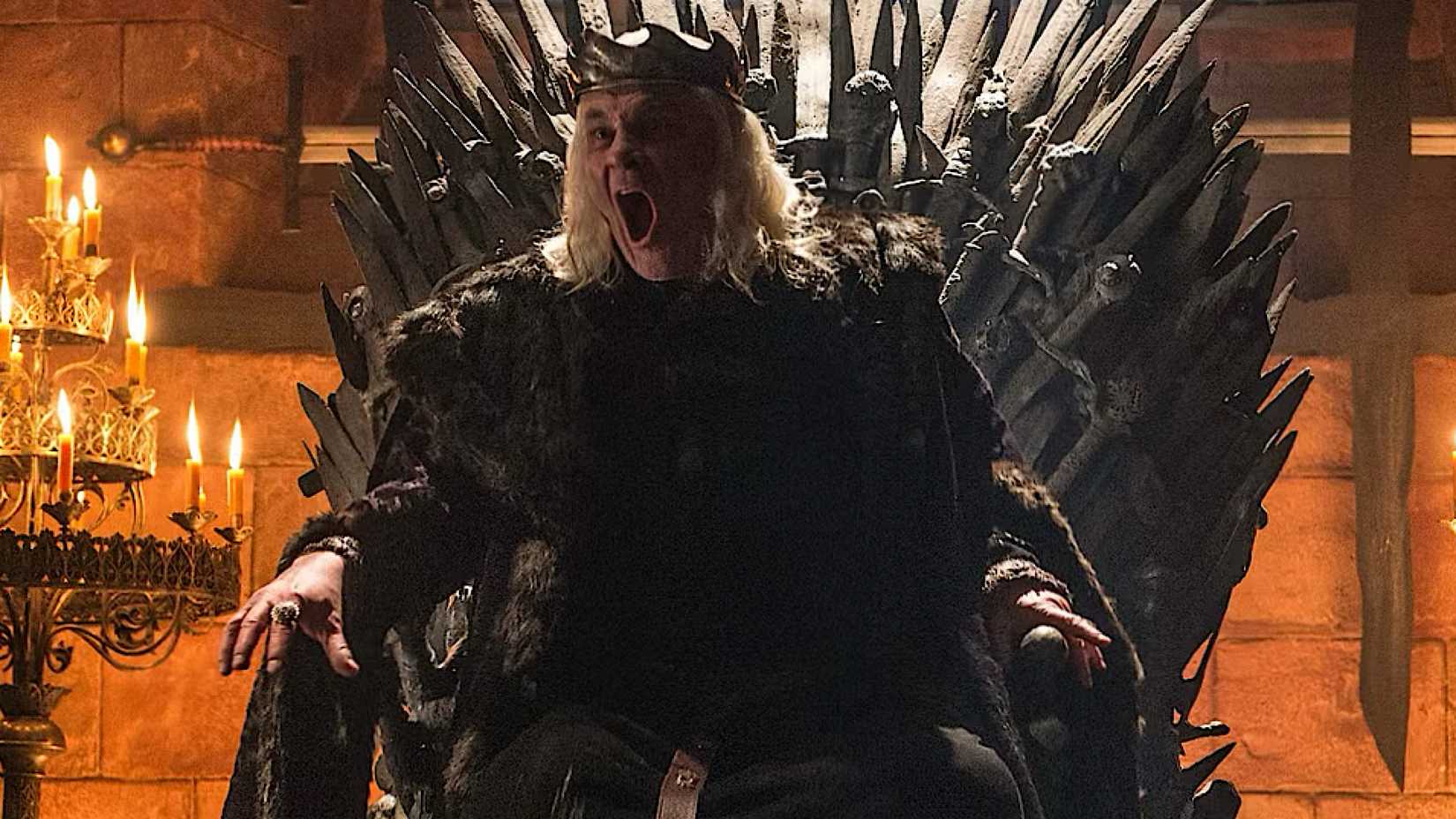
Yet one of the most tantalizing periods in that history remains largely untouched: the collapse of the Targaryen dynasty and the war Robert Baratheon won. That story was finally told in full this year through Game of Thrones: The Mad King. The stage prequel has been playing to sold-out houses at the Royal Shakespeare Company in Stratford-upon-Avon and will transfer to London in 2027 after its final performance on September 5.
Martin confirmed the move himself on his Not a Blog, writing, “I had a splendid time in Stratford-upon-Avon for the premiere of Duncan Macmillan and Dominic Cooke’s epic new stage production. New venue and premiere dates will be announced in due course.” The transfer was arguably the predictable outcome once the reviews started landing. Critics have been notably kind to the production, praising its scale and stagecraft in terms that theater openings rarely earn, with WhatsOnStage calling it a “soaring, surging spectacle.” The Guardian and The Independent both went four stars, with the latter noting the story “has serious shades of Shakespeare – with added dragons.”
HBO
The one recurring gripe concerns the runtime, which currently sits at 3 hours and 40 minutes including a 20-minute interval, and even some of the warmest notices concede that’s a serious ask. The Times‘ three-star review grumbled that “only the most dedicated of [the fans] will have the energy for this marathon.” That is at least a problem the creative team can address before a London remount, and adaptor Macmillan and director Cooke still have well over a year to make cuts if they decide to.
“Robert’s Rebellion” remains one of the few major Westeros stories that has never been dramatized directly, whether in the original series, HBO’s prequels, or even the novels themselves. By putting younger versions of Ned Stark, Jaime Lannister, and Cersei on stage, the production arguably gives that chapter of Westerosi history a canonical weight few franchise spin-offs can match, especially with Martin reportedly closely involved throughout. For now, the production’s success has at least kept open the possibility that “Robert’s Rebellion” could eventually move beyond the stage.