
As a young man growing up in the 1970s and 1980s in Brooklyn, Evan Seinfeld found heavy metal music culture at the legendary venue L’Amours. “The first time I walked into L’Amours… It was like I was home,” Seinfeld told me. “I walked in, and there were people there standing around who weren’t the usual characters. They had long hair. There were people with tattoos. There were people … with different types of style. There was a different kind of music. There was a subculture. And it felt organic for me as part of it … I was home.”
As heavy metal was growing as a culture, New York City was also the home of the developing underground punk rock and hip hop scenes. Seinfeld recounted when the late Pete Steele of Carnivore, for whom Seinfeld was a roadie, took Seinfeld to the birthplace of punk rock, CBGBs. “I was a metalhead … I used to roadie for Pete Steele when I was 16,” he recalled. “And then one day, Pete says to me, ‘Bring your car, pick up the equipment. We’re gonna go play CBGBs.’… I’d never been to CBGBs … The only person with long hair was me and Pete … And I’m like, ‘Wow … Eyes open to a new thing.’”
Seinfeld’s openness to new music and culture may have been the initial signs of a developing life philosophy centered around gratitude—particularly appreciating what he could experience in a given moment. “Gratitude … That’s the cheat code for everything you want to get. You want to be successful. You want to be happy. You want to get in shape. Get grateful,” Seinfeld explained. “Get grateful for what you have right here right now.”
Eventually, Seinfeld would manifest his gratitude for the rich musical and cultural experiences he had as a founding member of the band Biohazard, arguably the godfathers of the fusion of heavy metal, hardcore punk, and hip hop. And as time went on, Seinfeld developed additional career paths, particularly as an actor, including his role on the television show Oz. Not only was he open to and grateful for new experiences, but he also actually began to crave change.
“The beauty of impermanence, and not to look at relationships and things ending … but rather an opportunity for a new beginning. If there’s one thing that’s constant in life that I’ve learned is change, so you better learn to love f*cking change, because it’s coming for me,” he described. “I’ve learned to take that scared fear moment and go. I’m breathing it in. I’m taking this like a drug right now. I’m powering up. This is the fuel for my next f*cking decision, my next move. And I need to step into it fearlessly, even though I’m afraid right now.”
Embracing impermanence and the opportunities that arise from new experiences is at the core of Seinfeld’s approach to self-actualization. “So if we want the world to get better, we got to get better,” Seinfeld said. “And how does the world get better? It doesn’t start with saying what those people should do. It starts with us. Starts with me. I got to be better every day. I’m just going to do everything that’s self-development. I’m going to try to become a better version of myself.”
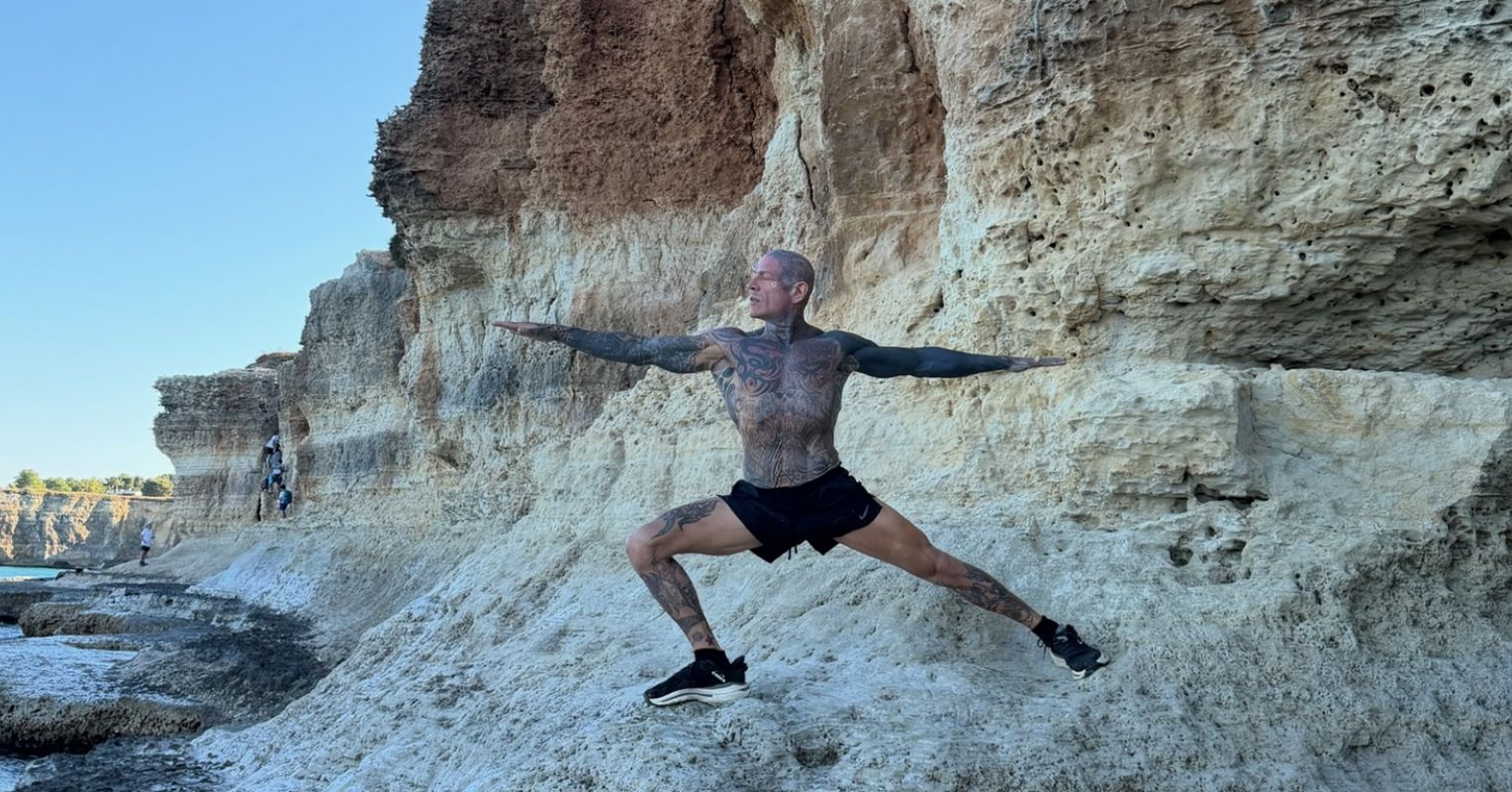
In that spirit, Seinfeld has started a personalized fitness and nutrition program. Seinfeld described the feeling he has when he works out, and how it helps him feel like the best version of himself. “I go to the gym. I snap into this high vibrational character. I got 1000 gym bros. I’m high-fiving people. My f*cking heart rate gets pumped up. I put on my music. I’m fucking moshing around the gym. No one in my gym even knows what that is,” he said, “And I’m in it. I get a great vibe, and I lift other people up. And it makes me feel it’s where I want to be in life.”
He believes fitness can improve both physical and mental health. “It took me quite a while to realize the interlinked connection between my physical fitness and my mental health and the hormones involved. And the neuroplasticity that I experience when my heart is pounding out of my chest because I’m doing sprints on the beach or I’m lifting weights and I’m f*cking hyperventilating,” he explained. “The high that I feel from that … It connects to some neurotransmitter, some endorphin. Something happens here that I become a little more grounded, connected to my body. I become aware of my thoughts a bit more. That they are just thoughts … And I mean, that’s what meditation really is, right? It’s like separating yourself from the hard drive and recognizing yourself as an energy, recognizing yourself as a soul, as a human being, not a human doing.”
Seinfeld reflected on how he will continue to push his gratitude and openness as he learns more about himself and helps others to do the same. “I’m a bit of a hard head, and I don’t learn easily unless I am in an intention of ‘I am here to learn.’ Otherwise, I am fighting learning, hanging on to my ideas as if I need to breathe,” Seinfeld described. “And that’s a terrible place to be. It’s a very lonely place to be. And when you’re not open to change, you’re really stuck. And if you’re not happy and you’re not open to change, well that’s a disaster, right? Because you’re just saying I’m going to stay here. I’m on fire, but I’m not going to do anything … I’m not going to try to put out the fire.
Gratitude Essential Reads
“I’m just going to sit in it.”