
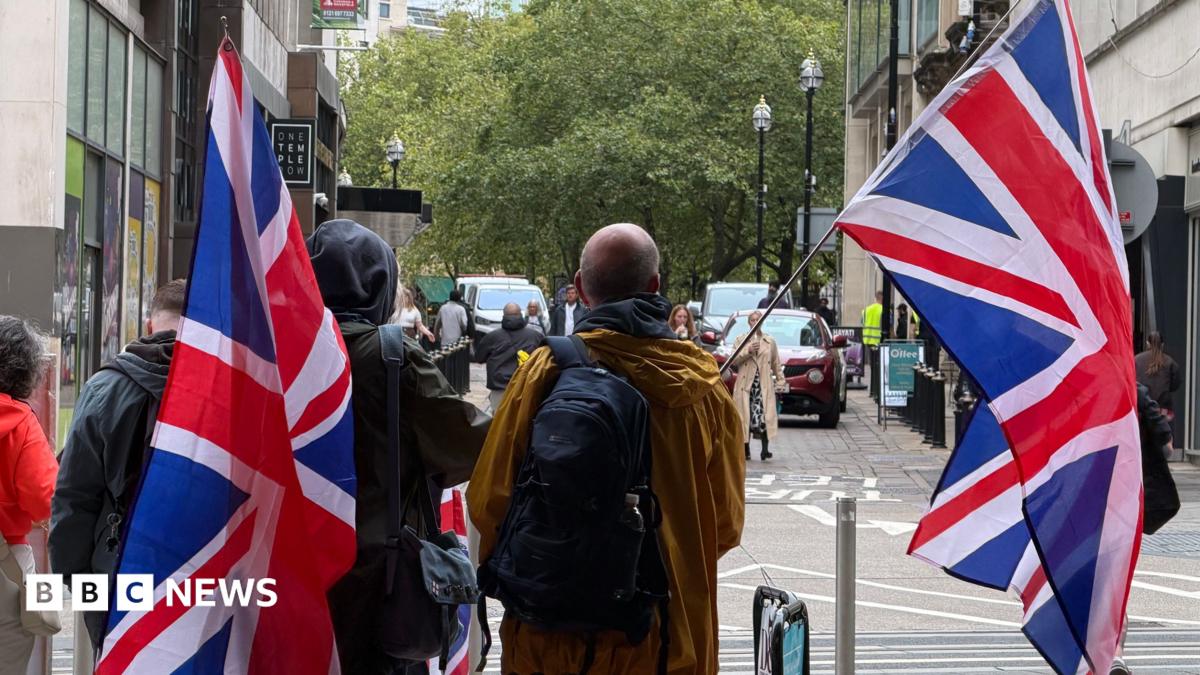
Flags first began appearing en masse around the country last year, with various groups behind the activity.
In court earlier, Bridge said he only had a number of days to prepare for the injunction hearing, claiming he had no alerts from anybody at the council that it was happening.
He said that after receiving a “bundle” of papers through his door five days ago he then saw the council was seeking an injunction via news reporting by BirminghamLive.
“It’s not been clear to us… we just would have liked the warning,” he said.
Bridge said he would undertake not to put up more flags in the city.
He claimed “this could have all been dealt with, with a letter to say that we will impose an injunction if you don’t stop”.
Barrister Jonathan Manning, on behalf of the council, said the authority was willing to accept undertakings from two defendants but not Bridge.
Manning acknowledged that while Oxfordshire County Council, which was recently granted a High Court injunction to stop people placing flags near highways, had accepted undertakings from Bridge, Birmingham City Council would not at this stage.
“His involvement is considerably more central,” he told the court.
“The activity in Birmingham has been at a level that is a different order of magnitude to that which took place in Oxfordshire,” the lawyer said.
“There has been significantly more anti-social behaviour, threats and intimidation.”
Following Tuesday’s proceedings, the city council said: “The judge accepted two interim undertakings from Julian Keane and Elliot Stanley who agreed not to attach flags without council consent, organise or publicise related events, interfere with the removal of flags or obstruct the highway.”
Two more of the named individuals, Child and Keating, did not attend the hearing due to holiday or work commitments.
Cullen did not attend either.