
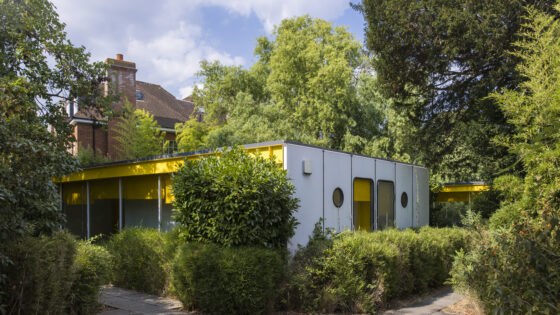
The Grade II*-listed house, designed in 1967 by Rogers and his then wife Su, will be handed over to the care of the National Trust and made available for visits with a plan to turn the site into an educational resource.
It will first open to the public for one day on 12 September as part of London’s Open House Festival. The festival will also offer the chance for visitors to step inside Rogers’ Lloyd’s Building, which built on the ideas explored in 22 Parkside and is marking its 40th anniversary.
22 Parkside was originally built for Rogers’ parent and is an early example of the High-Tech architectural style which came to characterise much of Rogers’ work, including the Pompidou Centre in Paris and several projects by his practice including 122 Leadenhall Street, also known as the Cheesegrater.
The house features an exterior of glass and brightly coloured yellow steel ribs, with the home split into two parts: a flat which served as a pottery studio for Rogers’ mother, and the main, open-plan house set in the trees behind.
Ben Rogers, the son of Richard and Su, said: ‘22 Parkside is much more than a family home. It is one of the most important buildings my father and mother created – a place where many of the ideas that would go on to influence my father’s work and some of the world’s most celebrated architecture were first tested and explored.
He added that the family wanted to ‘ensure that this remarkable house would be protected, cared for and shared with future generations’ instead of ‘remaining a private asset’.
The National Trust plans to provide activities for the local community at the site, as well as work with international partners to ‘inspire the next generation of architects, designers and creatives’. This could mean guided tours, digital content and the use of the building as an educational resource for schools and universities.
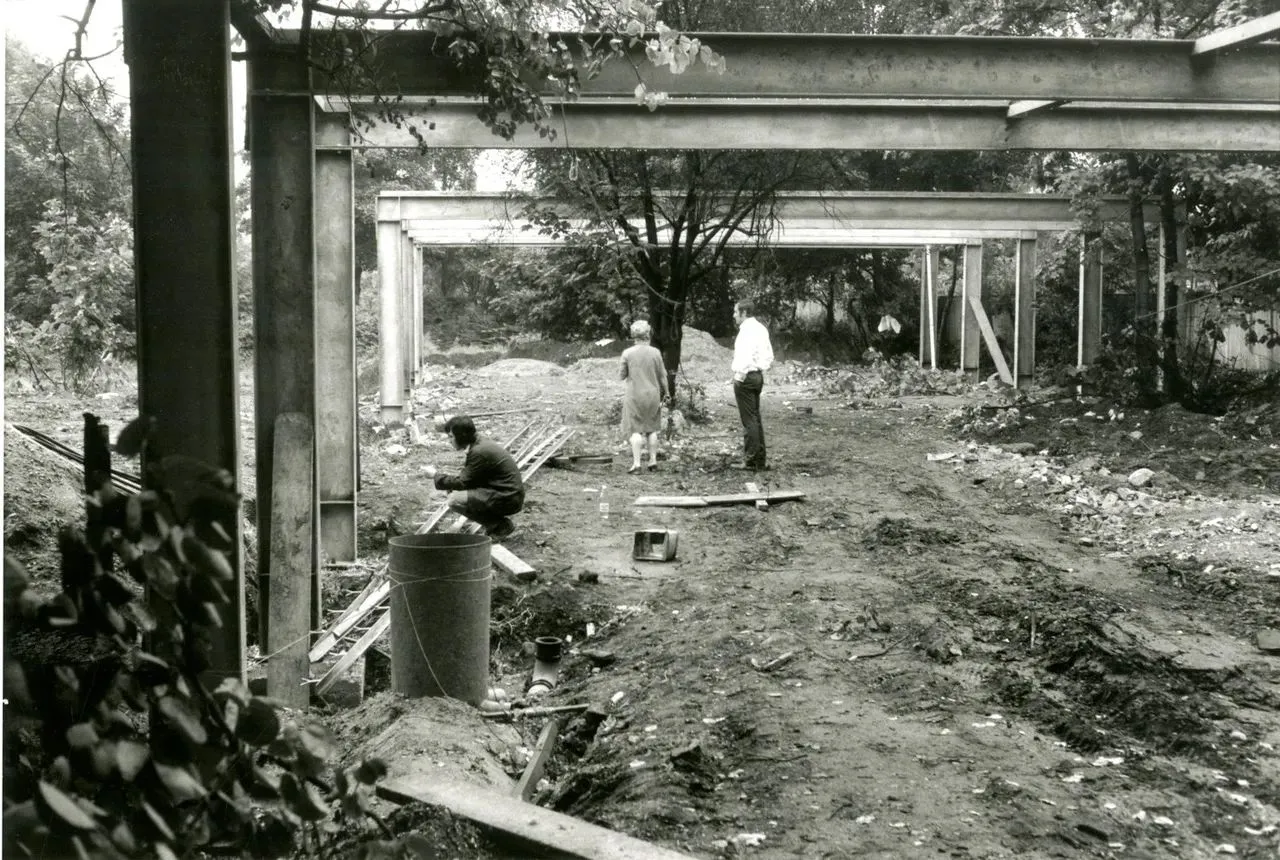
22 Parkside by Richard and Su Rogers. under construction
Source: RRCS
National Trust director-general Hilary McGrady said: ‘We are profoundly grateful to the Rogers family for placing this extraordinary house in our care.
‘Their generosity means that 22 Parkside will now become part of our shared inheritance, belonging not to a single family but to the people of England, Wales and Northern Ireland.’
The organisation said it had raised a ‘significant endowment’ from private donors and charitable trusts, including Bloomberg Philanthropies and the Sigrid Rausing Trust, to enable it to safeguard the building’s long-term future, but appealed for further donations to support the new vision.
Norman Foster, who worked in partnership with Rogers in the 1960s, said: ‘In many ways the building encapsulated the spirit of the 1960s. It was the essence of optimism. It is a tribute to the National Trust that they have taken this initiative, this responsibility to preserve it for future generations to visit, to enjoy.’
Twentieth Century Society director Catherine Croft said that her organisation was thrilled to see the ‘highly experimental manifesto house’ given over to national control.
‘From this small acid-yellow pavilion off Wimbledon Common, to the heights of the Pompidou Centre and the Lloyd’s Building, the house paved the way for the globe-straddling Avant Garde architecture that followed,’ she added.
The National Trust said that the acquisition would broaden its existing range of 20th–century buildings, allowing it to better tell the story of modern architecture.
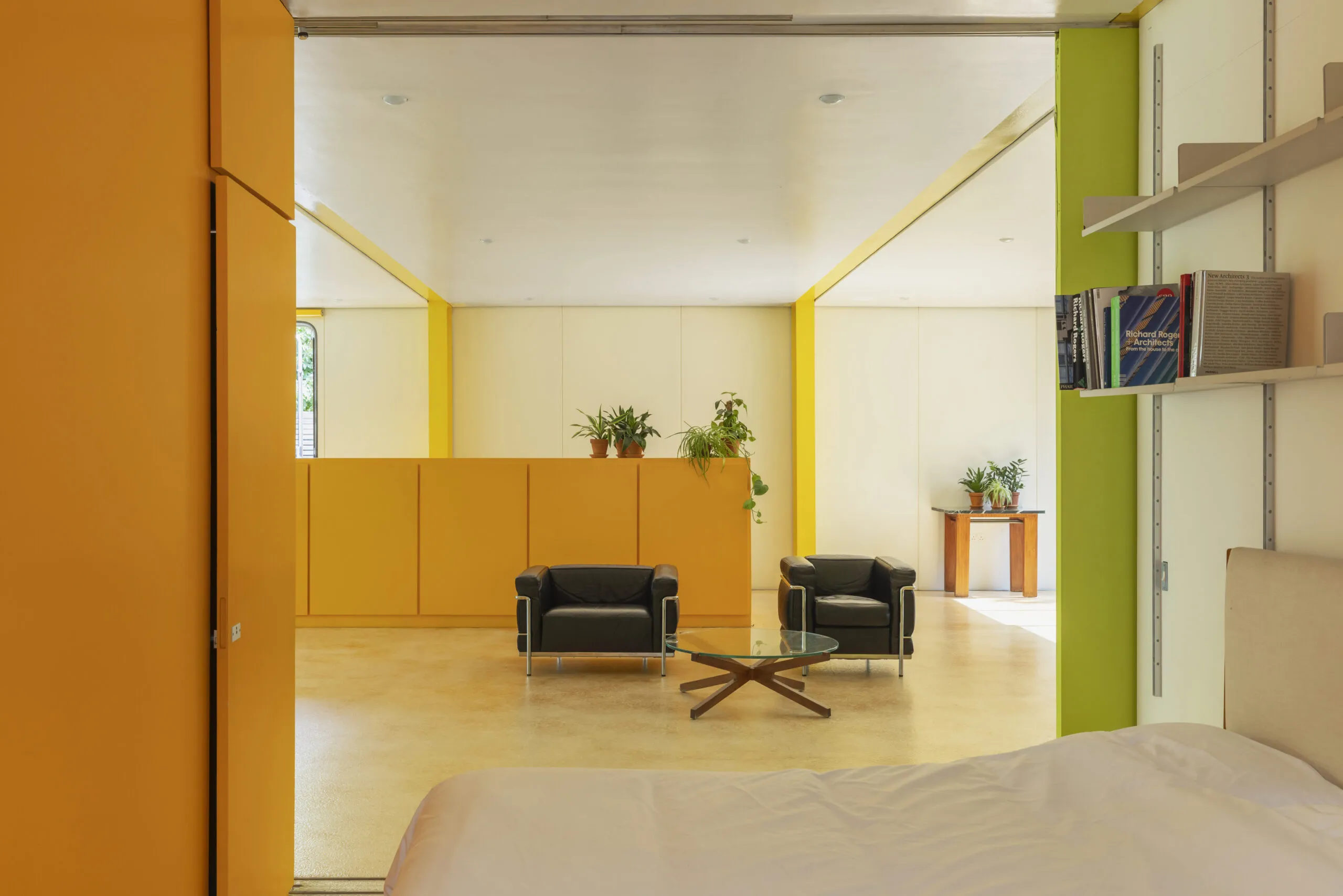
22 Parkside by Richard and Su Rogers
Source: National Trust Images Megan Taylor