
The first afternoon of my release from a mental health facility, my mother pressed the keys to a car she had bought me into my hand. It was not a ceremony, and there was no speech. She handed them over, as though the act were ordinary—though nothing about it was.
I had spent 10 months inside a Wisconsin forensic psychiatric hospital after accepting a not-guilty-by-reason-of-mental-disease plea on eight felony charges arising from a psychotic manic episode. Lithium had brought order after a decade of neural dysregulation. The institution had provided structure, medication, and enforced stillness behind two barbed-wire fences, in which something resembling insight could solidify into meaning. But the hospital had not healed me. It had stabilized me, which is a different endeavor entirely, the way that stopping a hemorrhage is different from restoring the blood.
What the hospital could not offer was what I needed most: a relationship in which I could be seen again.
My mother, Linda, became the bridge back.
This was by no means foreordained. For years during my untreated illness, I had sent her messages of breathtaking cruelty—called her my Judas, disparaged her character, and weaponized her vulnerabilities with the fluency of a man whose intellect had been conscripted by mania. Anosognosia—the neurological inability to recognize one’s own illness—had made me experience her concern as a kind of persecution. I had pushed her away with a force that, for many other mothers, would have been permanent.
Every message landed. She stayed anyway, making a decision that was daily and costly and unromantic to keep witnessing a son whose illness had made him unrecognizable, on the faith that the person she remembered was still somewhere inside.
During my months at the hospital, she visited regularly. We read Kay Redfield Jamison’s An Unquiet Mind together and discussed its meaning to our lives over the ward phone. We learned about bipolar disorder side by side, not as teacher and student but as two people assembling a shared language for something that had nearly destroyed them both. What we built was more tentative but more honest than anything our prior relationship had contained. And when I walked out of the hospital, she was there with the car keys, not because everything was resolved—but because the process of meaningful repair had begun, and ongoing repair requires continued presence.
What I have come to understand is that recovery is not a hermetic project of one. Medication can calm the brain’s electrical chaos. Therapy can reorganize the mind’s predictive patterns. But the soul, the part of us that knows itself through our relation to others, heals in the space between people. Recovery, at its most essential, is relational.
Developmental psychologist Daniel Stern noted that even before language, infants and caregivers communicate through what he called vitality affects—mutual rhythms of feeling, moments when the caregiver mirrors the child’s inner state in a different sensory register. Susan Vaughn, in The Talking Cure, observes how these exchanges occur roughly once every two minutes in healthy pairs, the mother reflecting to the child an understanding of his current way of being. When asked why they responded as they did, mothers often said they were trying to “share the infant’s experience.” In these moments, Stern suggested, is nothing less than the “shape of and extent of the shareable inner universe.”
This magnificent exchange is called attunement, and it does not end in infancy. As Daniel Goleman writes in Emotional Intelligence, several psychoanalytic theories see therapy itself as a “reparative experience of attunement,” in which the therapist mirrors the client’s inner state “just as an attuned mother does with her infant.” The neuroscientist Stephen Porges, as Gabor and Daniel Maté note in The Myth of Normal, identifies reciprocity and attunement as among our most fundamental needs: to be, in the archaic greeting of the medieval world, “well met.”
In a previous column, I described how my therapist Susan became the first person after my release who truly saw me, not as a risk score or a clinical profile but as a whole person. What my mother was doing, across the longer trajectory of our reconciliation, was the same work in a different key. She was attuning to me—not perfectly, not without friction—but with the persistent attention that only someone who has known you for decades can provide. Thomas Lewis, Fari Amini, and Richard Lannon, in A General Theory of Love, call this knowing the deepest labor of love: “the prolonged and detailed surveillance of a foreign soul.” If that does not describe a mother’s attunement to a son she has watched for over 40 years, through the illness and the slow return, I do not know what does.
But not everyone in a family can make this journey. Recovery asks something colossal of the people surrounding the person who has been at once ill and savage: it asks them to hold, simultaneously, the person who caused real harm and the person now recovering in the room in the same frame. Some family members jump in. Others reach what I have called the empathy ceiling: a limit beyond which understanding becomes too costly, too uncertain, too destabilizing to the comforting story they have constructed for themselves about what happened. I have come to believe this is not mercilessness but self-preservation. But it means the person recovering must learn to accept a profound asymmetry: that not every relationship will be repaired on the same timeline, or at all.
My mother jumped in. She made that choice—daily, actively, and at great personal cost. And what I want to name as forthrightly as I can is that her choice was not incidental to my recovery. It was intrinsic to it. Without her attunement—without our morning calls, the cribbage games at the kitchen table, the willingness to read my memoir and let it change what she understood, and to share her own journal and let it change what I understood—the medication would have still helped to manage my symptoms. But it would not have restored my life.
Personal Perspectives Essential Reads
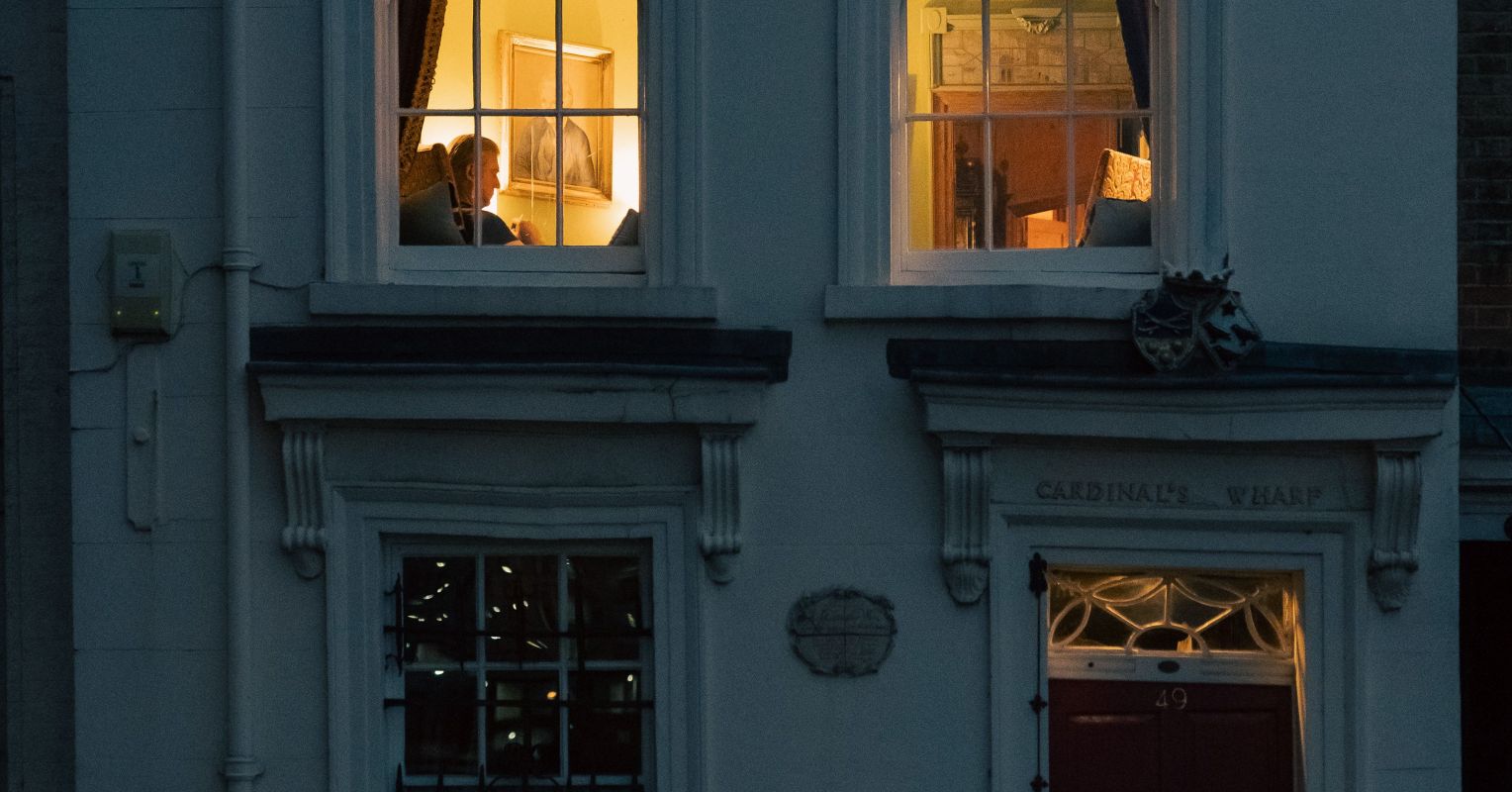
Recovery, at its deepest, is the work of becoming known again by someone patient enough to look past what the illness did and remember who you were before it spoke in your voice. It is coming home to yourself through the presence of someone who kept the light on in a room you were not yet ready to enter.
My mother kept the light on. And when I finally walked back through the door, she was still there.