
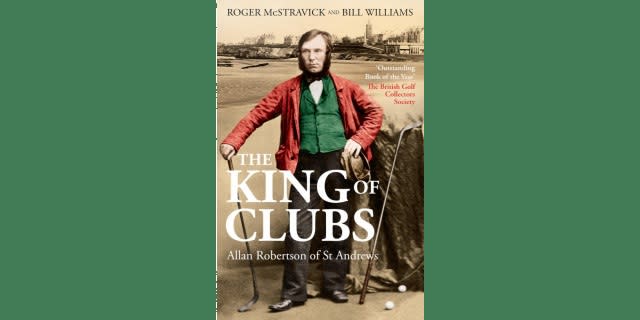
Roger McStravick and the late Bill Williams have delivered something rare in sports literature: a meticulously researched biography that reads with the vibrant energy of a living history.
The King of Clubs: Allan Robertson of St Andrews, 1815-1859 finally pulls golf’s first genuine superstar out of the historical shadows of Old and Young Tom Morris, firmly establishing his rightful place at the absolute pinnacle of the game’s origin story.
This started as a work being compiled and produced by Bill Williams, who consulted Roger McStravick on its content and initial research plan as he is an acknowledged expert on all things St Andrews.
Roger is a double winner of the USGA’s Herbert Warren Wind Book Award and the British Golf Collectors Society (BGCS) Murdoch Medal. As a past editor of Through the Green, he cemented his standing as one of the world’s leading golf historians and storytellers.
Following the unfortunate death of Bill in 2020, Roger was approached by Bill’s daughter, Emma, who was visiting St Andrews to arrange dispersal of her father’s ashes. She asked him to complete the project, basing much of his work upon the exquisitely detailed research that Bill had already undertaken.
This is a Masterpiece
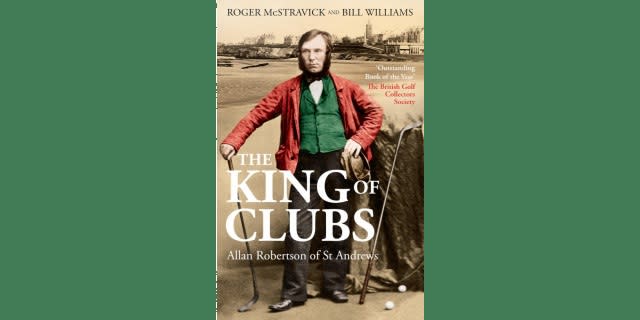
This book provides an exceptional legacy in Bill’s memory but also of his research revelations as to the important role that Allan Robertson and the Robertson clan provided to world golf.
What makes this biography so exceptional is its ability to dismantle long-held misconceptions. For generations, casual fans might have viewed Robertson as merely a foundational caddie or a footnote in the shadow of his contemporaries. With this book, McStravick and Williams utterly shatter this illusion.
They paint a vivid portrait of a pioneering businessman, a brilliant greenkeeper, and the operator of what was essentially the world’s very first professional golf shop on the St Andrews Links.
Robertson Was a Skilled Businessman And Craftsman
Central to his empire was his absolute dominance of the gruelling featherie golf ball industry.
The authors masterfully detail the agonising, artisanal process that underpinned the early economy of the sport – where a craftsman could produce only four or five balls a day. Readers are given a front-row seat to the painstaking work of cutting and stitching bull’s hide, boiling goose feathers, and using an iron awl to force a “hatful” of plumage into the wet leather pouch. As it dried, the leather shrank while the feathers expanded, creating a sphere nearly as hard as stone.
He adopted an early marketing technique of rarity and simply marked his finished balls with the single word “Allan”. If you should find a similar one on your golf course, expect it to require specialist review as prices range from low thousands to mid twenty thousand dollars per ball. These were balls that sold for 4 shillings each in the 1800s. That’s a sizable appreciation.
A Golfer Truly Ahead of His Time
Beyond his commercial genius, the book captures Robertson’s revolutionary approach to the game itself. He was arguably golf’s first truly scientific player.
In an era often associated with rudimentary, brute-force play, Robertson was an analytical master who studied the contours of the greens, meticulously tweaked his equipment, and relied on strategy and course management over raw distance.
Every chapter provides a new insight into the history of the game and its links to St Andrews.
I particularly enjoyed the analysis of the Rabbit Wars based upon forensic examination of the court papers submitted to resolve the dispute. Imagine where we would be now if the links had continued to be degraded and decimated by the rabbit populations and the playing of golf had ceased. It provides an in-depth analysis of the context and background behind the legal drama that I found fascinating.
The prose is beautifully written and accessible, balancing deep archival history with an engaging narrative arc that culminates in the technological shift to the gutta-percha ball.
Allan Robertson Was Golf’s First Great Champion
Allan Robertson died years before he had achieved all he was likely to attain within golf. His death left a void that was filled by The Open Championship and the crowning of the Champion Golfer of the Year.
His funeral was said to be the largest ever seen at St Andrews such was public recognition of his importance to the game at that time in history.
For anyone interested in the origins of golf and St Andrews, this book is an essential, definitive read that bridges the gap between golf’s ancient folklore and the birth of the modern game.
If you love St Andrews, golf history, or the stories of golfing pioneers, The King of Clubs is nothing short of a masterpiece.
This paperback edition is also available in eBook format. You can purchase directly from the publishers or on Amazon.