
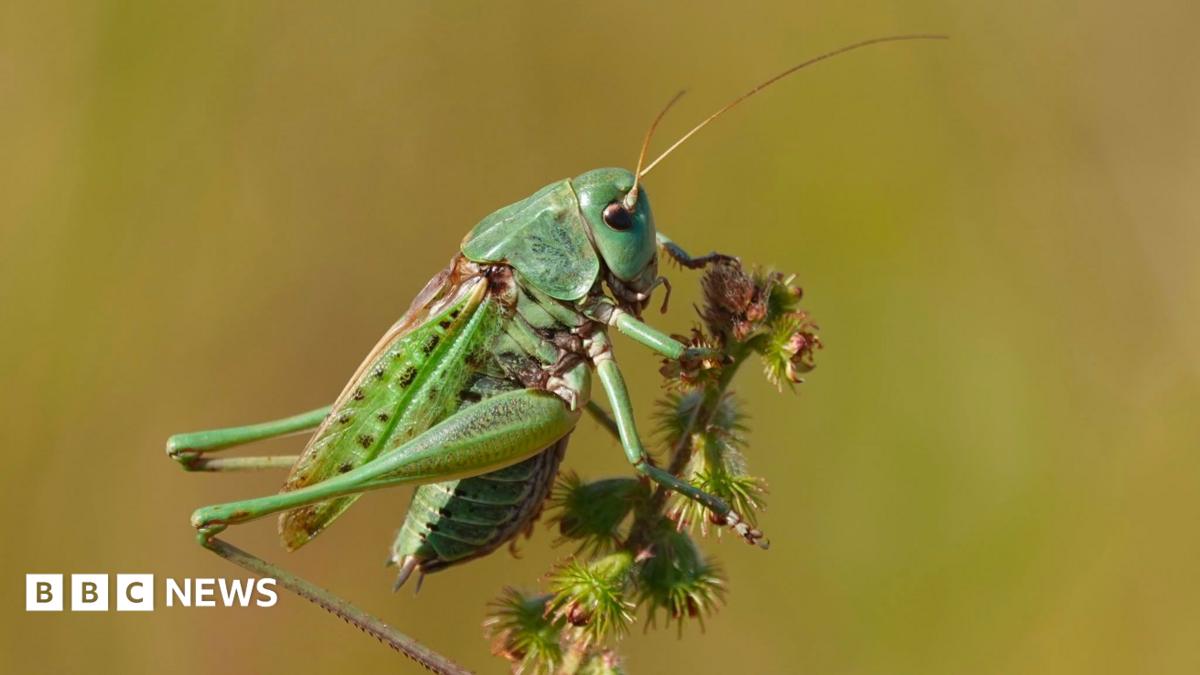
A conservation project has received a funding boost to help save one of Britain’s rarest and most critically endangered insects by establishing a new population in Sussex.
A spokesperson for the scheme, headed by the charity Buglife, said the wart-biter bush crickets were only found in a few sites in the south of the UK.
The charity added the support from Defra meant it would help them carry out research to identify a new site.
Conservation officer Alice Parfitt said the species – named due to a belief it could be used to “cure” warts by eating them – was an important indicator of the health and resilience of the UK’s ecosystems.
Currently, the crickets are only found in six established sites, four in Sussex, one in Kent and one in Wiltshire.
The charity said the South Downs was the latest location where wart-biters have been introduced, though the site is yet to be classed as established.
“Wart-biters have very specific habitat requirements,” Parfitt said. “They need high-quality chalk grassland with varied vegetation and bare ground to lay their eggs.
“They are omnivorous and depend on species-rich grassland habitats for their food source.”
Parfitt said if wart-biters thrived in grass chalkland, this meant these rare habitats were healthy.
“If we can maintain these habitats, it benefits a myriad of other species too including pollinating insects,” she added.