
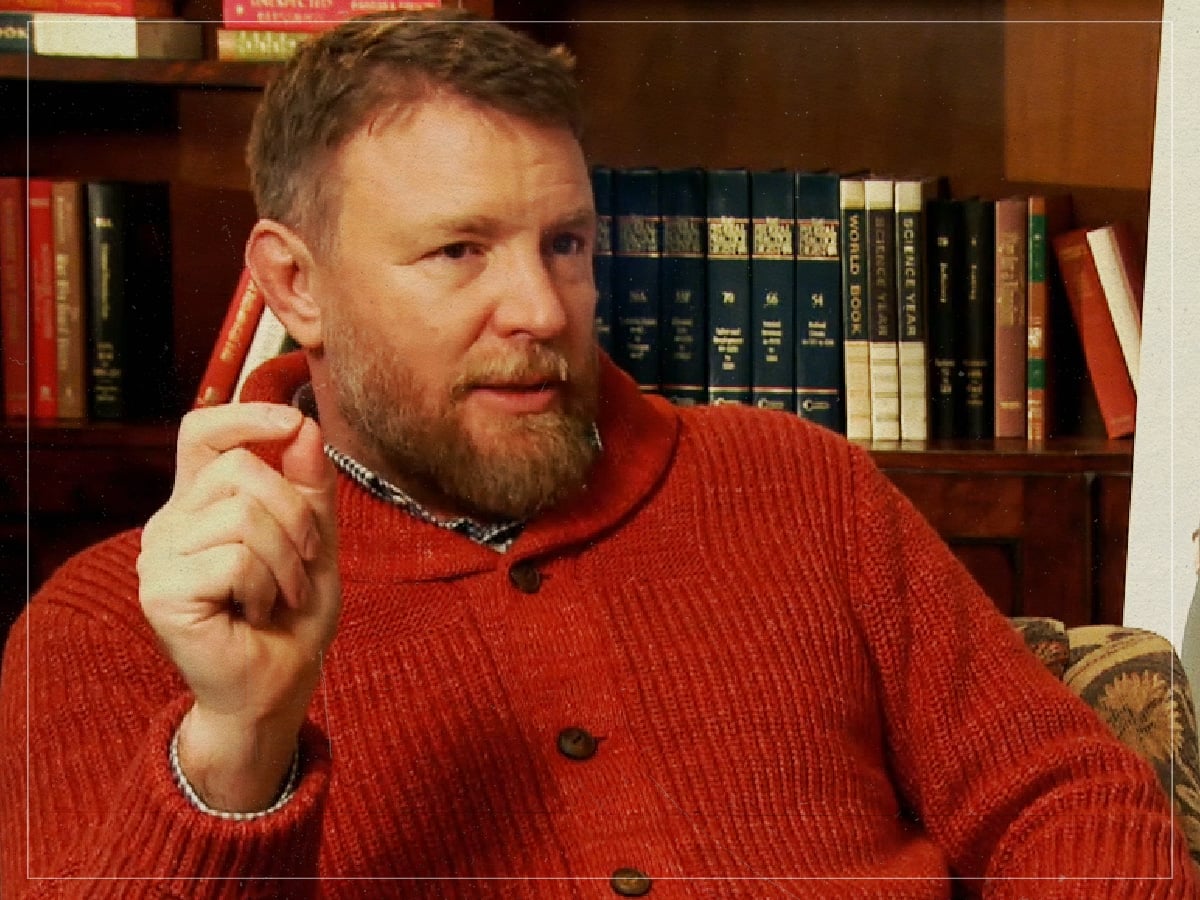
Credit: Far Out / YouTube Still
Sat 12 September 2026 2:30, UK
British cinema in the 2000s was dominated by one unlikely hero in Guy Ritchie.
Just when Hollywood was entering a new millennium with even more ambition to make films bigger, better and louder, Ritchie came along and provided a quintessentially British antidote to all that chaos, with his gangster classics Lock, Stock and Two Smoking Barrels and Snatch.
Both films emphatically introduced Ritchie’s writing and directing style, which involves dialogue packed with witty colloquialisms and scenes chopped up with harsh cuts and comedy-laden introductions. It was this unique blend of comedy and action that felt relatively fresh in an era of glossy blockbusters, and so set his stall out for the rest of his career to follow.
But it could have been very different for the filmmaker had he not debuted with something so individual to his taste. Had he been pigeon-holed into a more studio safe film, the sort that were being wilfully wheeled out in the 2000s, then Ritchie could have become the next blockbuster action director, forced to mould his stories to an American audience and leave the cockney twang of his beloved characters behind.
But soon after his breakout debut with Lock, Stock and Two Smoking Barrels, he was offered a shortcut entry to the very top of the Hollywood project pile, with a film that probably would have taken him away from his beloved London forever.
“I was offered the job to direct Charlie’s Angels, but turned it down,” he revealed, “I probably would have done it if it had been my first film, but since I had already established my name, I did not want to sign on to it. The movies I make cost so little that the studios leave me alone and give me pretty much total control. With a big-budget film, you are at the mercy of the studio’s whims. Charlie’s Angels cost more than ten times than Snatch. The studio system is a beguiling thing, and I want to make movies that I have as much control with as possible.”
In 2000, Ritchie opted to make his sophomore classic Snatch, which not only built on the Lock Stock model but topped it by folding in Hollywood actors with British stalwarts, thereby proving he could translate the colloquialisms for the big stage and make yet another small-budgeted movie feel like an epic worthy of the big screen.
Further reading: Cutting Room Floor
There’s no doubt that he would have perhaps done something interesting with Charlie’s Angels, but it wouldn’t have been the film the studio wanted, nor would it have been the film Ritchie needed. It was crucial that he had a few more years of flexing his arthouse muscles with projects closer to home before branching out into something like Sherlock Holmes come 2009.
But it was the fans who were the real winners, because Snatch would have always been made, being as it was the sort of project Ritchie was destined to make his entire career, and its filming in 2000 came at the perfect time, when London was experiencing a moment in the millennial era, with the actors involved all hurtling towards the peaks of their careers. Had it been made later on in the ‘00s, it simply wouldn’t have been the same.
