
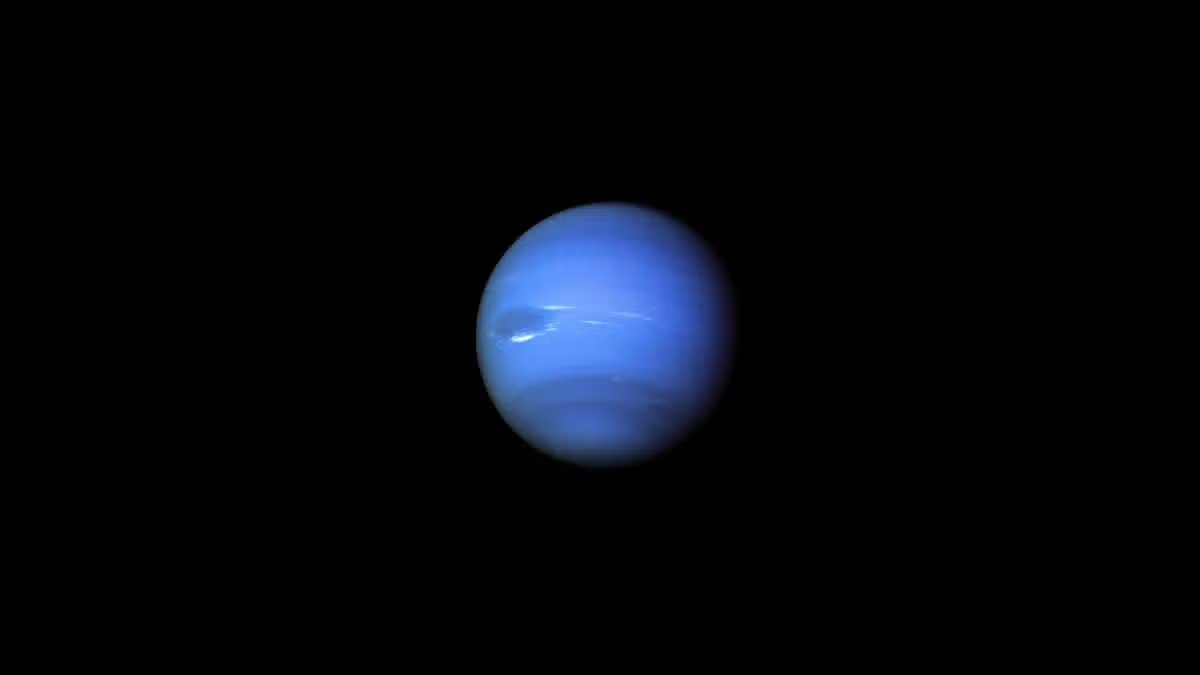
It will appear closer and brighter if you know where and how to look
Neil Shaw Assistant Editor
13:27, 09 Sep 2026
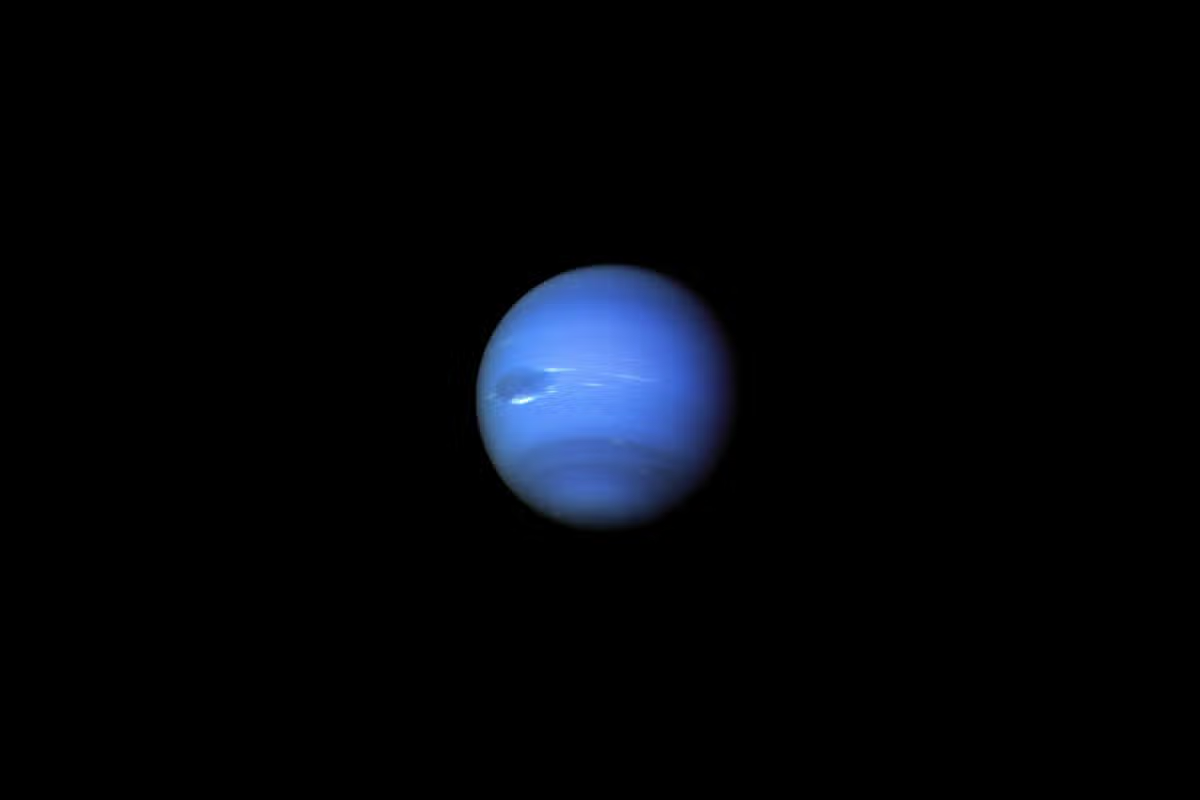
Neptune was first seen 180 years ago
One of the most distant planets in our Solar System will reach a special point in its orbit this month, giving UK stargazers a chance to spot Neptune at opposition on September 26. Neptune is the eighth and most distant recognised planet from the Sun, sitting around 4.5 billion kilometres away from Earth on average.
It is usually far too faint to see with the naked eye, but when it reaches opposition, it appears closer and brighter from our perspective, making this one of the best opportunities of the year to observe the blue planet. The planet was officially identified in 1846 after astronomers predicted its position based on unexplained movements in Uranus’s orbit.
According to 365 Astronomy, stargazers with a telescope should look towards the constellation of Pisces to find Neptune. “Opposition occurs when Earth passes directly between the Sun and an outer planet, meaning the planet is on the opposite side of the sky from the Sun,” says Graham Devenish, Advisor at 365 Astronomy.
“This is an important event for observers because the planet is at its closest point to Earth around opposition and is visible for much of the night. Neptune reaches opposition on 26 September, giving stargazers a particularly good opportunity to try to find the distant planet.”
Can you see Neptune without a telescope?
Graham said: “Unfortunately, Neptune is too faint to be seen with the naked eye, even when it reaches opposition. A telescope is needed to pick it out from the surrounding stars, but this is part of what makes Neptune such an interesting target for amateur astronomers.
“Through a telescope, Neptune appears as a tiny blue-coloured disc rather than a bright point of light. Under suitable conditions, observers with larger equipment may even be able to spot Triton, Neptune’s largest moon. Neptune will be located in the constellation Pisces around opposition, so knowing where Pisces is in the sky can make finding it much easier.
“A stargazing app or planetarium software can be particularly useful for locating Neptune because it is so faint compared with brighter planets such as Saturn. Once you’ve identified the general area of Pisces, a telescope and a good star chart can help you work your way towards Neptune.”
Why is Neptune’s 2026 opposition interesting?
Graham said: “Neptune’s opposition is always a good opportunity for amateur astronomers because it gives us the best chance of observing one of the most distant planets in our Solar System. But 2026 adds an extra layer of interest because this year marks 180 years since Neptune was officially discovered.
“It’s remarkable to think that Neptune was discovered through mathematics before it was directly observed as a new planet. Astronomers noticed that Uranus wasn’t moving exactly as expected and predicted that another, more distant planet could be responsible.
“Anyone pointing a telescope towards Neptune this September will effectively be looking at the same distant world that caused such excitement when it was first identified in the 19th century.”