

Two other services were told to make improvements by a healthcare watchdog this week
The service cares for children as well as adults(Image: Getty Images)
A Manchester care service has been rated ‘inadequate’ after a slew of safety concerns were found by inspectors in this week’s healthcare round-up.
The Care Quality Commission (CQC) said South Manchester Care Limited, based in Chorlton, said it had ‘no medication errors’ and 100pc compliance, but inspectors said this was not accurate. One person had not received their medicines because they were ‘unavailable’ with potentially ‘fatal’ consequences.
Staff at the service were also ‘exposed to avoidable risks’, the healthcare watchdog said. There were ‘numerous’ incidents of service users displaying distressed behaviour, including aggressive behaviour that resulted in injuries to employees, but these risks were not reflected ‘clearly’ in risk assessments.
Click here for the latest on Greater Manchester’s politics in our newsletter
Families also reported late or missed care visits, while one staff member worked with vulnerable people for three months while displaying ‘active respiratory symptoms and disease’. When asked, the provider could not ‘reliably identify’ all the children and other staff members with whom that person had worked, leading to public health professionals raising concerns.
Amaan Habib, founder and director of South Manchester Care Ltd acknowledged the seriousness of the findings and apologised to service users and their families. He said he was determined to make improvements.
Here is a breakdown of Greater Manchester’s recently published CQC reports:
Bolton
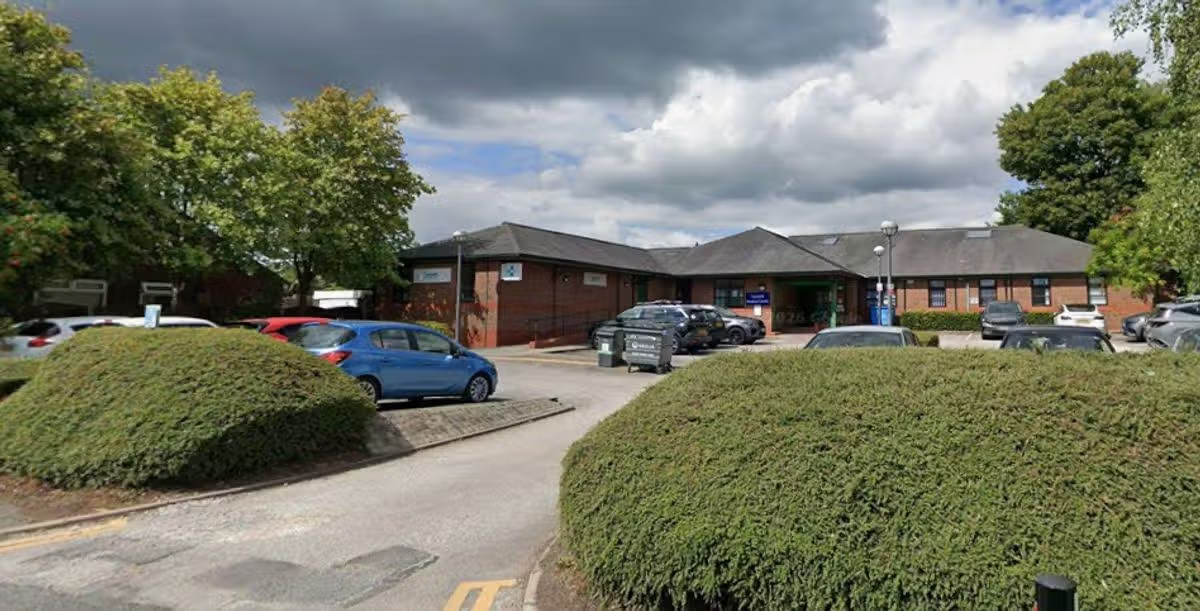
Stonehill Medical Centre was rated ‘good’ by inspectors this week. The GP had enough ‘skilled and experienced’ staff and employees were supported to develop their roles through training.
Staff who had joined as receptionists or in admin roles had been assisted in becoming healthcare assistants or management, the CQC said. The service was noted to be ‘visibly clean’.
Home visits were used to encourage cancer screening uptake and clinics were held on the weekend for working patients. People told inspectors staff were ‘excellent’, ‘brilliant’ and ‘really cared’.
Bury
Short-term reablement service Choices For Living Well was also rated ‘good’ this week, although inspectors said improvement was needed when it came to leadership. Service users said they felt ‘very safe’ with their carers and families spoke of the ‘kindness’ shown to their relatives.
One person told inspectors their father’s carers were also supporting their mother, with the CQC saying this demonstrated the service ‘extended compassion’ beyond just the people for whom they cared.
Staff showed a good awareness of people’s healthcare needs and how to respond to changes in their condition.
A service user said: “Fantastic. Very knowledgeable and so caring and considerate. The care I have had is exceptional.”
Staff vacancies meant the service had to limit the number of people it cared for and there was a waiting list for the service. Recruitment was ongoing at the time of the inspection.
However, care plans were not always tailored to service users’ preferences. Despite this, however, staff ‘knew people well’ and asked about their preferences during visits, so person-centred care was still provided.
Some concerns were raised over medicine management, with the service not able to demonstrate that competency checks and weekly audits were effective. There was also ‘limited evidence’ that the provider worked to reduce risks in people’s homes when they were identified.
Staff also said they did not always feel supported by managers.
Stonehill Medical Centre, in Bolton(Image: Google)
Manchester
South Manchester Care Limited, in Chorlton, received an overall rating of ‘inadequate’, the lowest of the four possible ratings, with concerns raised over safety, effectiveness and leadership. Caring and responsiveness were rated ‘requires improvement’.
The domiciliary care agency, which supports both adults and children, did not have a ‘proactive’ or ‘positive’ culture of safety, the CQC said, with concerns not ‘listened to’ and safety events ‘not investigated’. Learning was not ‘consistently shared’ with staff, with some saying they were ‘unaware of any safeguarding incidents’.
One local authority told inspectors it had ended all care packages with the provider due to safeguarding concerns. Two further local authorities said they had experienced delays in receiving important information from the provider.
Records showed ‘numerous’ incidents of service users displaying distressed behaviour, including aggressive behaviour that resulted in injuries. Two people had tried to hurt members of the public. However, these risks were not reflected ‘clearly’ in risk assessments.
Staff ‘did not receive sufficient support’ following incidents where they had been injured while looking after service users. Staff were ‘exposed to avoidable risks’, the CQC concluded.
Relatives described ‘frequent changes in care staff, carers arriving late and occasions when carers did not attend’. This negatively affected children who relied on consistency, routine and familiar staff to meet their needs safely.
One staff member had worked with ‘active respiratory symptoms and disease’ for three months, including ‘close prolonged contact with vulnerable people’. The provider had not then been able to ‘reliably identify’ all the children and other staff members with whom that person had worked, leading to public health professionals raising concerns.
Provider records showed ‘no medication errors’ and 100pc compliance, but inspectors said this was not accurate. One person had not received their medicines because they were ‘unavailable’ but this was not reported and advice was not sought from healthcare professionals.
The consequences could have been ‘fatal’, the CQC said. The provider later said they had raised the issue with medical professionals, but this had not been recorded by staff.
A staff member told inspectors care documentation was ‘not up to scratch’, adding: “Paper work isn’t always in place, actually next to nothing in place. I have to try to work out what is needed from the daily notes which are not up to scratch. Care plans don’t inform carers what they should be doing, what equipment is needed, etc.”
However, relatives did speak positively about some carers, with one described as ‘kind natured and fantastic’ with their loved one, and another as ‘always smiley and happy’.
Amaan Habib, founder and director of South Manchester Care Ltd acknowledged the seriousness of the findings and apologised to service users and their families. He said he accepted ‘responsibility’ for addressing the shortcomings, including ‘examining’ his own leadership and the ‘effectiveness’ of service oversight.
He added: “We have been reviewing the service from leadership and governance through to office operations and frontline practice. Revised care coordination and supervisory responsibilities have been introduced, with our incoming service manager due to join on 14 September.
“We are strengthening director oversight through a central improvement plan with designated owners, deadlines, evidence requirements and repeat audits. Recruitment records, employment checks, training and supervision are being reviewed, with nurse-led practical competency assessments scheduled to begin in October.
“Reviews of care plans, risk assessments, medication records and incident management are underway, alongside clearer arrangements for safeguarding escalation and statutory notifications. We are also strengthening oversight of rotas, staffing continuity and communication with families and professionals.
“These actions are at different stages. We recognise the distinction between introducing a change and demonstrating that it is effective. Our task is to follow each action through, examine its impact and address weaknesses that remain.
“The lessons must be reflected throughout the organisation. Directors must seek evidence that systems work. Managers must act on concerns. Office teams must coordinate support accurately and communicate reliably. Frontline staff must work within their competence, maintain accurate records and feel confident speaking up.”
“To the people we support and their families, we understand that this report will affect your confidence. You deserve clear answers and dependable care throughout this improvement process. Your questions, concerns and experiences must inform our decisions.
“I remain committed to the purpose of South Manchester Care and to the colleagues who fulfil their responsibilities with integrity. That commitment requires openness about our shortcomings and the determination to address them properly.
“Over the coming six months, I intend to demonstrate the progress made since July through evidence and the quality of the service people experience. Every commitment in this statement carries a responsibility to follow it through.
“Judge us by whether care becomes safer and more reliable, whether families are heard and informed, whether staff are competent and supported, and whether concerns lead to timely action.
“We have substantial work to do. I accept responsibility for seeing it through, and I welcome scrutiny of how we do it.”
Mr Habib also recognised the ‘contribution’ of frontline staff in the service saying they were ‘dedicated care workers who support people with patience, compassion and professionalism’.
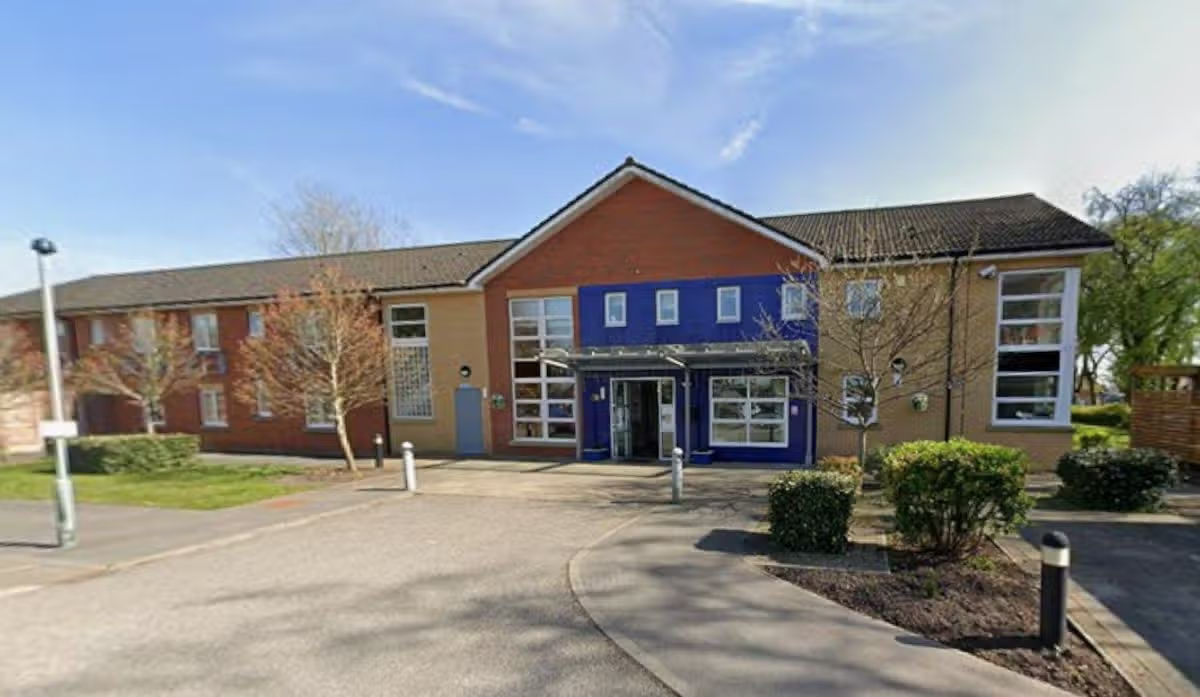
Heartly Green care home, in Irlam, was rated ‘requires improvement’ in all areas by the inspection team. Staff ‘did not always have clear guidance on how to support people safely’, the CQC said, and sometimes there was insufficient staff working to support people’s needs and offer timely care.
Heartly Green care home, in Irlam(Image: Google)
During the visit, nine residents were left alone in the lounge for more than 10 minutes because staff were busy. An incident occurred on the first day of the inspection, but there were delays in notifying a team leader for support, the CQC added.
Care was also not always person-centred, while mealtimes felt ‘rushed’ on occasions.
Medicines were not always given at the correct times which meant they might not work properly. Allergy information for medication was not always accurate, putting people at risk.
There were also some concerns over safety in the garden due to overgrown weeds and old furniture.
However, staff were judged to be caring, polite and friendly. A relative said: “There’s a core of staff who have been here for years; they are supportive and caring. It’s a stable team.”
A spokeswoman for Park Homes, which runs Heartly Green, said: “We recognise and accept that the overall rating of Requires Improvement means there are areas where we need to do better. We take the findings of the Care Quality Commission seriously and have been working through the areas identified since the inspection.
“A number of improvements have already been made, with strengthened management oversight, governance and auditing arrangements, alongside additional support for the team to ensure that improvements are embedded and sustained. We continue to monitor progress closely and will work constructively with CQC and our local partners.
“While we are disappointed with the overall rating, we remain focused on the people who live at Heartly Green and on delivering the standard of care they and their families rightly expect. We would like to thank our residents, their families and our staff for their continued support.
“Our priority now is to demonstrate sustained improvement and ensure that the changes being made result in consistently safe, compassionate and person-centred care.”
Oldham
Hadfield House care home was also rated ‘requires improvement’ overall, though it received a ‘good’ rating in the caring category. The home did not always obtain key information when a new resident moved in.
In one case, the provider did not have information on how a person’s covert medicines should be administered. Hospital passports were in place, but some had missing or incorrect information such as allergies.
Safeguarding systems were not robust, the CQC added. An incident of resident-on-resident abuse had not been reported to the watchdog in line with statutory requirements.
Staff reported ‘increased pressure’ due to shift pattern changes, saying they were ‘rarely able to take breaks’. Sickness levels, particularly on the night shift, were a concern.
Concerns were also raised over medicine management, with insufficient detail in care plans and staff competency assessments not complete.
However, residents and relatives felt staff treated people with kindness, compassion and dignity. One family member said: “Staff do tend to make time to chat with [person] and we have had some laughs with them over the years. They are like friends now.”
There were regular activities at the service, including bingo, quizzes and baking.
Masterpalm Properties Ltd, which runs the home, said it was ‘working towards the improvement plan’.