
This year, though, that figure has dropped to 42 per cent. Or just one-third since her most recent title in Miami in late March. In other words, the problem is spiralling.
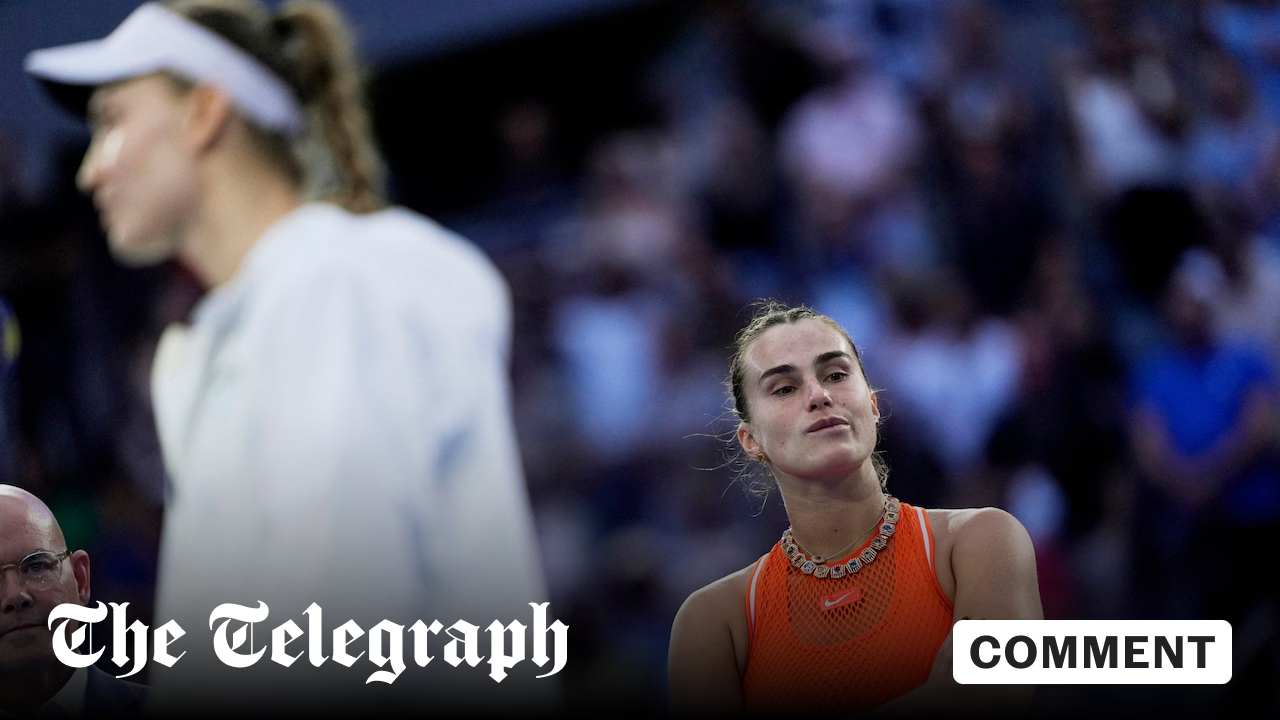
Sabalenka still rarely loses in straight sets, but as soon as you push her close, she finds her inability to dominate you so annoying that she loses control of her own game. “Why am I not knocking this girl off the court?” she seems to ask, with every petulant head-shake and puff of the cheeks. Against Rybakina, she reached such a pitch of frustration that she was barely competing by the end.
Her team is all too familiar with the situation. “The fire that she has … someone’s strength can sometimes be their biggest weakness as well, if it’s not managed,” acknowledged Jason Stacy, Sabalenka’s performance coach, in an interview earlier this summer. On the evidence of Saturday’s final, Stacy’s management programme needs a significant overhaul.
I have written before about how Sabalenka’s sore-loser antics do not bother me overmuch. If she wants to mime urinating on her 2025 Australian Open runner-up plate, or to call Coco Gauff’s victory in the French Open final a total fluke, then that is all of a piece with her filter-free approach to life. In short, it feels authentic. And I would rather have emotion, of any kind, than Rybakina’s wintry stoicism.