
On August 21, the U.S. Bureau of Reclamation cut the allotment of river water to Arizona, California and Nevada.
Due to a nearly three-decade-long drought, overconsumption of the available water and the inability of the seven states along the Colorado River to agree on how to share the resource, the federal government has cut water deliveries to the three lower-basin states — Nevada, Arizona and California — over the next two years.
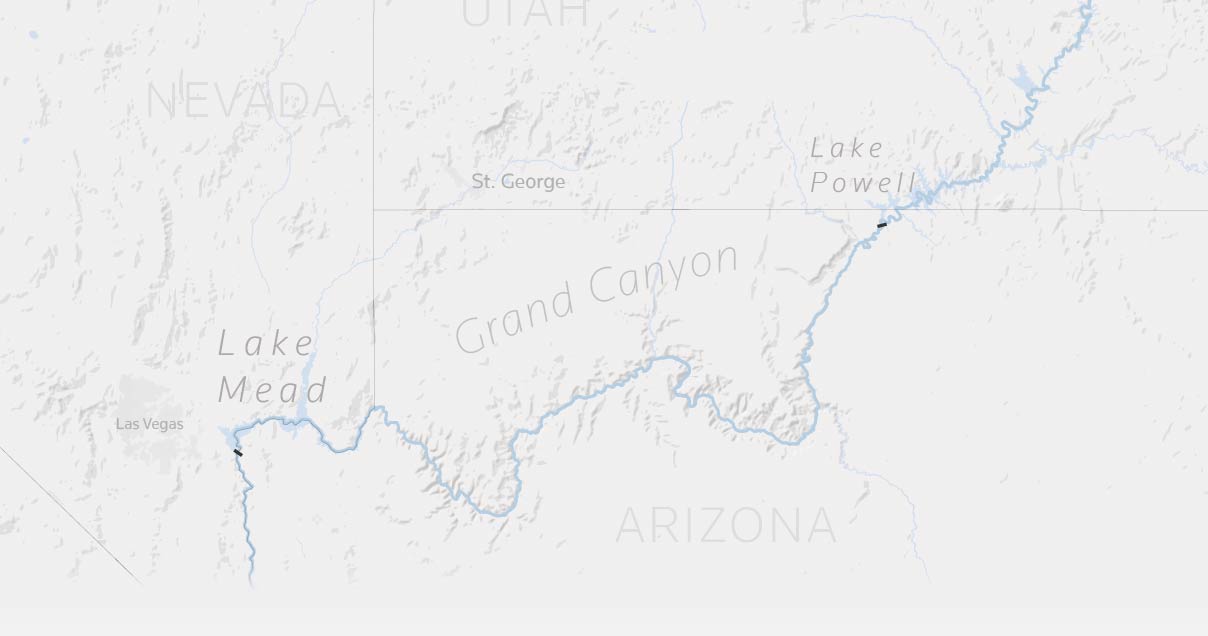
For most of the 20th century, water use stayed well below what the river carried. Dams completed in 1935 (Hoover) and 1964 (Glen Canyon) created Lakes Mead and Powell — below and above the Grand Canyon — generating hydropower and functioning together as one giant reservoir.
Water use peaked in the late 20th century. Consumption has eased since, but the U.S. still draws more from the Colorado than the river provides — a gap widened over the past two decades by a megadrought that has pulled reservoir levels sharply lower.
The river’s reservoirs, chiefly Lake Mead and Lake Powell, have worked like liquid bank accounts — filling in wet years and paying out when snowmelt fell short of what the math demanded.
But a drought now in its 27th year — capped by a poor 2025-26 snowpack that produced little runoff — has drained the account, and both reservoirs are nearing dangerously low levels. Today, nearly every drop is diverted for use and the Colorado no longer reaches the sea.
The Pacific Ocean is warming to record levels in what forecasters are calling a super El Niño — a pattern that can bring drier conditions to the river’s mountain headwaters where snowmelt provides most of the river’s streamflow. Some scientists see the megadrought as a lasting aridification of the western U.S., and the river’s lower flows as the new normal — meaning modest cuts from three states may not be enough. Federal officials will recalculate how the water is shared on a two-year cycle over the next decade. Emergency actions would be triggered if either Lake Powell or Lake Mead fell to a level that threatened their ability to generate hydropower.
Cut volumes for Arizona and Nevada are pending final figures.
U.S. Bureau of Reclamation (natural flow and consumptive uses and losses reports); U.S. Geological Survey (streamflow).
Julia Wolfe, Donna Bryson and Nia Williams