
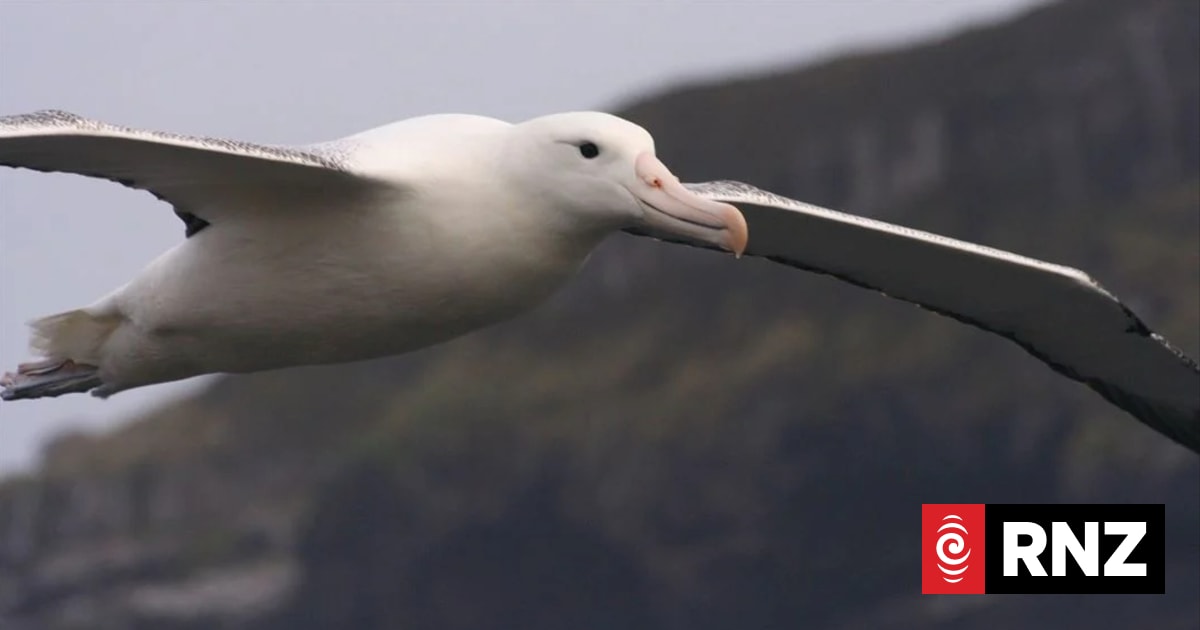
H5/N1 bird flu is here, what does this mean for our wildlife?
Follow Our Changing World on Apple, Spotify, iHeartRadio or wherever you listen to your podcasts.
The highly pathogenic H5N1 strain of bird flu has left a devastating wake in its journey around the globe, and now it has arrived at New Zealand shores.
At Pukekura, on the Otago Peninsula, home to the only mainland breeding colony of northern royal albatross/toroa in the Southern Hemisphere, preparations have been underway for years.
But the questions of when and how the virus will arrive as well as what impact it will have on different native species create uncertainties.
World-wide spread
University of Otago virologist Professor Jemma Geoghegan says scientists have known about the H5N1 strain for about 30 years. But in 2020, a change in the genetic code created a subclade of H5N1 called 2.3.4.4b which started to spread more widely.
Rather than infecting only waterfowl or poultry the virus can now infect many different bird species, as well as other animals such as foxes, cows, sea lions and seals.
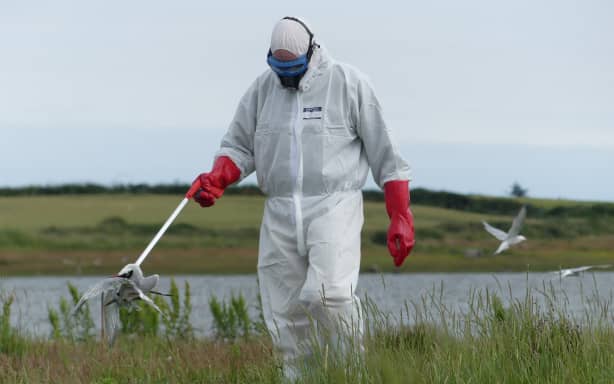
BirdWatch Ireland fieldworker collecting dead birds at Lady’s Island Lake, Co. Wexford.
BirdWatch Ireland
The result has been major mortality events in some places and especially in animals that breed in colonies such as gannets, terns and elephant seals.
New Zealand’s geographical isolation helped delay the virus’s arrival, but with H5N1 now spreading in bird populations in Australia the journey is much shorter for migratory species that move between the two countries.
And while we don’t know precisely how our endemic animals will react, the signs from overseas are not good says Jemma.
“It’s a bit tricky to completely understand what might happen here because of the very unique species. But what we can see is across the world… the breadth of species being infected by this virus. It doesn’t really paint a great picture of what we might see in New Zealand.
“This is potentially going to be a huge problem for us.”
Ireland’s experience of H5/N1 bird flu: A conversation with Niall HatchOur Changing WorldBonus episode
The vaccination plan
One of the advantages of the slow arrival to New Zealand’s shores has been the time it has allowed for vaccines to be developed overseas and then trialed here.
The Department of Conservation (DOC) developed a vaccination response plan with two phases, both of which have been approved by the Ministry for Primary Industries (MPI).
In the first phase, vaccinations of breeding adults from five highly-managed bird species began, including kākāpō. The second phase extended the plan to a further 23 high-priority species. While some species have been decided upon, the full list has not been announced, to allow flexibility in DOC’s decision-making, said Conservation Minister Tama Potaka.
DOC principal ranger Jim Watts – who also leads H5 bird flu preparedness for Coastal Otago – says toroa are included in the vaccination plan but it is not a straightforward process, nor is it a silver bullet.
“The vaccination requires two doses and that needs to occur three to four weeks apart. So, you need to be able to guarantee that you can recatch a bird.”
They don’t have the confidence they’d be able to give those two doses in time to the large chicks that are just about the fledge from the headland, Jim says, so they aim to vaccinate the new adult birds that will soon arrive for the next breeding season.
“And then it is about one month after the second dose where that bird becomes the most protected through the vaccine and then it has protections up to about six months out towards the year.”
The timing, therefore, is critical but complicated.
Because although bird flu has been detected here, as yet, there have been no mass mortality events, nor signs that it is spreading within colonies here. No-one knows when it will arrive at Pukekura.
So monitoring is a key part of the plan.
Planning for Pukekura
Pukekura hosts far more than albatrosses. The largest red-billed colony in the country also calls this headland home, as do Otago shags, tītī, royal spoonbills, fur seals, kororā or little blue penguins and the occasional visiting sea lion. Several wildlife tourism operators are based on the headland and others use it as a key tour stop. It’s estimated that it attracts more than 100,000 visitors each year.
H5/N1 bird flu is here, what does this mean for our wildlife?
The headland is managed according to a plan developed by Te Poari a Pukekura – a group made up of representatives from Te Rūnanga o Ōtākou, Korako Karetai Trust, the Department of Conservation and Dunedin City Council.
The arrival of H5N1 has been on their minds for years, says Nadia Wesley-Smith, a mana whenua representative on Te Poari a Pukekura. The site-specific response plan they’ve developed is based around three possible scenarios.
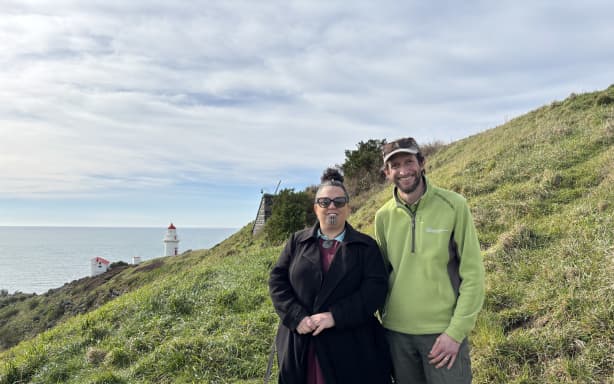
Nadia Wesley-Smith and Jim Watts at Pukekura
RNZ / Claire Concannon
In the first, current scenario, H5N1 is present in New Zealand but has not reached Pukekura.
Monitoring and surveillance are the priorities, including observation of the animals on the headland and daily testing of water from water baths around the reserve for the presence of the virus.
The second scenario is that bird flu is present at Pukekura but is not causing mass mortality. In that scenario, tourism activity could continue while monitoring remains in place.
The third scenario involves mass mortality among wildlife colonies on the headland. In that case, tourism would stop and a complete headland closure would be considered. But there’s no specific number of bird deaths in the plan that would trigger this, says Nadia Wesley-Smith.
“It depends on the number of birds on the headland at the time and in any of the species. So we can’t we can’t put a number on it… That decision is going to have to be made based on what is happening at Pukekura at the time.”
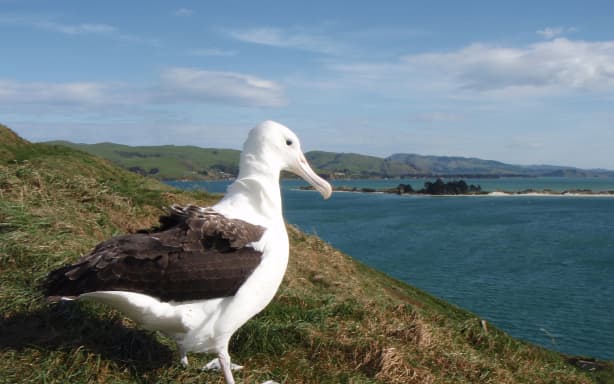
The albatross spends several years away feeding in South American waters before returning to Taiaroa Head to find a mate.
Department of Conservation
While the risk to human health is considered low because this virus can’t spread between people, there have been hundreds of cases across the past two to three decades says Professor Jemma Geoghegan, when people have had direct contacted with infected animals.
“The virus in those people has caused severe disease. The mortality rate is estimated to be about fifty percent in those people. So it’s really, really high.”
The close proximity of the red-billed gull colony to a visitor walkway is another reason why Pukekura is considered a high risk site once H5N1 starts spreading here.
For now, Jim Watts says, they are keeping a close eye on the birds, looking for any of the neurological symptoms that have been seen overseas. In particular, there’s a close watch on a local white-fronted tern colony, a species of bird that winters in Australia.
H5/N1 bird flu is here, what does this mean for our wildlife?
Having watched it spread overseas there are two main messages says Jim. First, once it arrives there is no getting rid of it and second, some birds will make it through if they are left alone.
“We really need to reduce that disturbance and reduce any stress on them. And then those are the birds that are going to survive, form that natural immunity and get the colony going again.”
If you find a sick or dead bird or mammal, do not touch it. If you find three or more dead birds/animals, take photos and report it to MPI online or by calling 0800 80 99 66.