
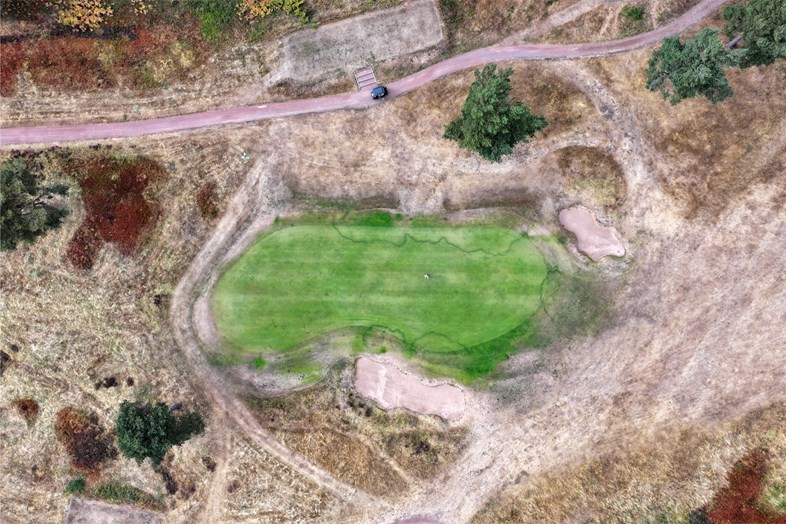
The UK’s hottest summer on record left golf courses fighting for water and raised an uncomfortable question: what happens when today’s extreme conditions become tomorrow’s normal? Rob McGarr spoke to the experts to find out…
For years, the warnings had been there.
Hotter summers. More heatwaves. Longer droughts. Increasingly violent storms. Rising seas. Water shortages.
For golf, though, climate change often felt like a problem for the future. Something for clubs to have on their radar, but an issue that would impact future generations more than current players.
But this summer, that future arrived in a blaze.
Summer 2026 was the UK’s hottest since records began, and the second consecutive summer in which the UK broke its temperature record.
And it wasn’t just hot. England and Wales recorded the driest July since records began some 190 years ago, with 19 English counties recording virtually no rainfall all month.
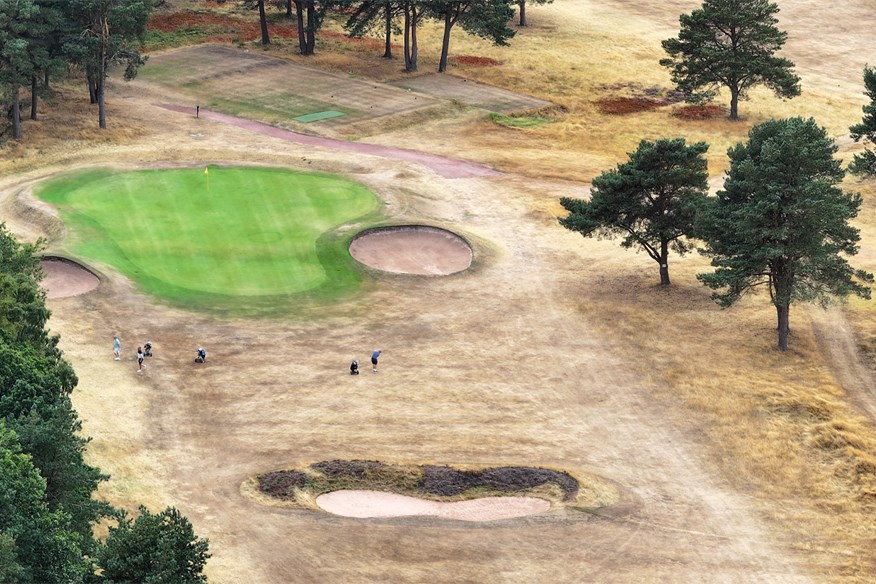
Golf courses bore the brunt, quickly turning brown under weeks of relentless heat and little rainfall. Wildfires broke out, smoking restrictions and hosepipe bans came into force, and greenkeepers found themselves facing a problem that no amount of hard work could solve: there simply wasn’t enough water to keep everything alive.
 The drive to survive
“We realised quite early on we were never going to have enough water to maintain the tees,” says Simon Fitton, Member Support Manager for the PGA and Chairman of Nene Golf, which runs two courses in Peterborough. “So unfortunately, they get turned off and it’s a focus on keeping the greens alive. Some summers, the conversation is around what kind of stripe pattern we want to put on the fairways. This year, it’s been about keeping the course alive, not making it look green.”
Almost three-quarters of the country was officially in drought. Even clubs with irrigation systems were finding that their water allowances, rather than their sprinklers, were becoming the limiting factor.
“Water availability is one of the most important challenges facing golf,” says the R&A’s Director of Sustainable Golf, Daniel Lightfoot. “Recent summers have demonstrated the requirement on clubs to secure, store, and apply water as efficiently as possible.”
And that is where the problem becomes much bigger than a few burnt-out fairways.
The £1m problem facing golf clubs
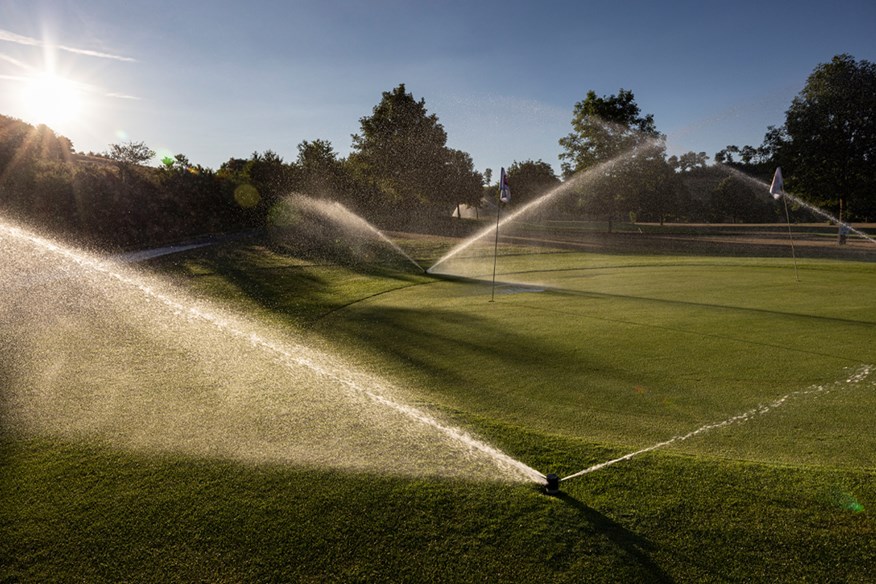
The obvious answer to a dry golf course is irrigation. The obvious problem is paying for it.
Fitton says clubs are increasingly moving their capital expenditure away from greenkeeping machinery and towards irrigation projects, but the sums involved can be enormous.
“An irrigation project could be anywhere between £500,000 and £1.5 million,” he says. “The cost to do the changes is so exorbitant compared to the turnover at the majority of golf clubs that I can’t see all places doing it.”
Some clubs have added fees to annual memberships to cover such works – an extra £100 per year from each member for three years, for instance – a method Fitton believes will “be one of the most common ways it will get done”.
But it’s not just the money – it’s having the space.
“Some golf courses will end up reducing to nine holes or 12 holes to make space for a reservoir,” says Fitton. “There will be places that adapt, but there will be places that just disappear.”
That is the uncomfortable calculation facing some clubs: sacrifice part of the course now to give the rest a better chance of surviving later.
But even a reservoir is no guarantee.
“With summers like this being so extreme, even the reservoirs may not be enough,” Fitton admits.
A club can spend hundreds of thousands of pounds building a sophisticated irrigation system, but it cannot manufacture rainfall. A modern irrigation system is of little use if there isn’t sufficient water available to put through it.
And that puts golf’s relationship with mains water under even greater scrutiny.
 “It can’t be one rule for golf courses and another for everybody else”
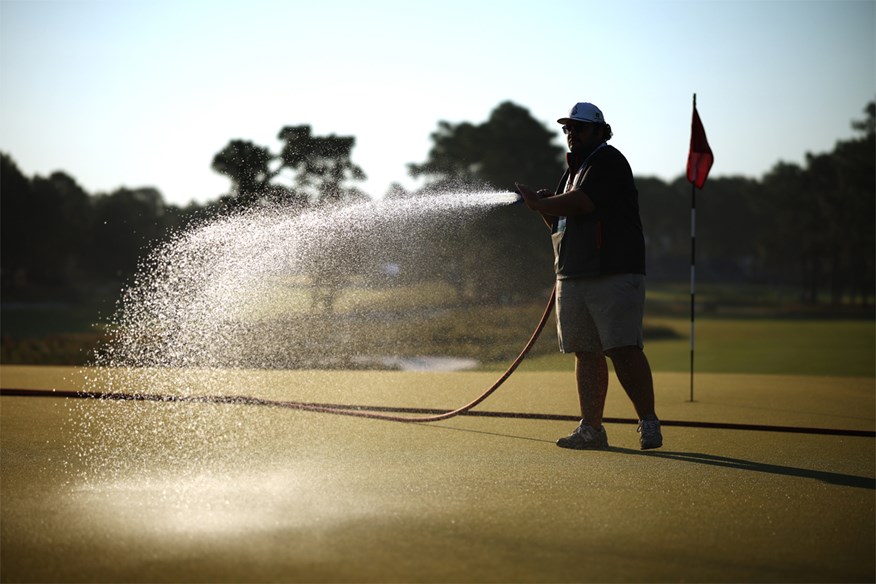
While golf is busy fighting a battle to keep its courses alive with less water than ever, it’s facing pressure from non-golfers, who view watering golf courses as a luxury society can ill afford when drought is impacting food production, rivers, and household water supplies.
“Hosepipe ban exemptions for golf courses and private school sports pitches symbolise everything wrong with our water system,” Labour MP Helena Dollimore told the Guardian. “All the while my constituents suffer water outages year on year. It cannot be one rule for them and another for everybody else.”
The R&A knows golf cannot assume its access to water is guaranteed.
“The challenge for golf is not only to manage water responsibly, but also demonstrate to golfers, communities, and regulators that the sport is using this vital resource efficiently and sustainably,” explains Lightfoot. “Failure to do so could lead to short- and long-term legislative change, affecting clubs’ ability to maintain playing surfaces effectively.”
The question of whether a golf course is a worthy use of water will only intensify as shortages worsen. Environment Agency projections suggest that England’s public water supply could be short by five billion litres a day by 2055 – enough to fill Wembley Stadium four and a half times, every day.
“As the climate crisis accelerates, the last thing we need is this wasteful, water-guzzling, land-hungry extravagance,” said Guy Shrubsole, an environmental campaigner and author of The Lie of the Land.
Golf therefore has a clear task: use less, save more. So far, it’s not doing great. More than 140 golf clubs in England have breached their water extraction licences in the past five years, according to data analysis by the Guardian.
The R&A is already working with clubs to encourage annual water audits and assess the efficiency of their irrigation systems. Sensors, moisture mapping, and increasingly sophisticated irrigation technology are allowing greenkeepers to identify exactly where water is needed, rather than simply turning on sprinklers and hoping for the best.
Making the most of every drop is becoming less of a luxury and more of a necessity. The days when a club could simply water its way out of a difficult summer are disappearing, just as difficult summers become more common.
A freak summer… or the new normal?
This autumn, as temperatures drop, rain returns, and UK courses turn green again, it would be easy to dismiss summer 2026 as a freak few months and let the climate concerns slip to the back of the mind.
But this was not just a bad summer for golf courses. It was a glimpse of what the game will have to learn to live with.
Met Office analysis found that a summer like the one we have just experienced would have been a once-in-more-than-1,000-years event in a climate unaffected by human-induced climate change. It is now expected roughly once every nine years.
And it won’t stop here. Met Office projections show that UK summers could be up to 6°C warmer and up to 60% drier by 2070 compared with 1990.
That is the uncomfortable reality golf must plan for. Not the chance of another summer like this, but a future in which summers like this – or ever more extreme – become the norm.
 Too hot to play
There is another way climate change could impact golf: by making it too hot to play.
A good summer used to be a gift to golf. More visitors. Fewer rain cancellations. Longer evenings. Fuller tee sheets.
But 2026 proved that the weather can be too good.
“Being out in the heat in the middle of the day for four hours is not a good choice when it’s 38 degrees,” explains Fitton, who saw driving ranges and courses become quieter during the hottest periods, with golfers choosing to stay away or play early and late in the day.
It is another glimpse of how climate change could alter the golf calendar and club revenue. If extreme heat becomes more common, the traditional summer peak season may become less attractive – and less profitable.
Golf has spent decades worrying about rain ruining play. It may increasingly have to worry about the sun doing the same thing.
And that is before we get to the other big issue already threatening some of the UK’s best courses.
 Water, water, everywhere
For inland courses, the problem is a lack of water.
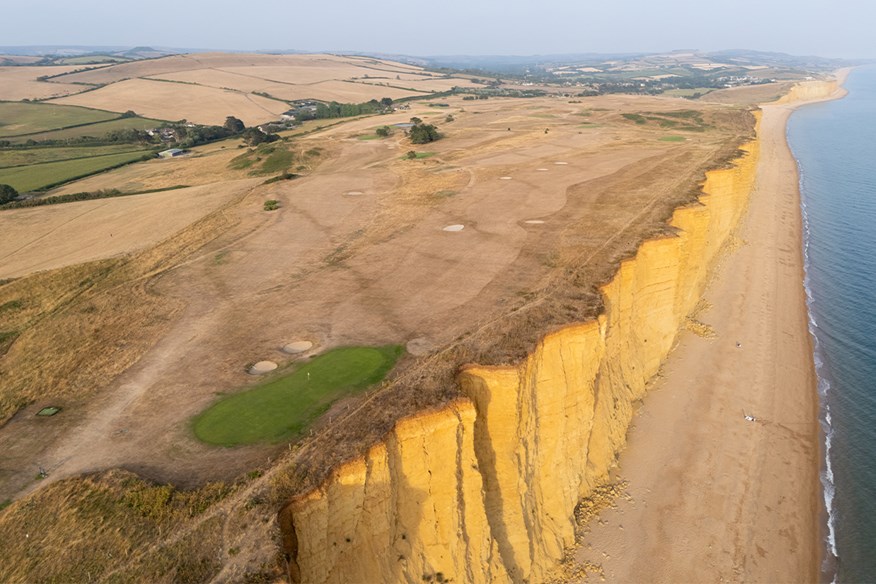
For links golf, the threat comes from the other direction. Coastal golf courses are vulnerable to erosion, rising sea levels, and increasingly severe storms.
The Met Office says sea levels around the UK have risen by about 20cm since 1901, with roughly two-thirds of that rise occurring over the last three decades.
Projections indicate that sea levels around the UK could rise by up to a metre by 2100. The Met Office also warns that high-impact scenarios involving more rapid ice-sheet loss – leading to much larger sea level rises – cannot be ruled out.
A report from the Climate Coalition warned that “only a small increase” in sea level could imperil the world’s links courses before the end of the century.
And this isn’t theoretical.
At Montrose, one of the world’s oldest golf courses, the North Sea is taking roughly seven metres of its historic dunes each year. Tee boxes have gone. Parts of fairways that have stood since 1562 are lost forever.
The oldest course in England, Royal North Devon, has already surrendered holes to the Atlantic and is planning further rerouting inland.
For some links courses, the question is no longer whether the coastline will change, but how long they can hold it back – and how much of the course they can save.
The golf course of the future
All of which raises a fundamental question: what will golf courses look like when the climate changes?
For decades, golfers have been conditioned to equate a good course with a green course.
Brown fairways suggest neglect. Bare patches suggest poor maintenance. A course that looks stressed can feel like a course that has failed.
But that relationship between colour and quality may have to disappear.
“A golf course does not need to be bright green throughout the year to deliver a wonderful test of golf,” says Lightfoot, pointing to the firm, fast conditions at this year’s Open at Royal Birkdale and Women’s Open at Royal Lytham as examples of how excellent golf can be played without a uniformly lush appearance.
“The architecture of the golf course will play an ever increasingly important role,” he adds. “Golfers should continue to expect high-quality playing surfaces, but quality should increasingly be defined by firmness, consistency, playability, and sustainability rather than colour.”
In other words, golfers may have to learn that a course can be in good condition without necessarily looking it.
“There’s nothing a greenkeeper can do in these conditions,” says Fitton. “It’s nothing to do with their skill level or their work ethic.”
The change may therefore need to happen in the golfer as much as the golf course.
The best courses of the future may look less manicured but be just as good to play – firm and fast, with more natural areas and less intensively maintained grass.
That doesn’t mean golfers should lower their standards. It means changing what those standards are. A firm, fast, brown fairway might eventually become something to celebrate rather than complain about.
And that could be one of the biggest cultural shifts climate change forces upon golf: learning to distinguish between a course that looks green but is unsustainable, versus a course that is actually healthy, resilient, and good to play.
 Fake plastic tees
Getting used to firm and dry courses is one thing, but some of the changes will be harder to swallow.
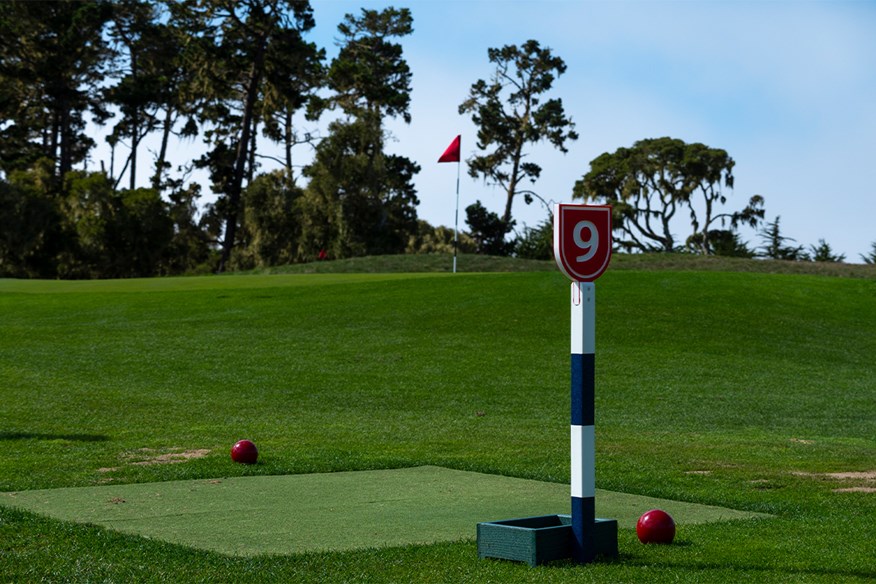
Fitton believes artificial grass could become a common feature of golf courses.
“It’s become pretty normal for most courses to have a winter course using mats, to give the tees a chance to regrow,” he says. “This year, that will be more important than ever. We’ll have a lot of wrecked tees because of the lack of growth. You can overseed, but if people are still walking all over it, it’s not going to grow properly.”
The prospect of playing golf off artificial tees year-round won’t thrill golfers who have experienced the careworn winter mats at many clubs, but Fitton sees a difference between a mat and a properly constructed artificial tee box.
“The complaints you normally get about artificial tees are them not being flat or ‘I can’t get my tee in’,” he says. “But if you use a really good quality artificial grass with a proper base that you can get a tee peg into, I can’t really see the downsides of that. I don’t mean just having a mat; I mean having a proper tee area, three metres by six metres or even bigger.
“I’ll be surprised if I don’t start seeing that popping up in the next couple of years at golf courses, particularly in areas where maybe the grass is exposed to sunlight so much that it’s just going to die off, or where it’s under trees and it’s always struggled to grow anyway.”
If that sounds farfetched, consider how quickly other sports have made the same switch. Fitton points to the number of artificial pitches used in the football league and amateur cricket as evidence that golf will merely be following the necessary shift away from real grass.
“In local level cricket, nobody’s using a grass wicket this year,” he says. “It’s all on astroturf. I don’t think we’re going to get to a stage where the greens will be artificial grass, but teeing areas, I can see that in the next 10 years, for sure.”
Golf has a climate problem. But it could also be part of the solution
There is an obvious criticism of golf in all of this.
Golf courses occupy huge areas of land. They use water. They require machinery, fertiliser, and other resources.
In a world where communities are being asked to consume less, it is entirely reasonable to ask why golf should be allowed to use scarce water to maintain grass.
The answer, increasingly, needs to be more sophisticated than golfers defending golf. Golf has to demonstrate that its courses are doing something useful with the land they occupy.
“When it does rain, 125 acres of golf course is better to receive rainfall than 125 acres of car park, where the water just runs straight off,” says Fitton.
A golf course is not simply a vast expanse of grass that demands regular watering. It can contain woodland, heathland, wetlands, and rough grassland. It can provide habitat for wildlife. It can absorb rainfall and, if designed properly, store water and reduce flooding elsewhere.
Lightfoot believes this could become one of golf’s biggest opportunities.
“Courses can and should be designed to capture, store, and manage significant volumes of water, helping to reduce flood risk for surrounding communities while securing sustainable supplies for future use,” he says.
The R&A increasingly sees golf courses not simply as victims of climate change, but as potential partners in adapting to it.
“The greater challenge is ensuring golf remains a valued use of land within local communities,” says Lightfoot. “Golf courses must continue to demonstrate their environmental and social value by supporting biodiversity, managing water effectively, and contributing positively to wellbeing of local people’s lives. By doing so, they strengthen their position as important community assets and sustainable landscapes for future generations.”
That distinction could become crucial. If golf wants to retain access to land and water, it will need to demonstrate that its courses provide value beyond the golfers using them.
Golf has spent decades learning how to manipulate nature to produce the conditions it wants. Climate change may force it to learn something rather different: how to work with nature instead.
Summer 2026 has provided a warning. Climate change is coming, and golf has to change with it.
The game may have to stop chasing green and start chasing resilience.
The future of the game will depend on learning to play with what nature gives us.
The R&A aims to support the sustainable development of golf courses through agronomy services, Golf Course 2030 initiative, and education. If you want to know more about how The R&A can help your club, please email sustainableagronomy@randa.org or visit The R&A’s website.