
Martin Lewis: ‘Will the Government honour Rachel Reeves’ pledge to me?’
Earlier today (Tuesday 15 September), Martin Lewis had questioned on X whether the Government would keep its State Pension tax pledge:

Martin Lewis
MSE founder & chair
It’s likely the State Pension will rise by 3.9% next April based on the rise in average earnings that has just been published. This would take the full new State Pension to just over £13,000, yet the tax free personal allowance is frozen at £12,570. Will the Government honour Rachel Reeves’ pledge to me when she was Chancellor that from next April “a pensioner only getting State Pension won’t pay tax”?
The £13,000 applies to someone on the full new State Pension.
Those who hit pension age before April 2016 are on the old State Pension, which is less than the basic amount.
Those who didn’t get maximum National Insurance contributions don’t get the full amount.
Speaking to Martin on his ITV The Martin Lewis Money Show Live in November 2025, the then Chancellor Rachel Reeves had confirmed that anyone who was only earning the State Pension (and had no other income, such as a private pension), would not pay tax on their income when the full State Pension exceeded the personal allowance threshold. Watch what the former Chancellor told Martin in full:
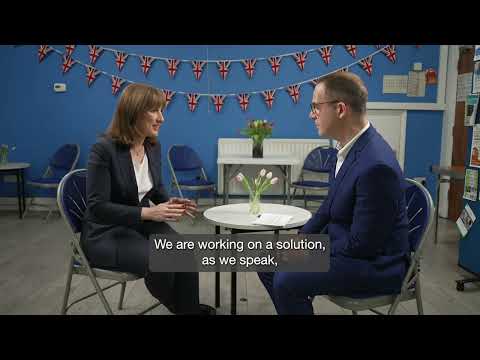

News! Chancellor: “Only on State Pension? You WON’T pay tax!”
From The Martin Lewis Money Show Live on Thursday 27 November 2025 courtesy of ITV. All rights reserved. Watch the full episode on ITVX.
The Government has now confirmed the promise WILL be honoured
Martin then wrote the following on X after the Government confirmed it would honour the former Chancellor’s pledge:
Martin Lewis
MSE founder & chair
NEWS! The Government’s confirmed it WILL keep this promise. I’ve got a statement from the minister for pensions @TorstenBell:
“In line with the commitment made at Budget 2025, pensioners who only just the exceed the personal allowance will not have the administrative burden of paying small amounts of tax in this Parliament.
“The Chancellor will set out further details on how that commitment will be delivered at the Budget.”
Martin added on X:
Martin Lewis
MSE founder & chair
Many saying “why don’t they just make State Pension tax free?” Well it’s always been taxable, so high earners pay tax on it (think someone with £1 million in earnings and investment income age 70).
The change is that from April, someone with ONLY the full new State Pension income will need to pay tax. And regardless of the triple lock or not, that would’ve happened at some point if you continue to freeze the personal allowance – that’s the prime cause of this for me.
How the triple lock works
Under the triple lock, the State Pension typically goes up each April by the highest of:
Average wage growth between the previous May and July (including bonuses) – 3.9% in 2026, as announced on Tuesday 15 September;
The previous September’s Consumer Prices Index (CPI) inflation measure – September’s figure will be published on 21 October – though it’s not expected to be higher than 3.9%. CPI inflation is currently at 2.9% based on the year to July’s figures.
Or 2.5%.
So currently, as the average wage growth is the highest of the three figures this year, the State Pension is expected to rise by 3.9% next April.
The new State Pension is expected to rise by almost £490 a year
Around one in three (36% of) state pensioners – 4.7 million – get the new State Pension. You’ll be on it if you reached State Pension age after April 2016.
NEW State Pension predicted rise from April 2027
Year
Weekly payment (1)
Annual amount (2)
2026/27 (current)
£241.30
£12,547.60
2027/28 (new – if increased by 3.9%)
£250.70
£13,036.40
Increase
£9.40
£488.80
Those on the basic State Pension will see a smaller cash increase
Around two thirds (64%) of state pensioners – 8.4 million – get the basic State Pension. You’ll be on it if you reached State Pension age before April 2016.
OLD, basic State Pension predicted rise from April 2027
Year
Weekly payment (1)
Annual amount (2)
2026/27 (current)
£184.90
£9,614.80
2027/28 (new – if increased by 3.9%)
£192.10
£9,989.20
Increase
£7.20
£374.40
Can you turn £923 into £6,800 by boosting your State Pension?
The figures above only apply to those who get the full State Pension, which comes from having enough National Insurance (NI) years – usually around 35 (though it varies widely). Many, especially those on lower incomes, don’t have their full years, so get a lower pension and therefore their monetary rise will be smaller still.
If you don’t get the full amount, there are two main ways you can increase it – claiming free NI credits or buying extra years. The first is a no-brainer if you’re eligible, but the other option needs to be considered carefully.
For full info, see our step-by-step State Pension boosting guide.